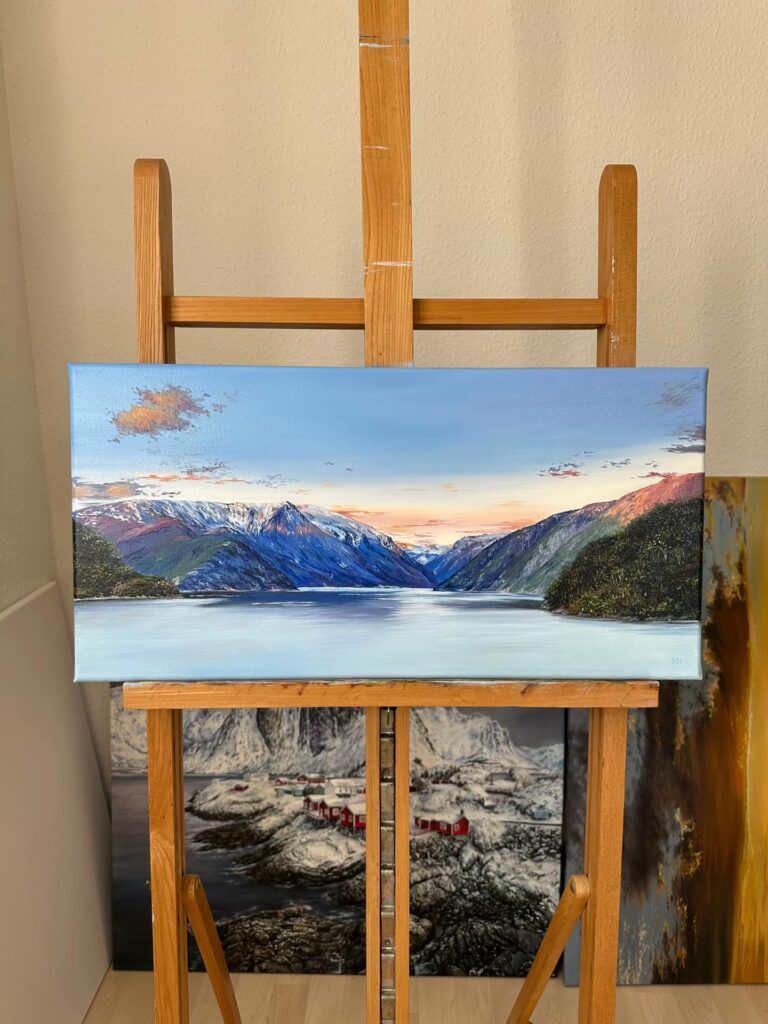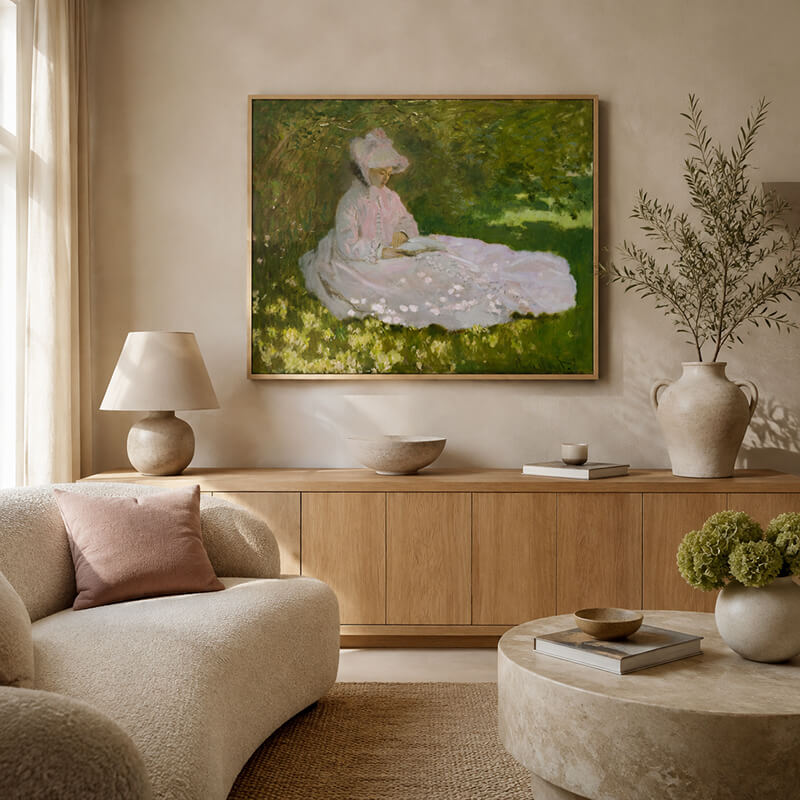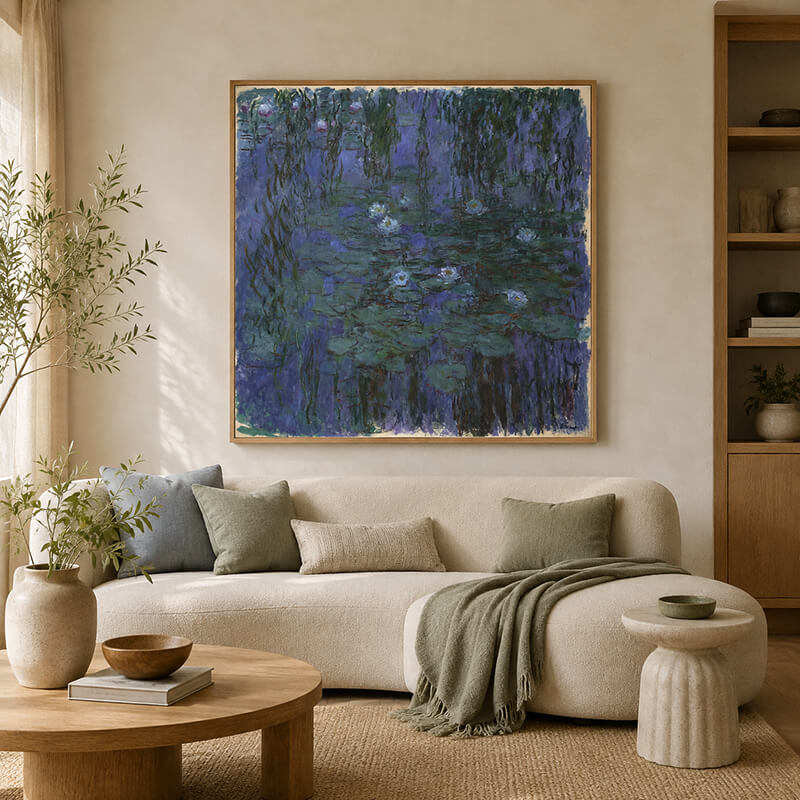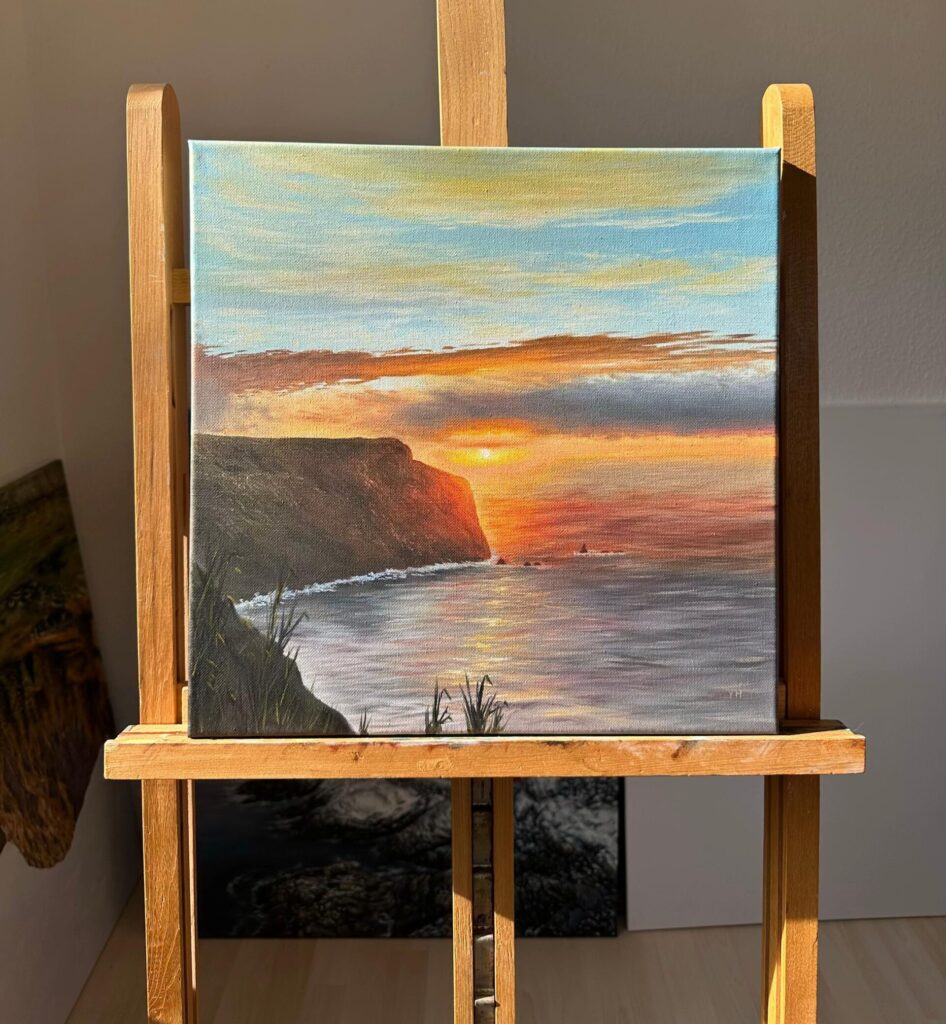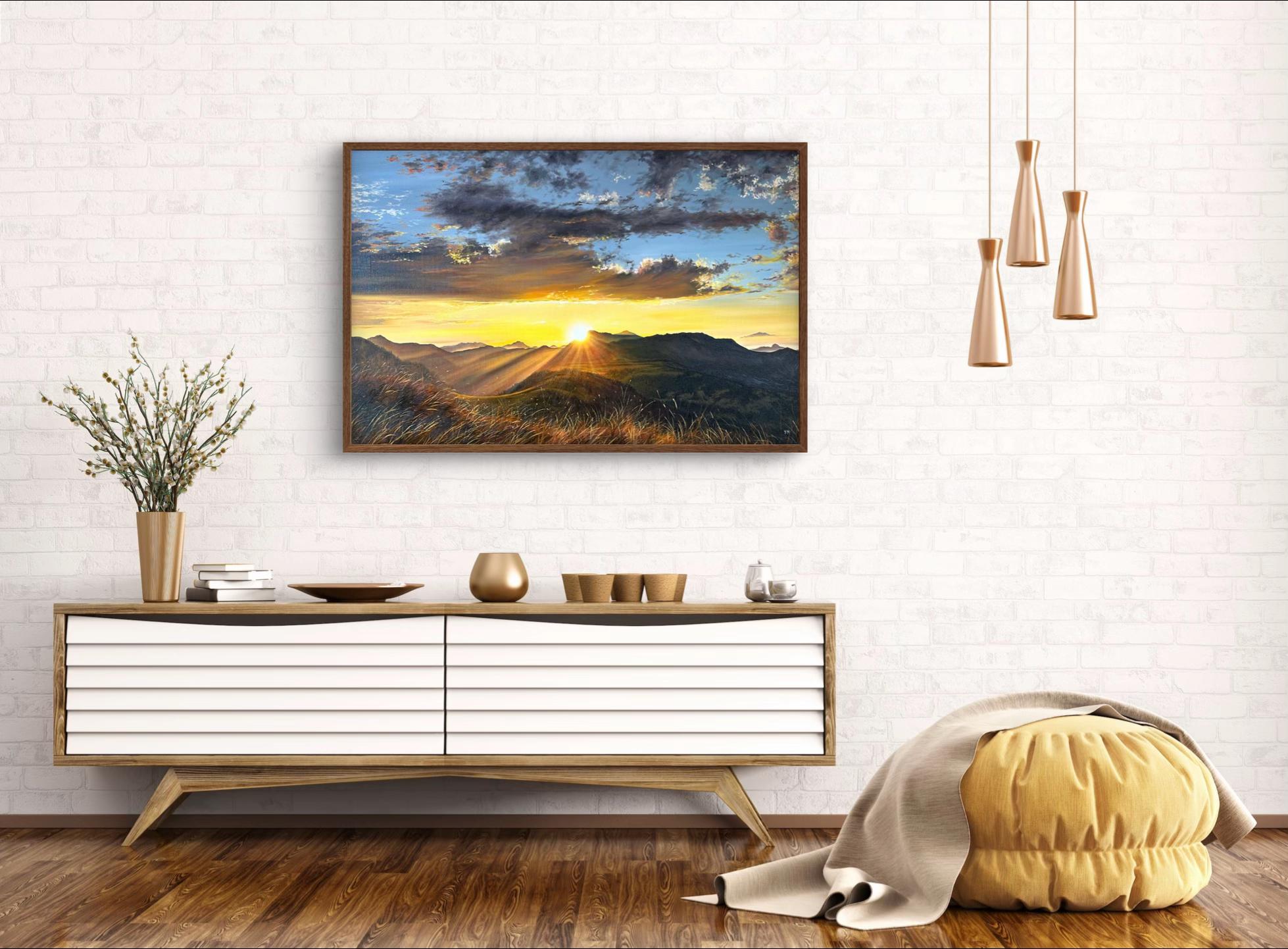
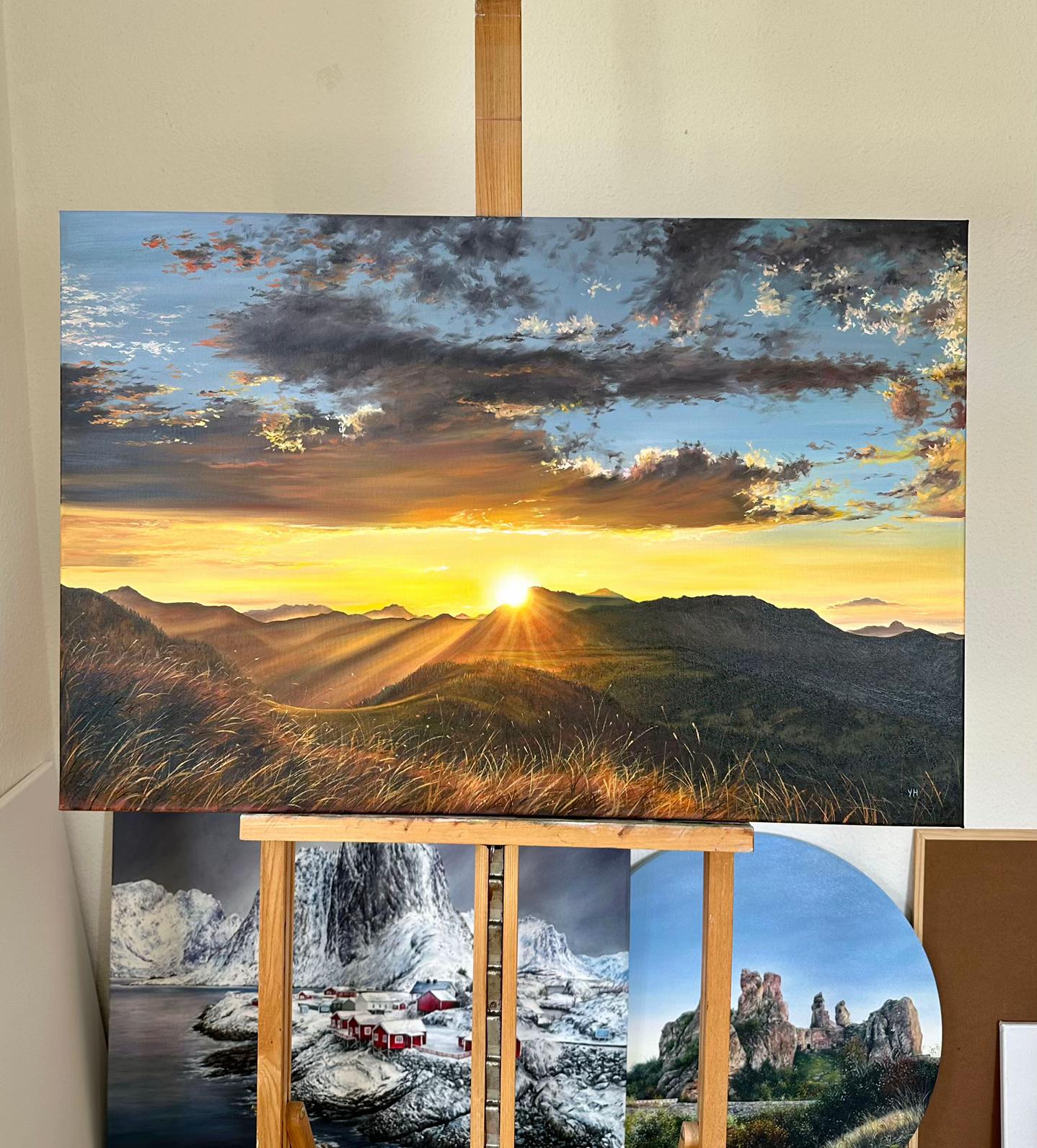
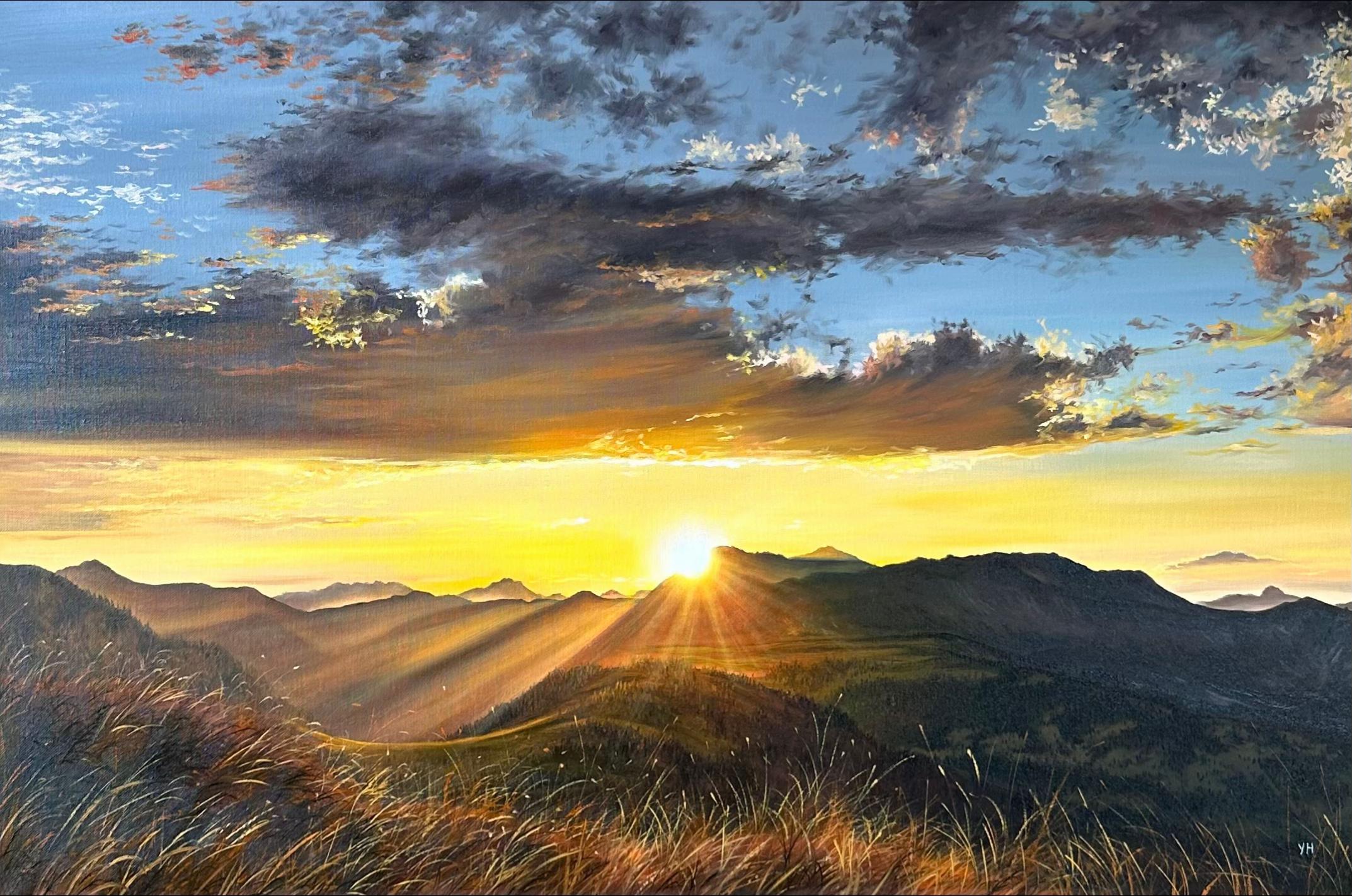
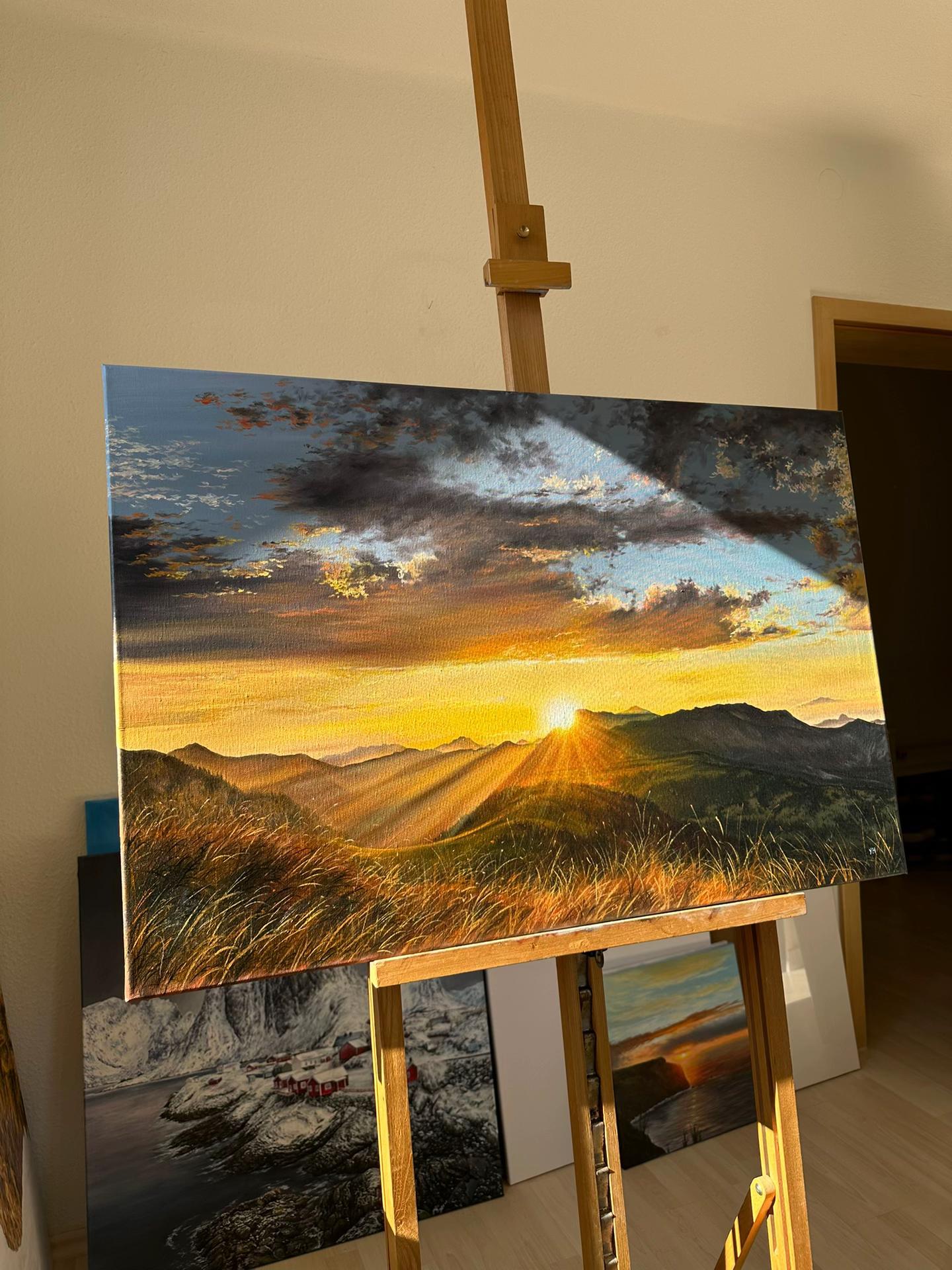
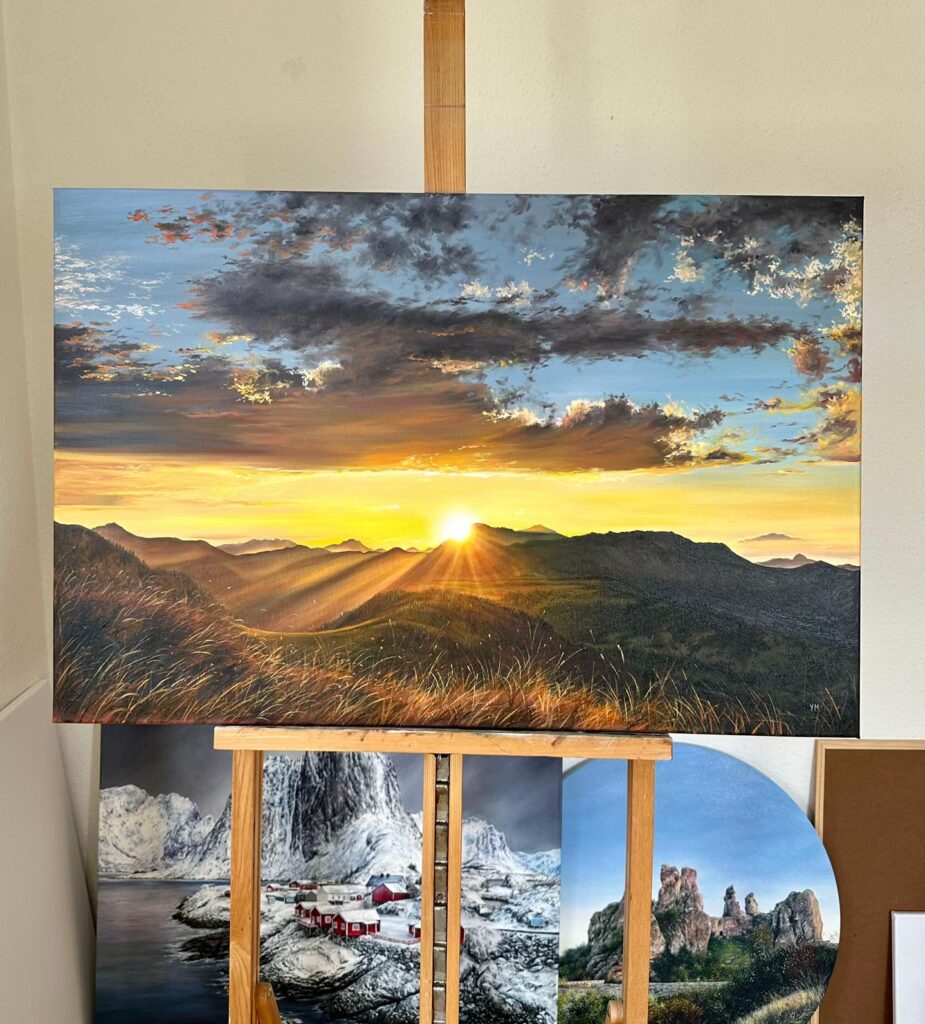
Golden light alone does not create a convincing sunset. This mountain sunset oil painting gains its depth from the relationship between dark clouds, distant ridges, angled sunbeams, and illuminated grass.
Visual Depth Across a Mountain Sunset
The sun sits close to the ridge rather than floating in an open sky. As a result, the mountain silhouette gives the light a clear source and scale. Rays then travel diagonally across the valley, connecting the bright horizon with the darker foreground.
This structure allows the viewer to read the scene from distance to foreground. It also prevents the yellow center from becoming an isolated patch of color.
Balanced Light Beneath Dramatic Clouds
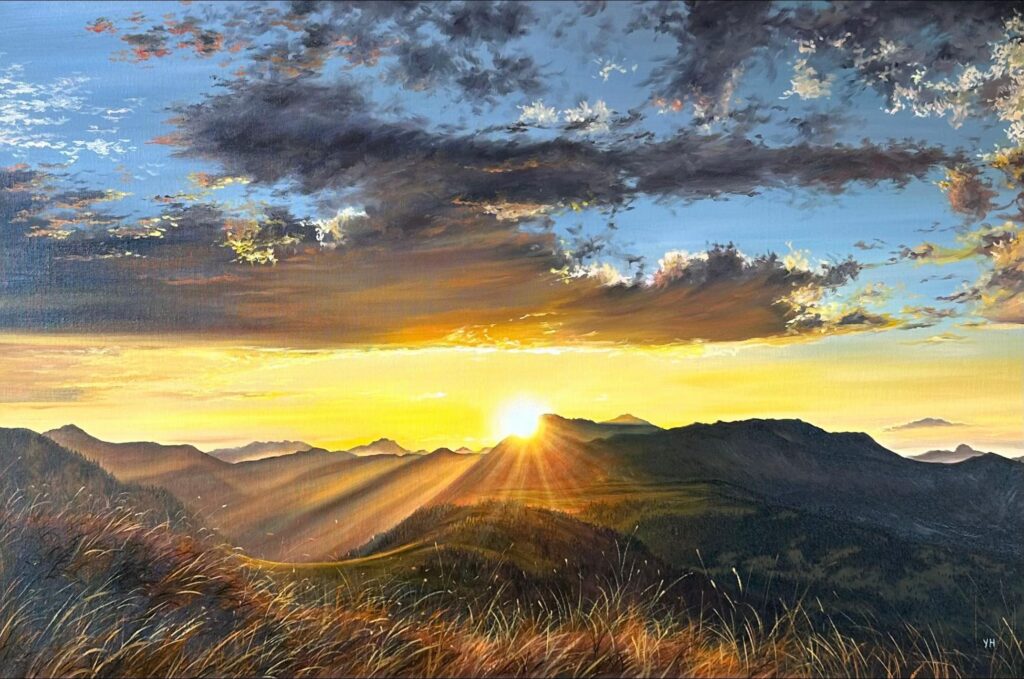
A convincing sunset needs controlled contrast. Here, blue-gray clouds occupy much of the sky, while gold and orange remain concentrated near the horizon. Small illuminated edges break apart the darker cloud mass and make the light feel active.
The landscape below stays comparatively restrained. Deep green and charcoal mountain tones support the glowing sky without competing with it. Therefore, the painting appears radiant rather than uniformly bright.
A similar contrast between storm clouds and illuminated land appears in Thomas Cole’s The Oxbow. The Metropolitan Museum of Art explains how Cole placed a tempestuous sky beside a landscape touched by sunlight. This historical example shows why opposing areas of darkness and light can give landscape painting greater visual tension.
Distance Revealed Through Mountain Layers
The mountain ranges do not use one continuous dark shape. Instead, overlapping ridges become gradually softer and lighter toward the horizon. This tonal change creates atmospheric distance, while the sharper foreground grass brings the viewer back to the front of the scene.
These details are especially important in a landscape oil painting. Without clear separation between near and distant forms, the mountains can look flat even when the colors are attractive.
Brushwork at Two Viewing Distances
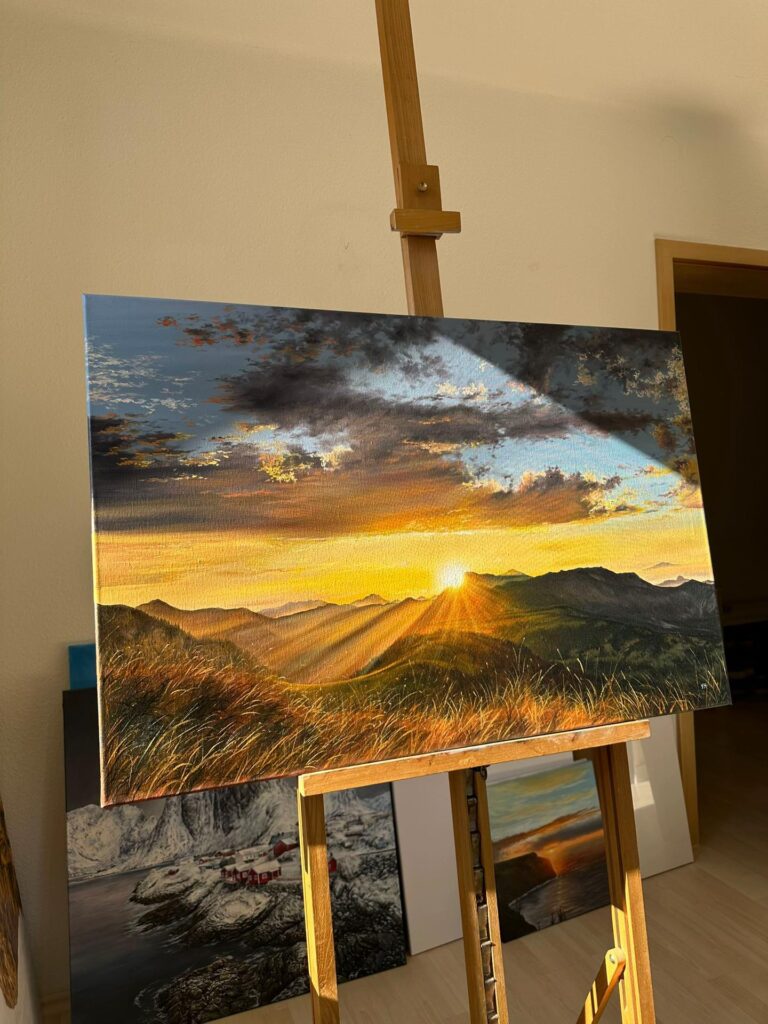
From across a room, the sun, cloud mass, and mountain silhouette form one complete image. At close range, individual strokes appear in the grasses, cloud edges, and rays of light.
This balance distinguishes an oil painting on canvas from a smooth photographic print. The brushwork adds physical variation without making every part of the surface equally textured. Consequently, the eye remains focused on the illuminated horizon.
Horizontal Scale and Interior Balance
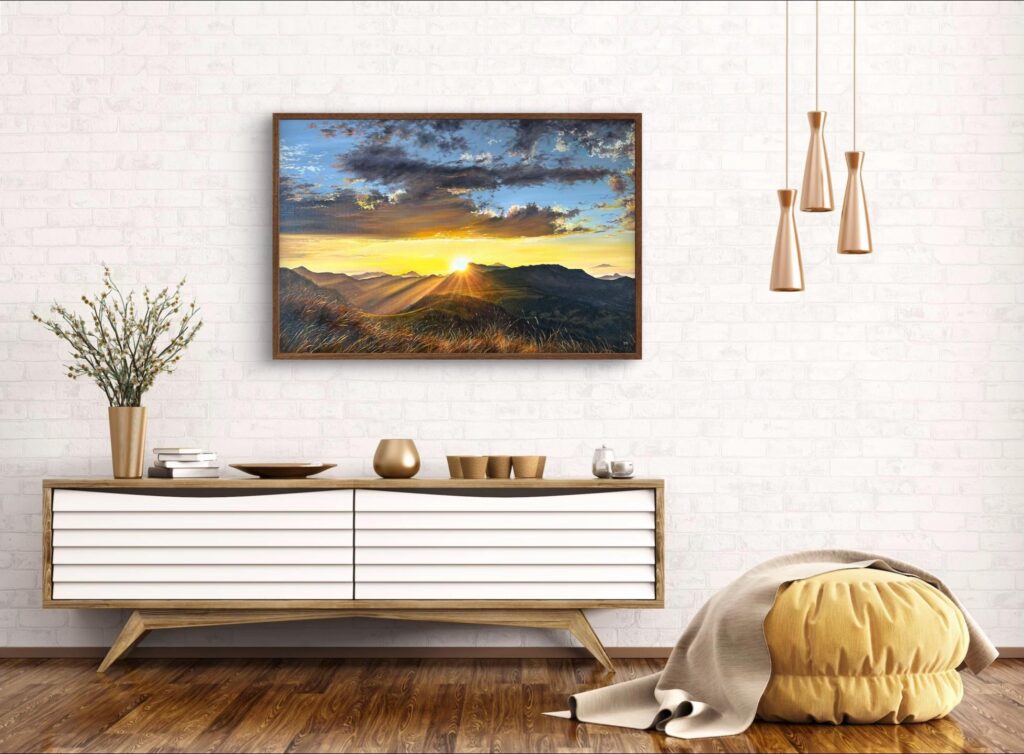
The wide format supports placement above a sofa, console, bed, or reception desk. As ديكورات حائطية لغرفة المعيشة spaces, it can introduce warm light while the blue-gray clouds connect with neutral upholstery, dark wood, and muted textiles.
Viewing distance should influence the selected size. A larger format allows the mountain layers and sunbeams to remain visible across an open room. Meanwhile, a slimmer natural wood frame can soften the transition to surrounding furniture. Buyers comparing related scenery can browse the landscape oil paintings collection for residential and commercial projects.
Practical Details Before Selection
Check the artwork width against the furniture below it rather than considering the wall alone. Also confirm whether the order includes an oil painting with frame or an unframed gallery-wrapped canvas, since each option creates a different finished size.
Custom dimensions, frame colors, and packaging can support individual homes, retail collections, hotels, and larger interior projects. After installation, keep the painting away from prolonged direct sunlight and excess humidity to preserve its color and painted surface.