
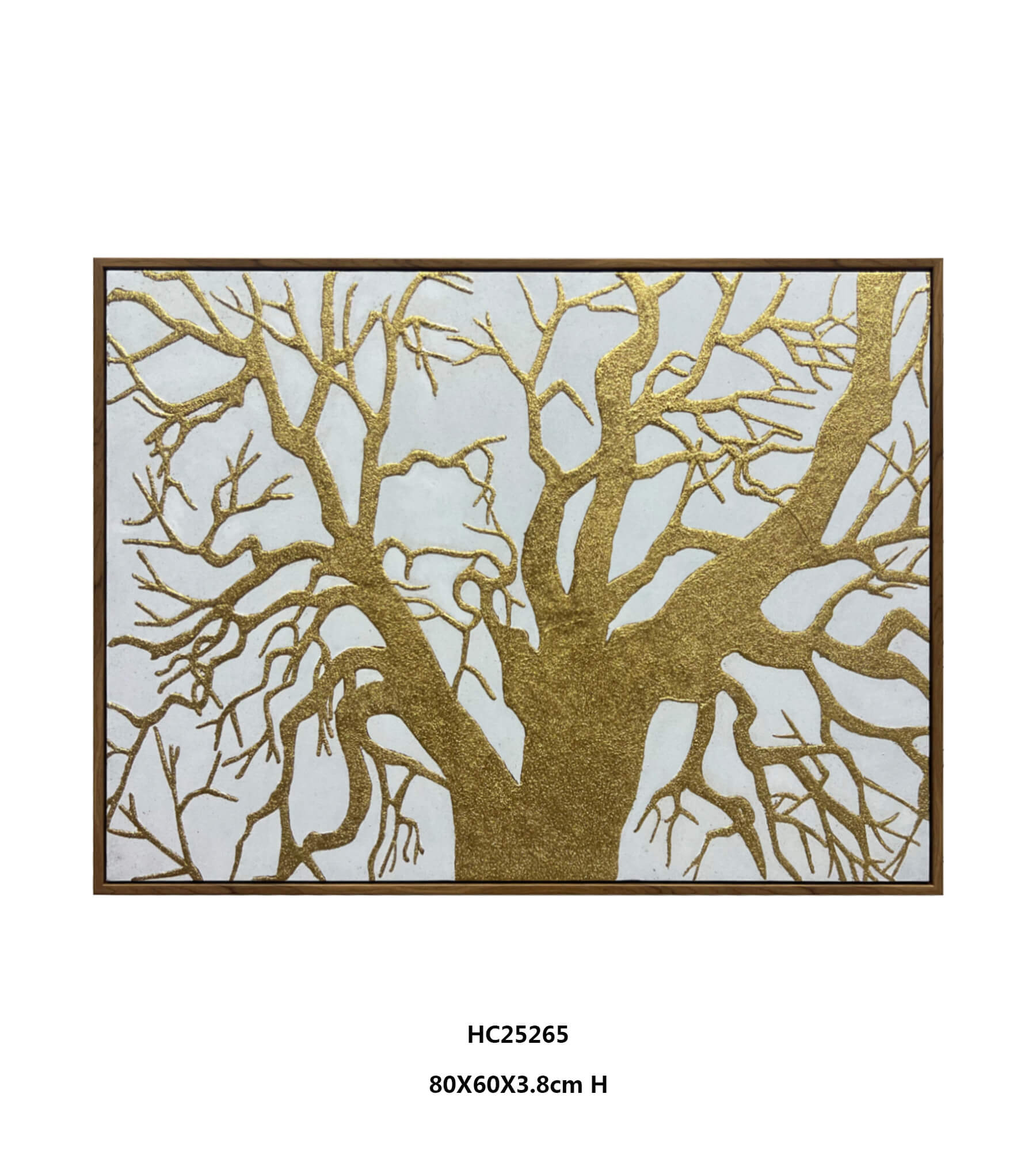
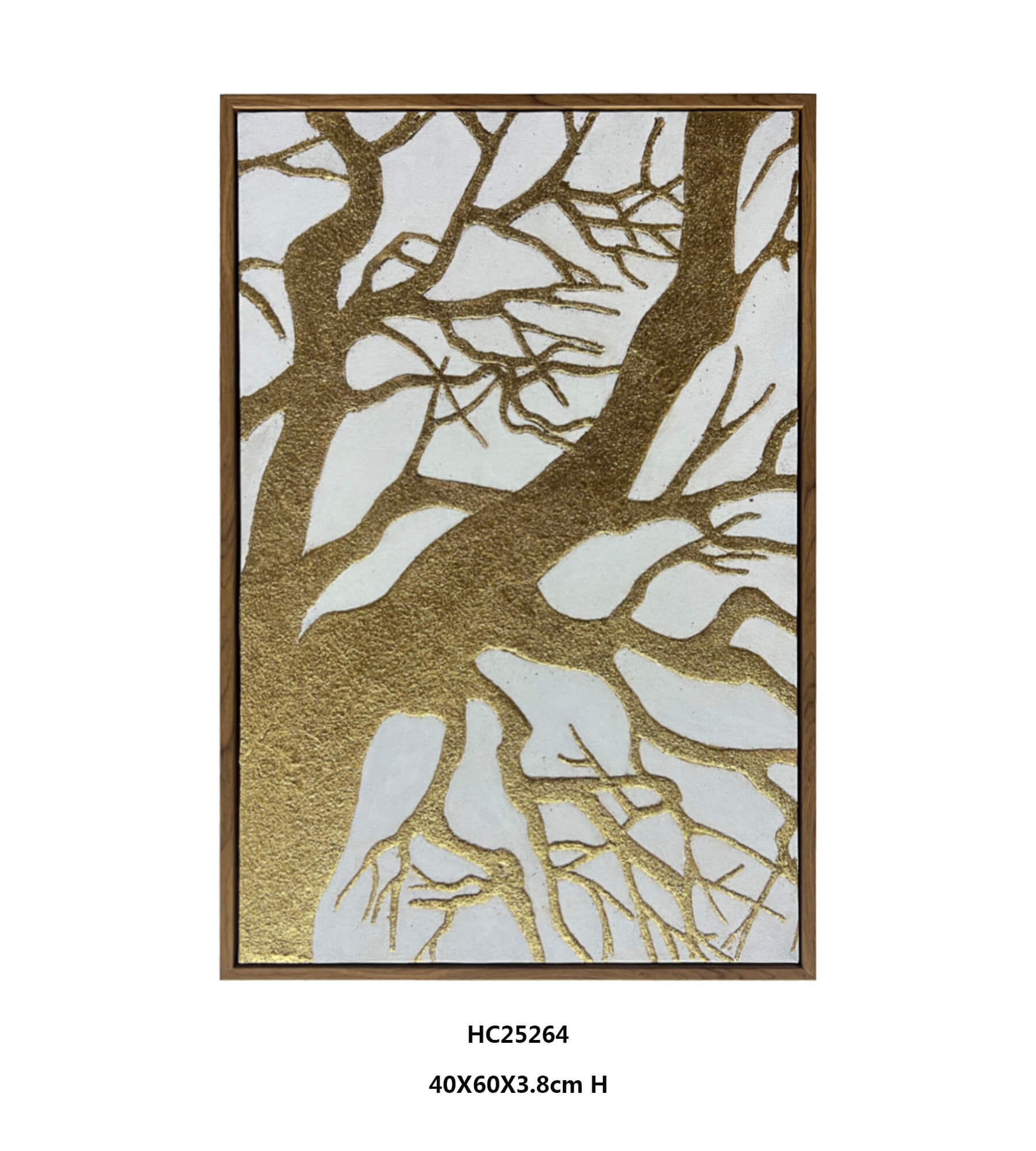

The same tree motif can feel expansive in a horizontal frame and more focused in a vertical one. When choosing textured gold tree wall art, consider where the branches lead your eye as well as where the frame will fit.
Choosing the Right Format for Textured Gold Tree Wall Art
These hand-painted gold leaf designs share a pale gray background, textured golden branches, and wood-tone frames. Yet each composition offers a different view of the tree. The frame determines which parts of the trunk and branches take priority.
Getty’s guide to the elements and principles of art describes movement as the route our eyes follow through an artwork. This provides a useful way to compare these designs: follow the trunk first, then notice how the branches carry your gaze toward the edges.

Horizontal Gold Tree Art with Spreading Branches
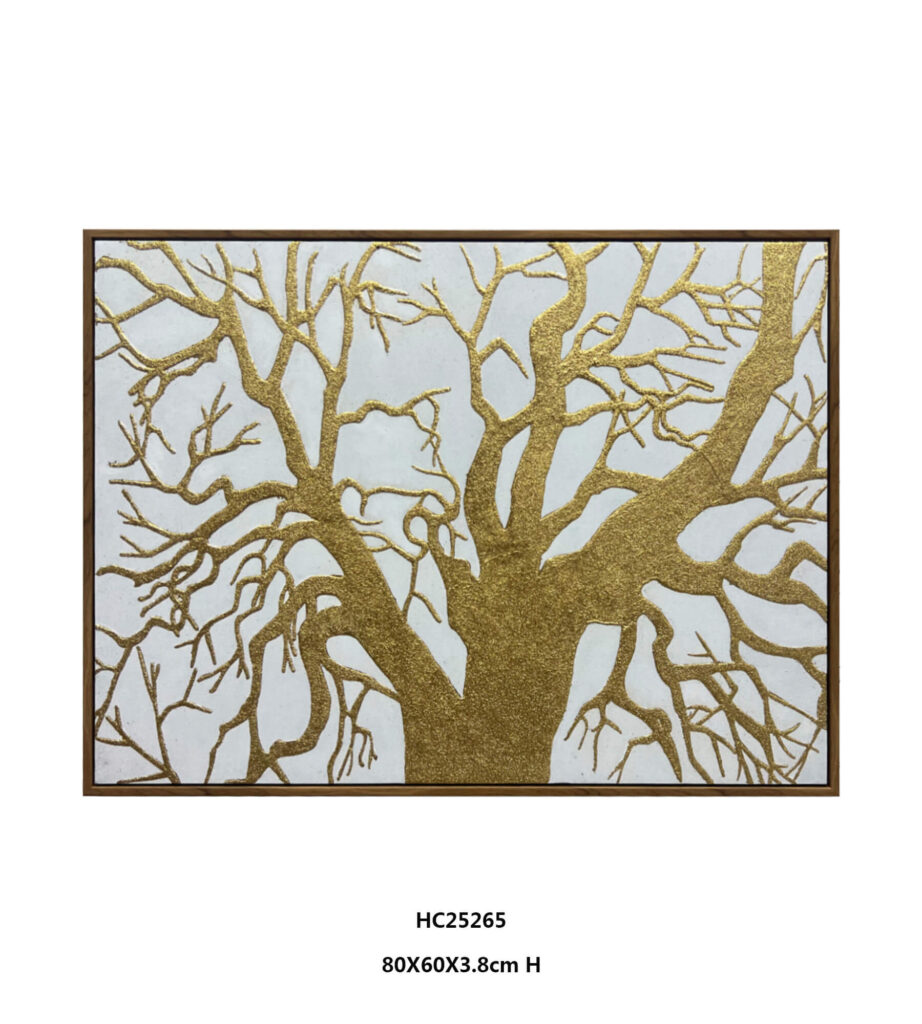
HC25265 gives the branching structure room to unfold across the picture. The trunk anchors the lower center, while limbs extend toward both sides. As a result, the composition encourages a broad, sweeping view.
This format can sit comfortably above a compact sideboard or small seating area, where its width echoes the furniture below. However, orientation alone does not determine scale. On a wide sofa wall, check the actual frame dimensions before choosing a single piece.
Keep tall accessories toward the sides of the display so they leave the central trunk visible.
Vertical Tree Wall Decor with Distinctive Lines
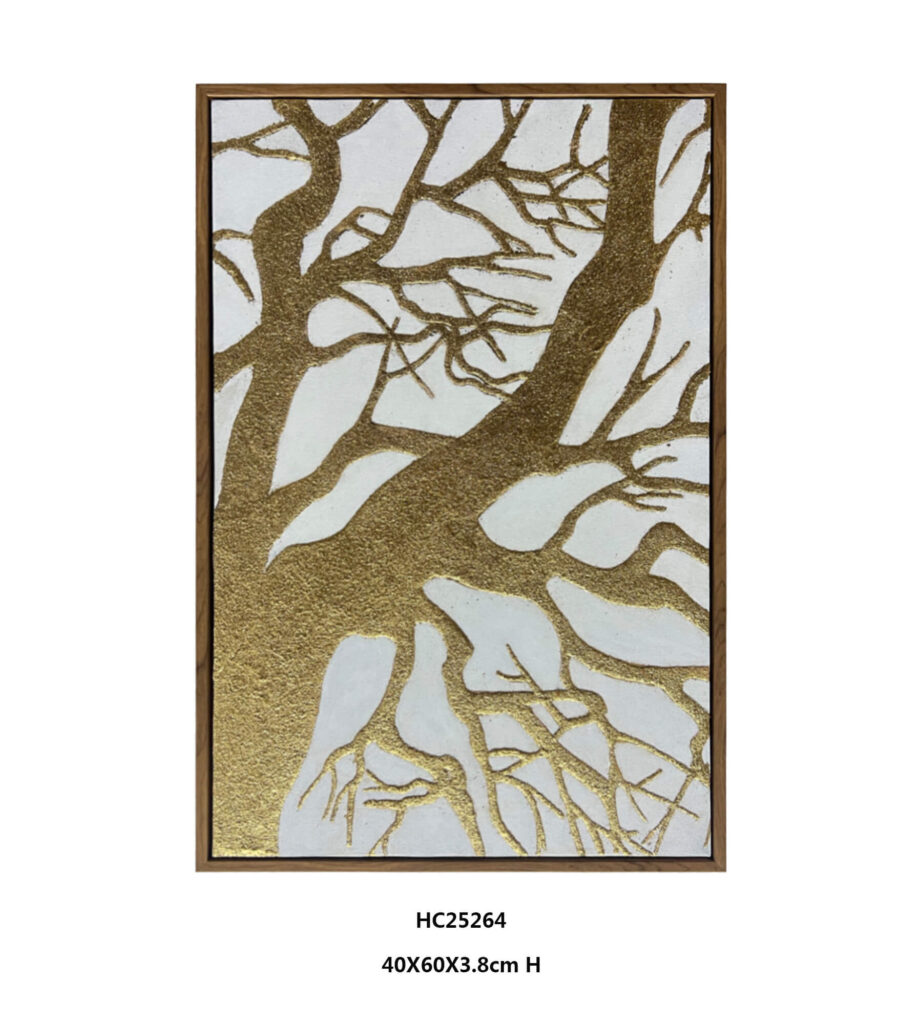
HC25264 places a strong, curving trunk within a taller frame. Its diagonal movement gives the composition energy, making it a useful focal point on an entryway wall or beside a console.
Meanwhile, HC25266 emphasizes branching trunks and interlacing limbs. The open gray areas between them help separate the gold shapes. This design rewards a closer look, particularly where people naturally pause.
For vertical gold tree wall decor, look for a wall section with enough height and clear space on either side. Avoid squeezing the frame between a door casing and a tall cabinet.
Wall Proportion Before Frame Orientation
Start by measuring the available wall area and any furniture beneath it. Then mark the proposed frame outline with removable tape or a paper template suitable for your wall finish.
View the outline from the doorway and your usual seat. Check whether it feels balanced with the furniture, lamps, and nearby artwork. A vertical picture may suit a narrow section, while a horizontal piece can relate more closely to a low cabinet.
Viewing distance matters too. From farther away, the gold tree silhouette is the main feature. At closer range, the textured surface and hand-painted details become easier to appreciate.
A Single Statement or a Coordinated Pair
A single gold leaf tree branch painting gives one composition your full attention. Pairing HC25264 and HC25266 creates a wider arrangement while retaining the upward emphasis of their vertical frames.
Before hanging a pair, place both pieces upright on a protected surface and compare their branch directions. Choose an order, align the top edges, and include the gap when measuring the total display width.
For more options, browse Wallartura’s مجموعة «لوحات أخرى» to compare textured designs and frame proportions. Use the same measurements to judge how each piece would sit within your room.