In the previous article, Stellora Wall Art mainly introduced basic issues such as wood selection, carving techniques, cracking issues, thickness, and large-size customization for wood-carved decorative paintings.
However, for customers who are actually preparing to purchase or customize wood-carved decorative paintings, more practical questions will arise, such as: Can wood-carved paintings be produced according to their own patterns? Can colors be customized? Will large-size wood carvings be too heavy? How should they be installed? And in which spaces are they suitable for application?
Below, we continue to provide detailed answers to questions 6-10 that customers frequently ask.
1. Can wood-carved decorative paintings be customized according to patterns provided by customers?
Yes, and pattern customization is a very important part of wood-carved decorative paintings.
Customers can provide design drafts, high-resolution images, hand-drawn sketches, CAD files, AI vector files, or even just a spatial rendering or a favorite reference image. We can redesign according to the actual production process.
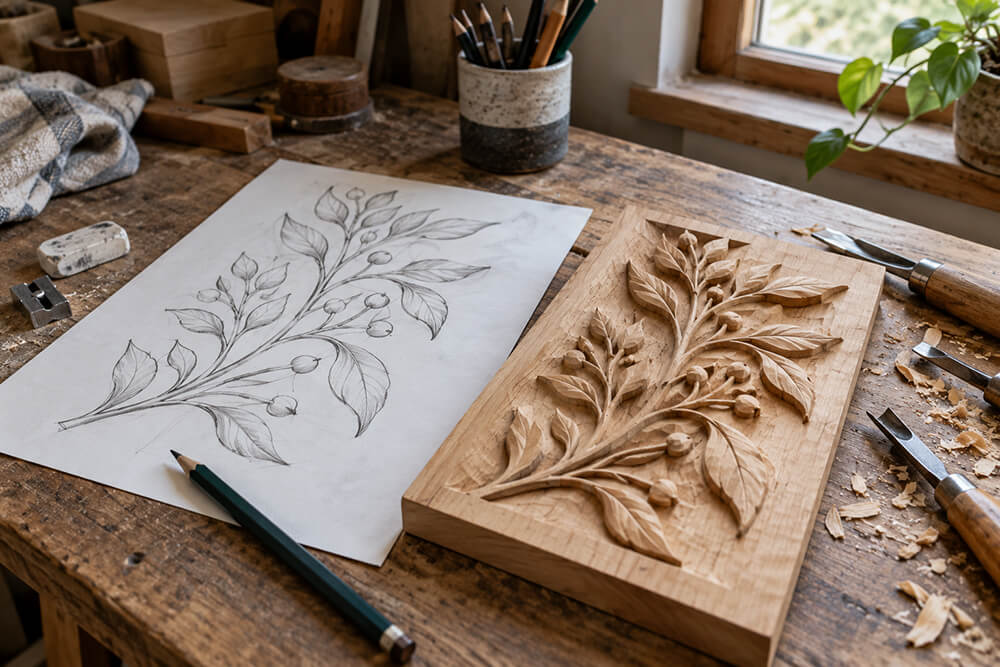
However, ordinary images cannot be directly transformed into wood carvings.
Wood carving design must consider many structural issues, such as which parts need to be raised, which need to be recessed, which areas can be hollowed out, and whether the lines have sufficient connection strength.
For example, if a simple picture of a leaf is directly carved, some parts may be too fine and prone to breakage. Therefore, the designer needs to readjust the line width and connection positions according to the characteristics of the wood.
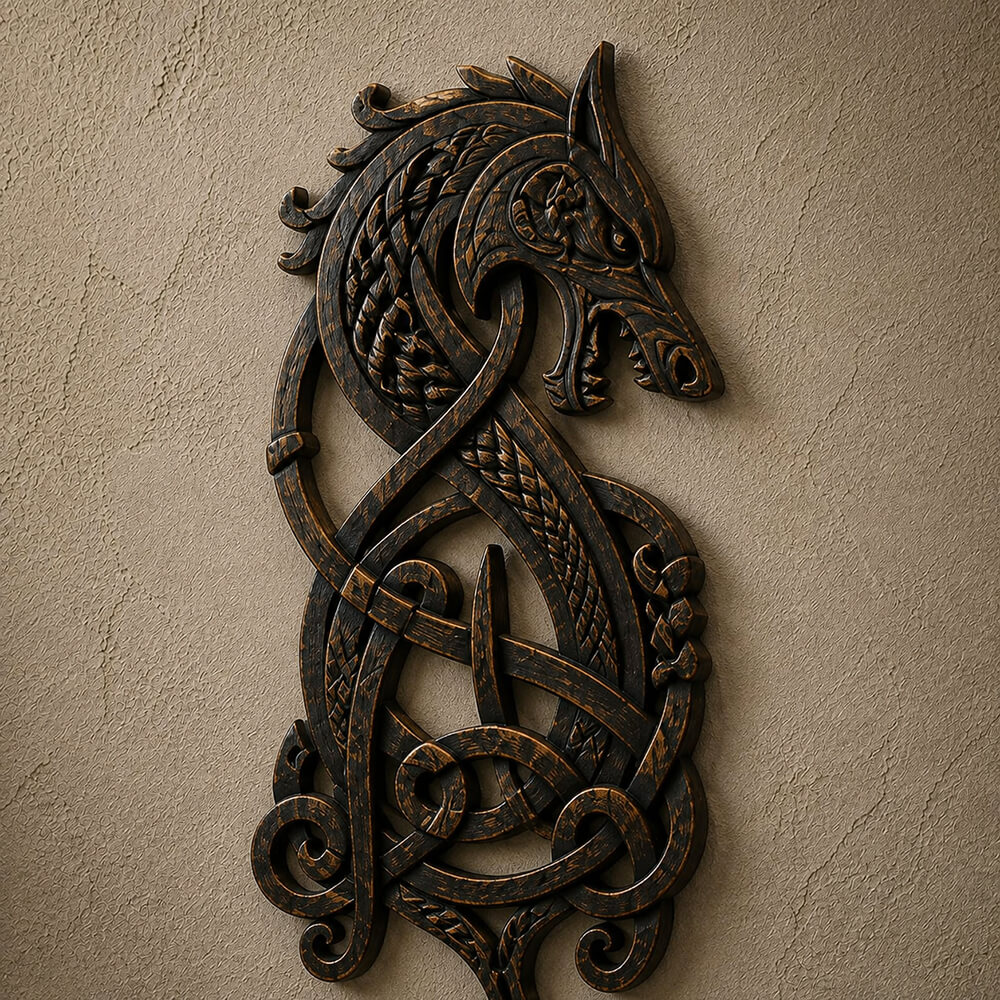
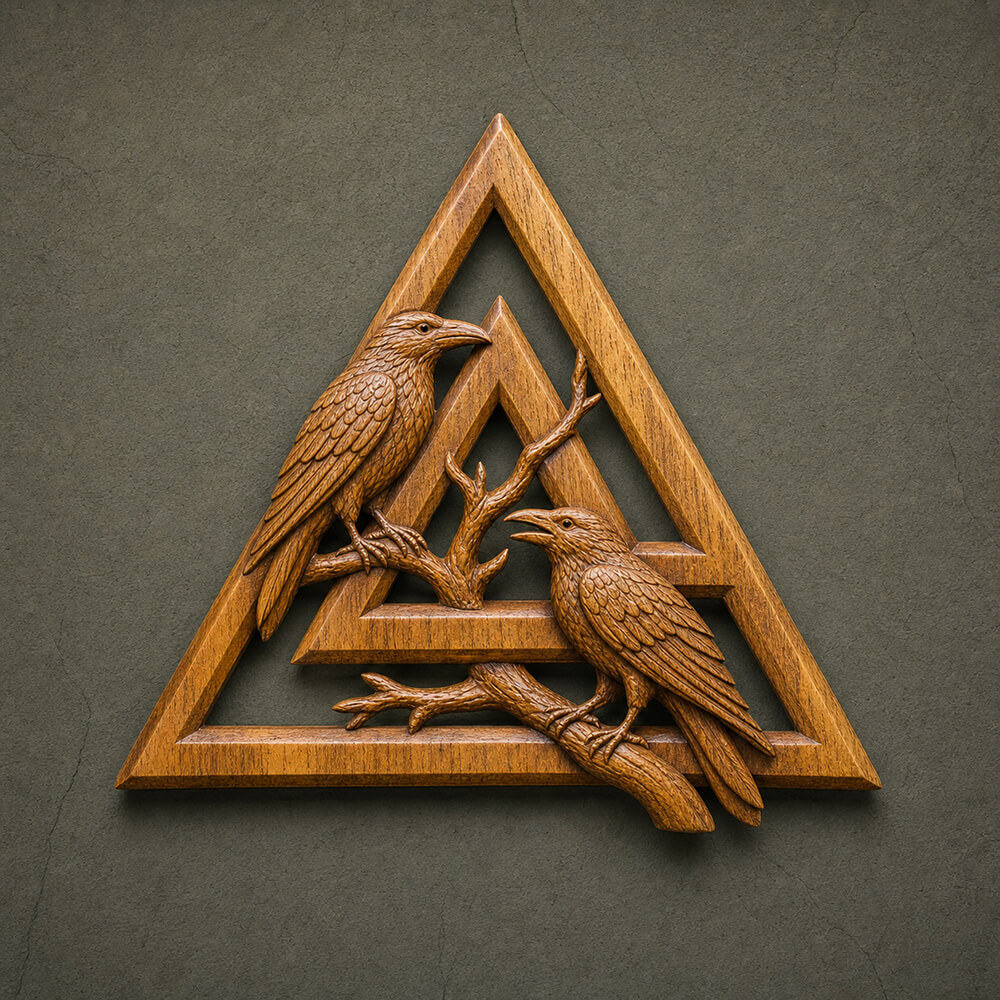
Common custom themes include abstract geometry, plant leaves, tropical plants, landscapes, animals, human silhouettes, mandalas, Buddhist elements, oriental patterns, Boho patterns, and modern minimalist art.
For hotels, guesthouses, restaurants, clubs, and commercial spaces, exclusive patterns can also be developed based on the brand’s visual identity system.
If the client has their own brand, their logo, text, or special graphics can also be incorporated into the wood carving design.
Therefore, true wood carving customization is not simply “carving from a picture,” but rather transforming a two-dimensional design into a three-dimensional structure suitable for wood production.
2. Can the color of a wood carving be customized?
Yes.
Many people believe that wood carvings can only retain the original wood color. In fact, modern wood carving products can undergo a wide variety of surface treatments.
The most common approach is to preserve the natural wood grain, then protect it with wood wax oil, stains, or varnishes to make the wood’s natural texture more prominent.
Different staining techniques can be used if a client requires a specific style.
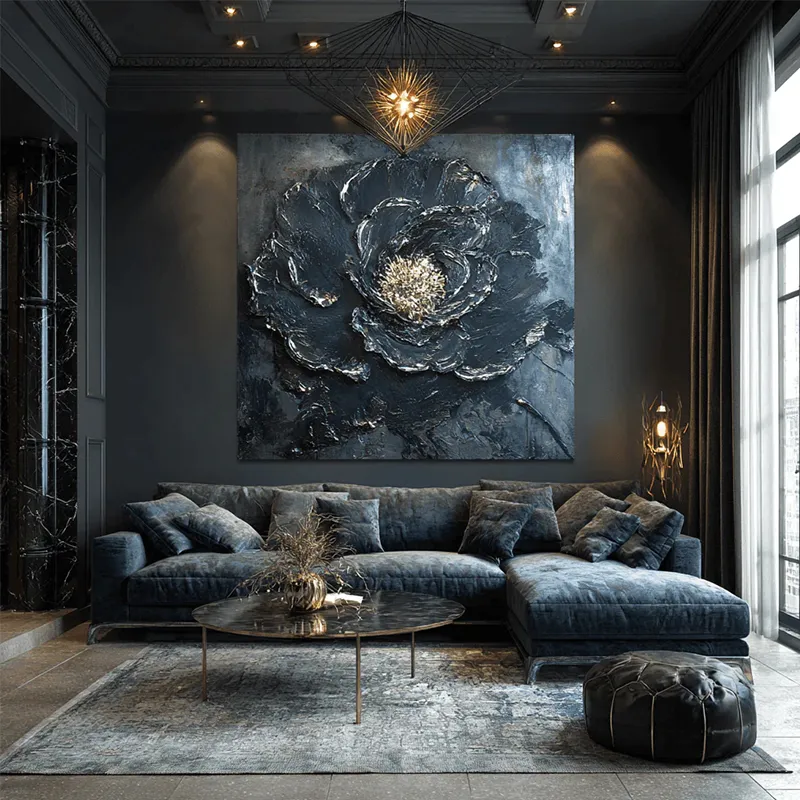
For example, black, walnut, dark brown, and natural wood colors are common in modern minimalist spaces; light wood colors, off-white, and natural distressed effects are more suitable for Boho or resort styles; and gold, bronze, silver, or champagne gold effects can be incorporated into European and luxury styles.
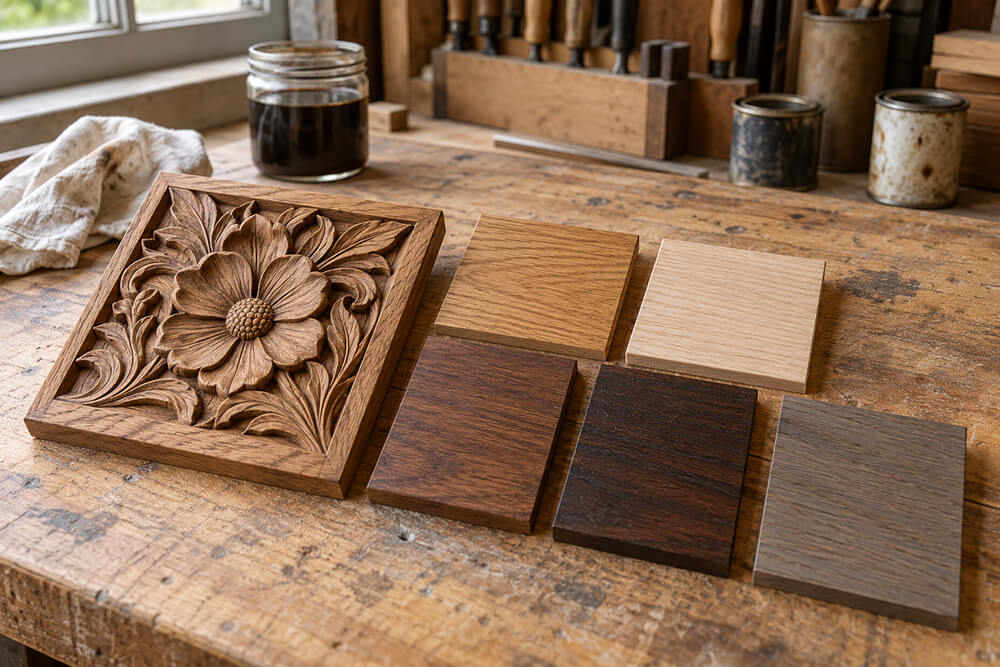
For wabi-sabi, natural, and art hotel projects, softer shades like beige-grey, sand, light brown, and stone-like textures can also be created.
Some high-end pieces also employ multi-layered color treatments.
For example, a dark base stain is applied first, then the wood grain is highlighted through hand-rubbing, and finally, a partial distressing is applied to create a natural color difference between raised and recessed areas.
This surface treatment significantly enhances the three-dimensionality of the wood carving.
For project clients, if the interior design scheme has been finalized, color matching can also be developed based on Pantone color codes, furniture colors, or wall colors.
3. Are wood carvings heavy?
The weight depends primarily on the type of wood, size, thickness, and structure.
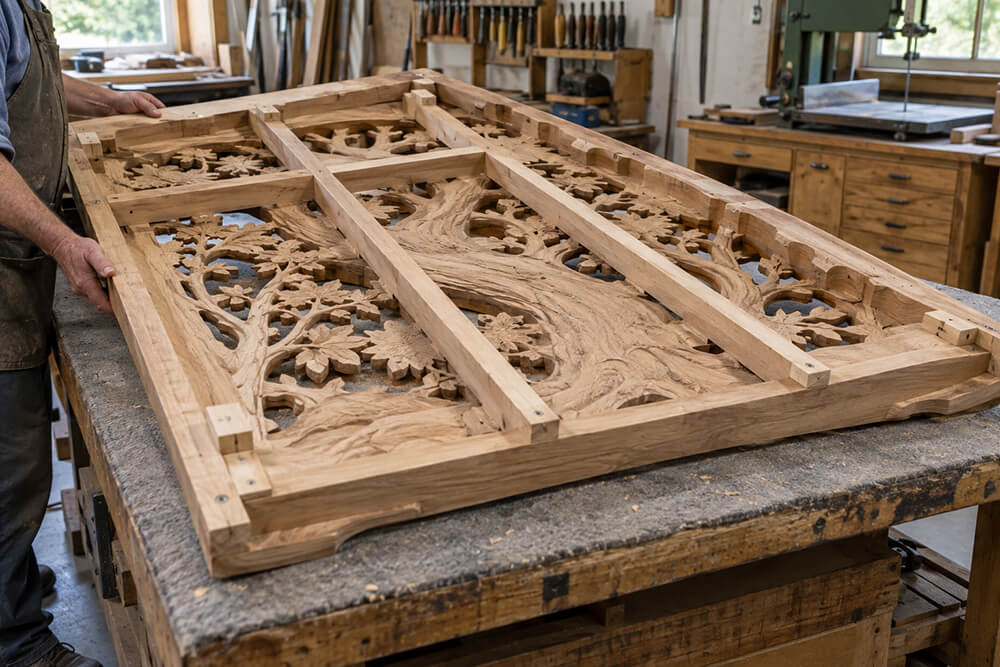
For example, a 100×100 cm piece made from a thick, solid piece of wood will be noticeably heavier; using openwork, bas-relief, or structurally optimized wood panels can significantly reduce weight.
Therefore, large wood carvings cannot only consider the visual appeal from the front; installation and transportation must also be considered during the design phase.
For ordinary residences, weight control is crucial for the structural integrity of the walls; for hotel projects, where dozens or even hundreds of wood carvings are needed in each guest room, weight becomes an even more critical engineering parameter.
When developing large wood carvings, Stellora Wall Art minimizes unnecessary weight through structural optimization.
For example, areas where carving is unnecessary can be weighted down at the back, or a thick structure can be replaced with a multi-layered composite structure.
This reduces the amount of wood used while maintaining the visual appeal from the front.
This is equally important for international trade clients.
Wood carvings are relatively large products. If a single piece is too heavy, not only will transportation costs increase, but packaging, protection, and handling costs will also rise accordingly.
Therefore, excellent wood carving designs need to balance “three-dimensionality” and “lightweight design.”
4. How should wood carvings be installed?
The installation method needs to be designed according to the product’s size and weight.
Small wood carvings can usually be installed on the back with ordinary metal hooks, D-rings, or hanging ropes, allowing customers to hang them directly on the wall upon receipt.
Medium to large wood carvings are more suitable for using concealed metal hooks or French Cleat mounting strips.
French Cleat is an installation method very suitable for large wall art. It usually consists of two parts: one part is fixed to the wall, and the other part is installed on the back of the artwork, with the two parts interlocking.
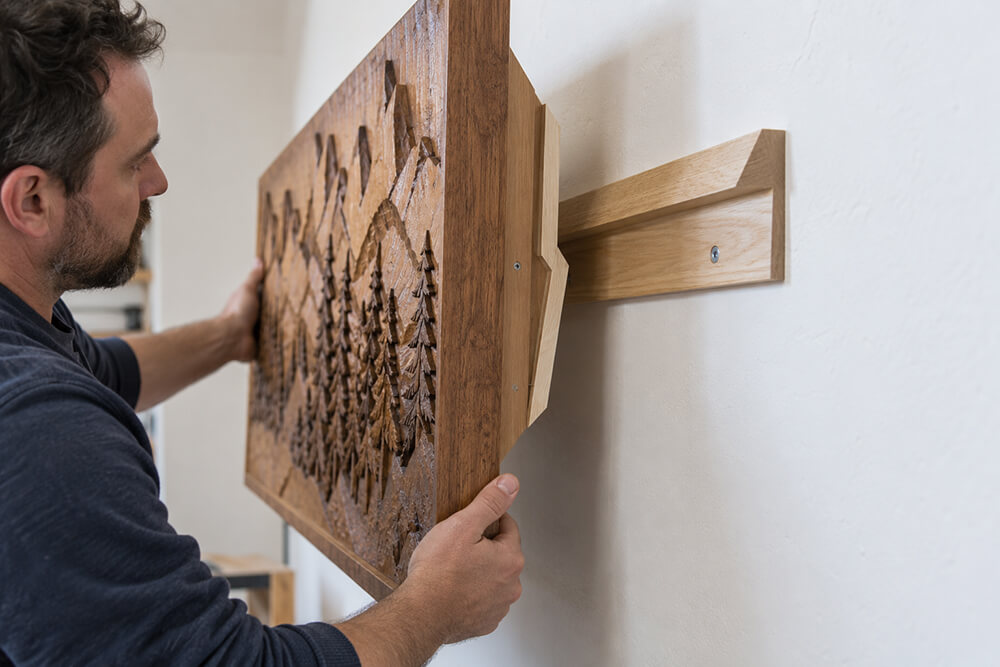
This structure makes the artwork more stable while keeping the installation accessories invisible from the front.
For large multi-panel wood carvings or engineering projects, a standardized installation template can also be designed in advance.
For example, if a hotel has 200 rooms and uses the same wood carving in each room, the placement of the carvings can be standardized, allowing installers to install them directly according to fixed dimensions.
This significantly improves on-site construction efficiency.
The mounting hardware used will differ depending on whether the wall is concrete, brick, plasterboard, or wood-framed.
Therefore, for heavier pieces, we generally recommend choosing appropriate expansion screws, wall clips, or specialized installation parts based on the actual wall conditions.
5. In which spaces are wood carvings suitable?
One of the biggest advantages of wood carvings is their adaptability to a wide variety of interior design styles.
In residential spaces, they can be used for living room feature walls, sofa backdrops, entryways, bedrooms, studies, stairwell walls, and hallways.
Compared to ordinary printed paintings, wood itself adds warmth and a natural feel to a space, making it particularly suitable for interior designs that aim to reduce the coldness of a space.
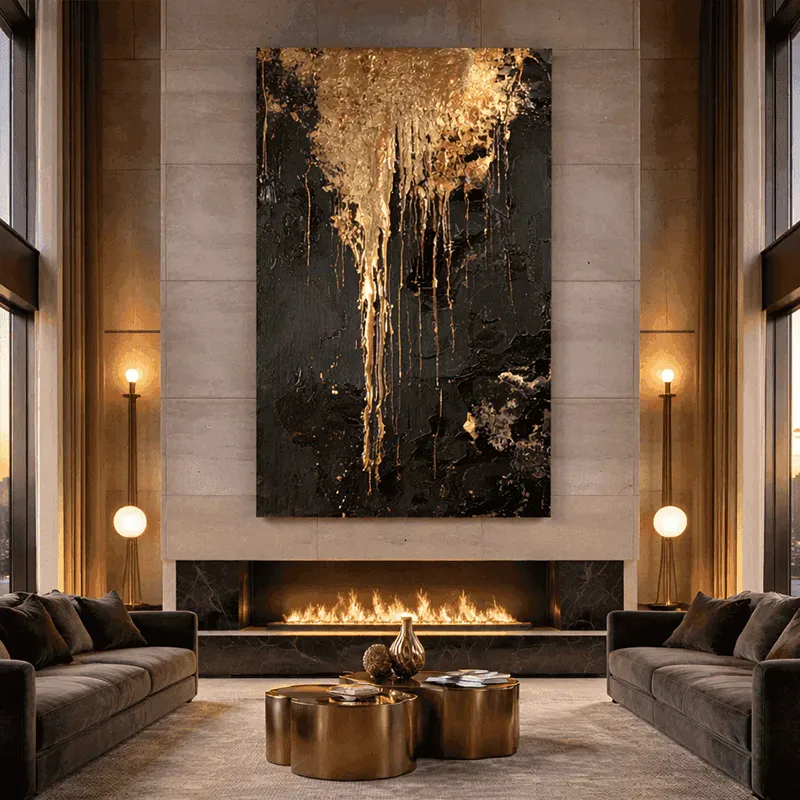
In villas and high-end residences, large-scale wood carvings are often used as a visual focal point.
For example, using a large abstract wood carving in a high-ceilinged living room, or installing a multi-panel wood carving wall at a staircase corner, can create a strong sense of spatial layering.
Hotels and resorts are also very important application scenarios for wood carving decorative paintings.
Especially in tropical resorts, nature-themed hotels, spa hotels, and boutique guesthouses, wood carvings can create a very harmonious visual effect with stone, rattan, greenery, and natural textiles.
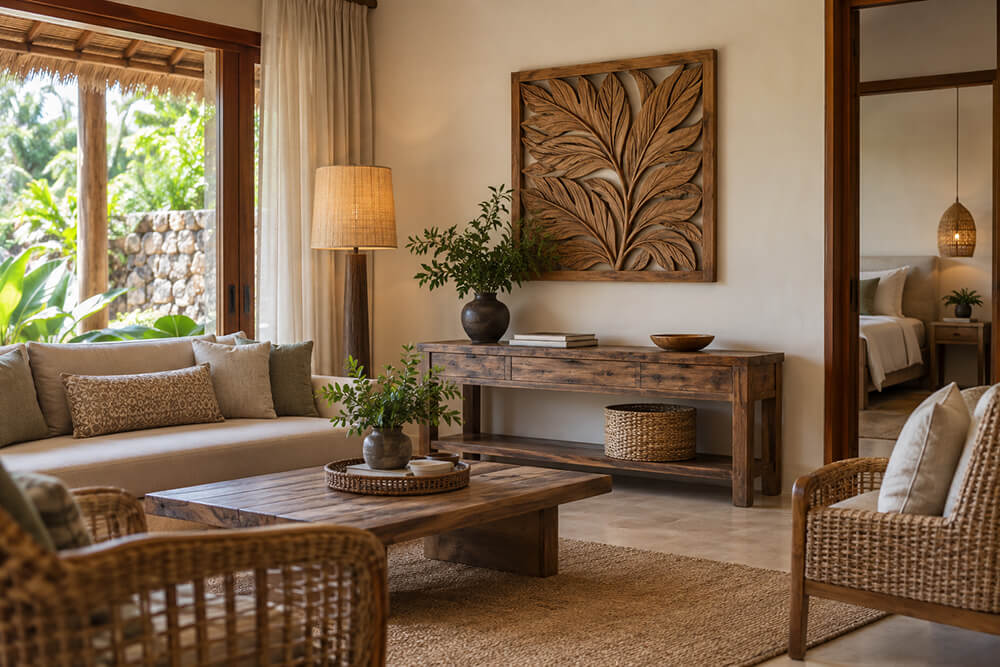
Furthermore, wood carving decorative paintings are also very suitable for restaurants, cafes, tea rooms, spas, yoga studios, private clubs, offices, and commercial spaces.
Different spaces can achieve completely different styles simply by adjusting the pattern and color.
For example: Modern offices can use black or dark walnut geometric wood carvings;
Spa spaces can use lotus flowers, leaves, or natural textures;
Hotel rooms can use light wood abstract patterns;
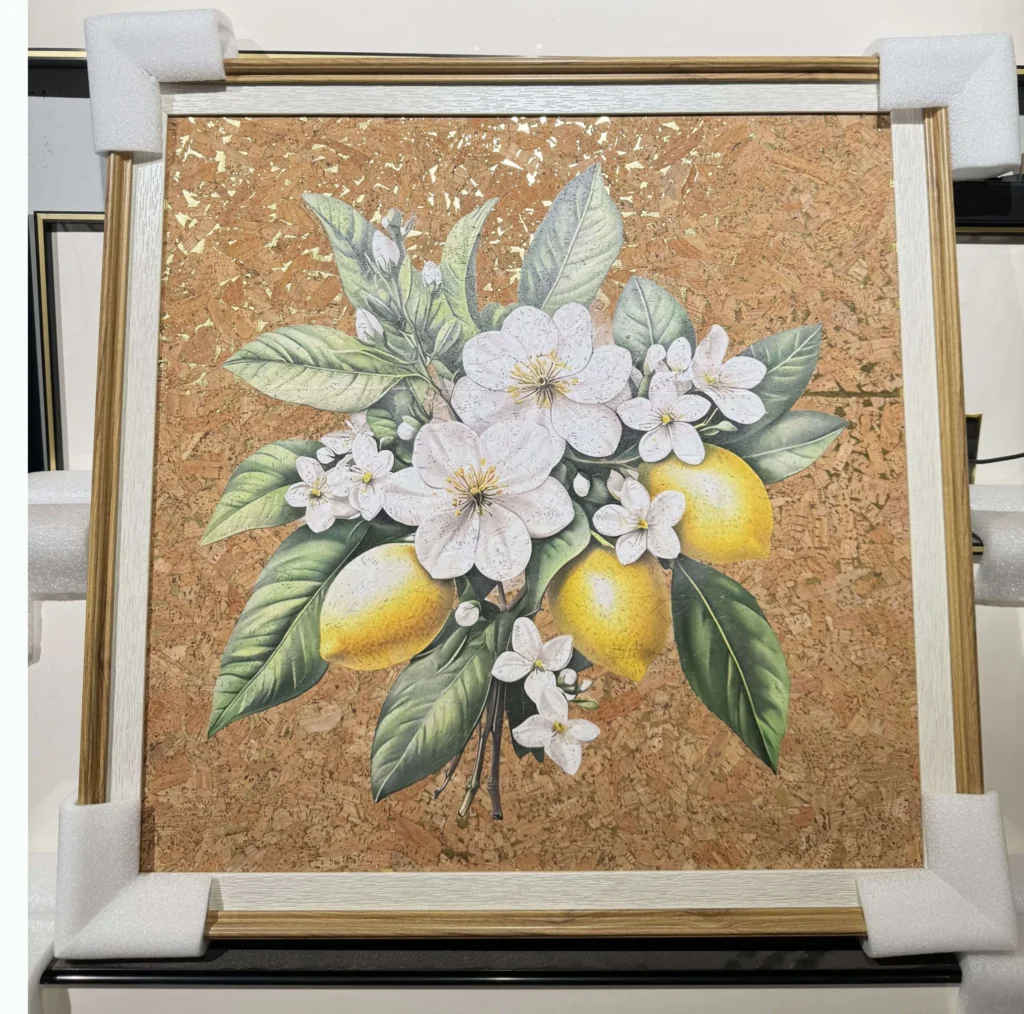
Restaurants and cafes can use vintage distressed or botanical-themed wood carvings.
Stellora Wall Art: Making Wood Carving Truly Integrate into Spatial Design
A high-quality wood carving decorative painting is more than just choosing a beautiful pattern and carving it.
A truly complete customization process requires considering the pattern structure, color, weight, installation method, and the final environment in which it will be used.
For private residences, the emphasis may be more on artistry and personalization, while for hotels, furniture brands, and large commercial projects, further considerations are needed regarding consistency in mass production, installation efficiency, packaging methods, and long-term stability.
Decoración mural Stellora can develop wood carvings based on client-provided designs, reference images, or spatial plans, adjusting the wood, size, color, carving depth, and installation structure according to different projects.
Whether it’s a single residential wood carving or a hotel project order of dozens or hundreds of pieces, we can consider practical production and installation issues from the design stage.
Good wood carvings should not just be a product on the wall, but an integral part of the overall spatial design.