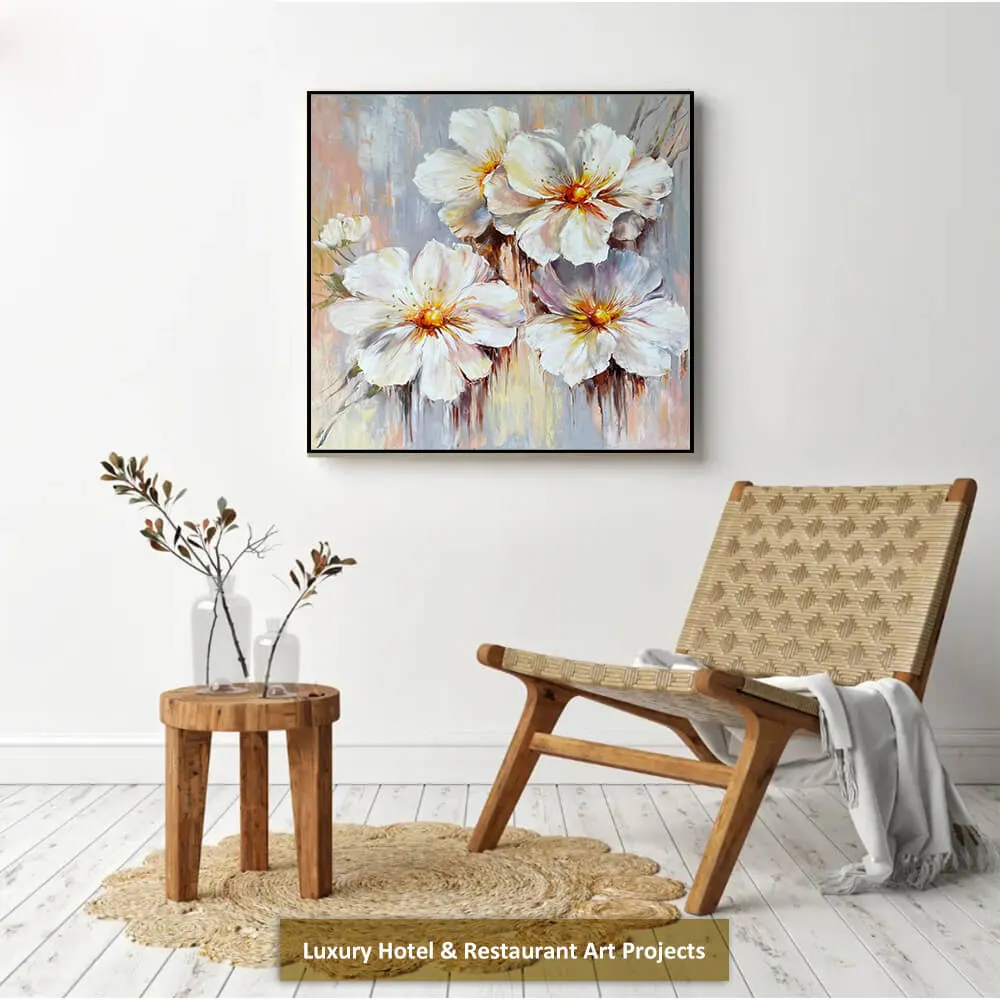
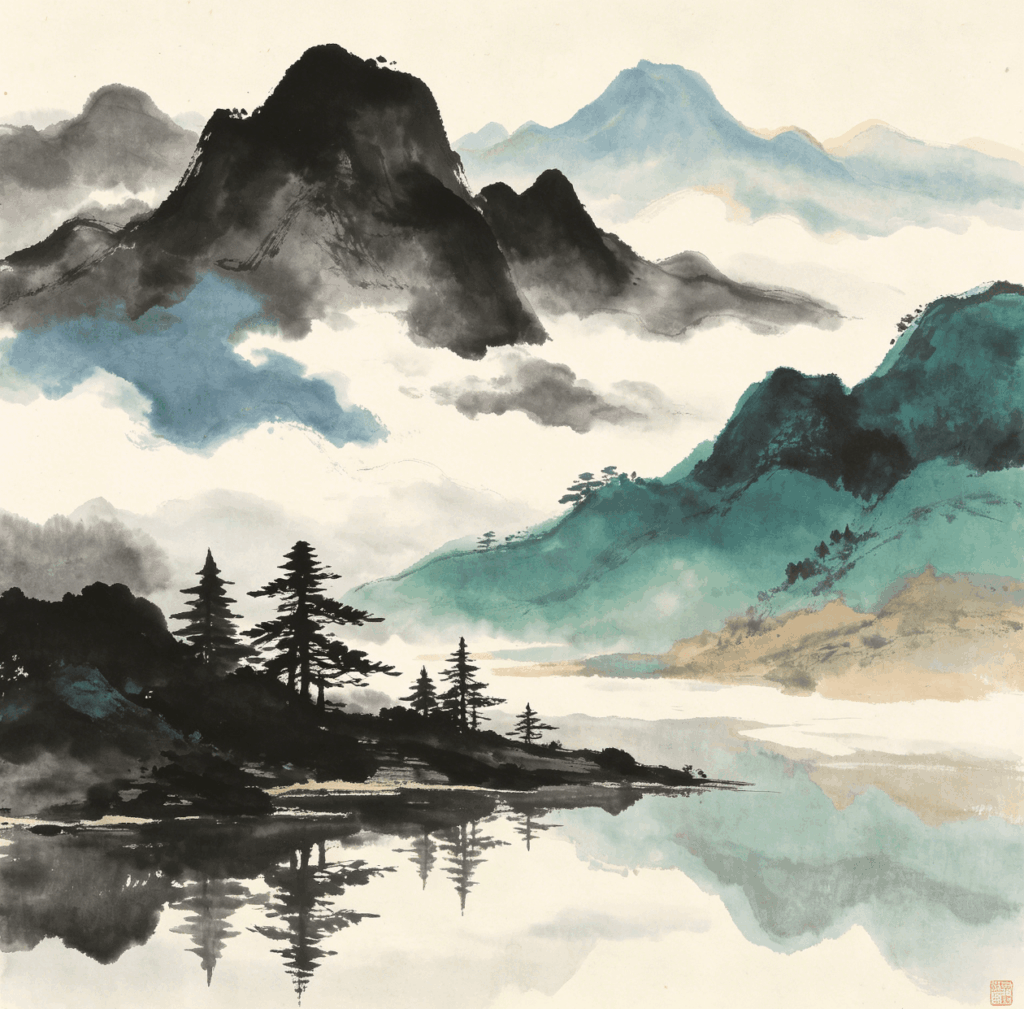
From mist-covered peaks to mineral-blue mountain panoramas, Chinese and Asian art offers more than a decorative view. Its visual language combines natural forms, expressive brushwork, open space, and cultural meaning. These qualities make it suitable for modern homes, hotels, restaurants, villas, and carefully planned commercial interiors.
The Cultural Meaning and Visual Language of Shanshui Art
Chinese landscape painting, known as shanshui ( “mountain and water”), is a major tradition of Chinese art. Traditional examples often use mountains, rivers, brushwork, ink, color, and empty space to express the relationship between people and nature. Rather than recording one fixed view, many works combine observation, memory, imagination, and poetic thought.
Chinese and Asian Art as a Broad Cultural Field
Chinese art includes painting, calligraphy, ceramics, sculpture, textiles, and decorative objects. Asian art is a broader regional category that includes distinct traditions from China, Japan, Korea, South Asia, and Southeast Asia.
Therefore, shanshui should be presented as one important Chinese tradition within the wider field of Asian art. Japanese ink painting and Korean landscape painting share historical connections with Chinese painting, but each developed its own techniques, subjects, and cultural identity.
The Meaning of Shan Shui
The term shanshui literally means “mountain and water.” These two elements represent more than physical scenery. Mountains suggest stability and height, while water introduces movement, change, and reflection.
Many traditional landscapes create a sense of inner travel. The viewer may move through the composition from a nearby path to distant peaks, misty valleys, pavilions, and rivers. Small human figures often appear within the landscape, emphasizing the relationship between human life and the larger natural world.
The Visual Language of Chinese Landscape Painting
Brushwork and Ink Variation
Traditional Chinese artists use brush pressure, direction, speed, and ink density to create different textures. Dry brush can suggest rough rocks, while softer washes can describe mist, water, or distant mountains.
The brushstroke is therefore more than a method of describing an object. It also carries rhythm, movement, and the artist’s personal expression.
Empty Space and Atmospheric Depth
Blank areas in a painting are not simply unfinished sections. They may represent clouds, fog, water, sky, or visual distance. This controlled use of empty space allows the composition to breathe.
As a result, a shanshui painting can feel spacious even when it is displayed in a compact format. This quality also makes Chinese-inspired landscape art suitable for calm and uncluttered interiors.
Multiple Viewpoints and Poetic Layers
Chinese landscapes do not always depend on one fixed viewpoint. In particular, long handscrolls allow the viewer to experience the scenery gradually from one section to another.
Many literati paintings also combine landscape imagery with poetry, calligraphy, and seals. The artwork becomes a combination of image, written thought, and personal expression.
Chinese Landscape Art and Western Landscape Traditions
Chinese shanshui and Western landscape painting developed different visual tendencies, although neither tradition follows one single rule.
- Spatial construction: Chinese landscapes often use shifting viewpoints and layered distance, while Western traditions have frequently used linear perspective and a more fixed viewpoint.
- Surface and technique: Chinese painting emphasizes brush lines, ink tones, and controlled washes. Western painting has often focused on light, color, texture, and three-dimensional modeling.
- Human and nature: Chinese landscapes commonly place people within a larger natural setting. Western landscapes may focus more strongly on topography, atmosphere, travel, religion, or direct observation.
- Purpose: Shanshui can express contemplation, cultural learning, and harmony with nature. Western landscape painting includes many purposes, from documentation to symbolism and visual pleasure.
These differences describe broad tendencies rather than strict divisions. Both traditions include realistic, imaginative, symbolic, and highly expressive works.
Three Landmark Works in Chinese Landscape Art
Fan Kuan and Travelers Among Mountains and Streams
Fan Kuan’s Travelers Among Mountains and Streams is a major Northern Song landscape painting. The monumental mountain rises above tiny travelers and animals, creating a powerful contrast between human scale and natural strength.
The carefully layered foreground, middle distance, and background create an expansive sense of space. The work remains an important reference for understanding the monumental style of Song dynasty landscape painting.
Huang Gongwang and Dwelling in the Fuchun Mountains
Huang Gongwang’s Dwelling in the Fuchun Mountains is a famous Yuan dynasty handscroll. Instead of presenting one dramatic mountain, the work develops through connected scenes that include trees, water, hills, and distant settlements.
Its long format encourages a gradual visual journey. Smarthistory’s analysis of Dwelling in the Fuchun Mountains also explains the work’s historical importance and its connection with later Chinese painting.
Wang Ximeng and A Thousand Li of Rivers and Mountains
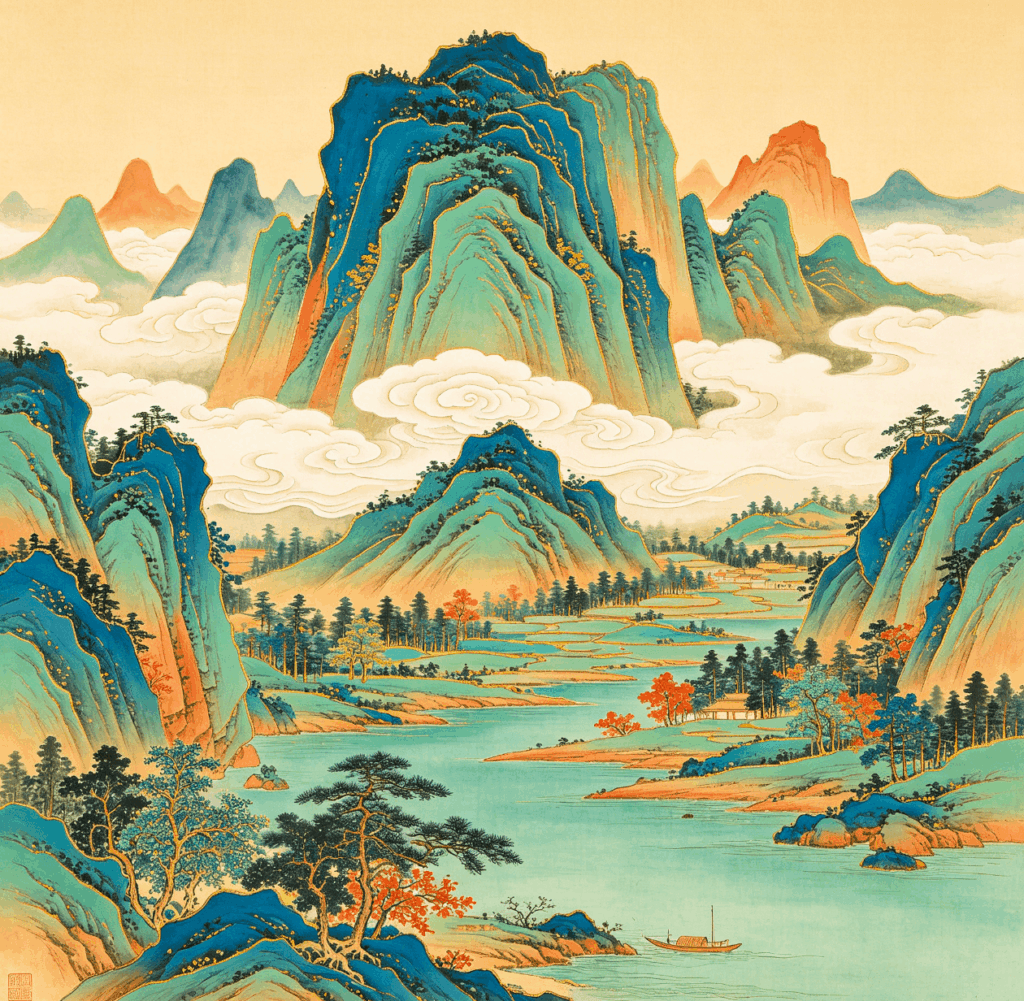
Wang Ximeng’s A Thousand Li of Rivers and Mountains represents the blue-green landscape tradition. Its rich mineral colors, panoramic composition, and detailed mountains create a more vibrant effect than monochrome ink painting.
The work demonstrates that Chinese landscape painting is not limited to black and white. Blue, green, turquoise, and warm mineral tones can also communicate grandeur, harmony, and poetic imagination.
Chinese and Asian Landscape Art in Modern Interiors
Modern interpretations of Chinese and Asian art can bring visual calm and cultural character to contemporary interiors. Ink-inspired artwork suits warm white walls, natural wood, beige upholstery, stone surfaces, and minimalist furniture.
Blue-green landscapes create a stronger color accent. They work especially well with cream, walnut, olive, muted gold, and soft gray. Vertical compositions suit entryways, staircases, studies, and bedroom walls. Horizontal landscapes are often more effective above sofas, consoles, dining tables, and hotel reception areas.
Frame Styles and Cultural Accuracy
Dark wood frames create a scholarly and traditional impression. Natural wood supports relaxed interiors, while black frames provide a sharper modern contrast. Gold or bronze details can complement blue-green landscapes and Chinoiserie-inspired rooms.
Bamboo-inspired frames, floating frames, and simple contemporary frames can all work with modern Asian wall art. However, they should be described as modern interpretations unless the frame has verified historical provenance.
Likewise, a modern oil painting or canvas reproduction influenced by shanshui should be described as Chinese-inspired or Asian-inspired art rather than an authentic ancient painting.
Planning Landscape Art for Interior Projects
Hotels, restaurants, villas, offices, and retail spaces often require more than one attractive artwork. Buyers may also need consistent dimensions, coordinated colors, repeatable framing, approved samples, clear packing details, and reliable production across multiple pieces.
For project references and material categories, visit Wallartura’s custom wall art project gallery. Reviewing completed projects can help designers compare scale, framing, surface treatment, and the visual relationship between artwork and interior architecture.