Founded in Austria in 1895, Swarovski built its reputation on precision-cut crystal and light-catching design. The word “crystal” can refer to different materials, so it helps to distinguish Swarovski crystal glass from naturally formed gemstones and from the laboratory-grown diamonds in the brand’s newer jewelry collections.
Understanding Swarovski Crystal Glass and Its Signature Brilliance
Swarovski Crystal Glass and Its Material
Swarovski crystal is a manufactured crystal glass, not a naturally formed mineral crystal or a diamond. Its appearance comes from the material’s light-reflecting qualities and the precision of its cut. Swarovski describes its crystal formulas as proprietary, so specific ingredient lists should not be presented as confirmed details unless the company has published them.
The formula has also changed over time. Swarovski’s 2021 sustainability report says the company reduced the lead content in its crystal to no more than 0.004 percent. For this reason, describing present-day Swarovski crystal broadly as “high-lead glass” can be misleading.
The Craft Behind Swarovski Crystal Brilliance
Swarovski’s characteristic sparkle is closely tied to its cutting and finishing. Faceted surfaces redirect light, creating flashes of brightness as the crystal moves or catches changing light. The result is designed for strong visual impact rather than the natural rarity associated with mined gemstones.
That distinction also explains why Swarovski crystal and natural crystal are not interchangeable terms. Swarovski crystal is a manufactured decorative material; a natural crystal forms through geological processes. Both can be attractive, but they have different origins and material properties.
Swarovski Crystal Compared With Lab Grown Diamonds
Swarovski crystal glass and laboratory-grown diamonds are separate product categories. Crystal glass is a manufactured material used for decorative sparkle. A laboratory-grown diamond is a diamond created in a controlled environment. It has essentially the same optical, physical and chemical properties as a mined diamond, while its origin is different.
For a gemological explanation of the similarities and differences between laboratory-grown and natural diamonds, see GIA’s comparison of natural and laboratory-grown diamonds.
Swarovski Created Diamonds also include a proprietary Octagon cut. The brand describes the cut as having 57 symmetrical facets, designed to create a distinctive geometric appearance and strong brilliance. This feature applies to its Octagon collection and should not be confused with the brand’s crystal glass.
Design and Brand Identity
Swarovski’s appeal combines material, cutting, styling and brand recognition. Its collections range from everyday jewelry and accessories to decorative objects, with designs that use shape, color and reflective surfaces to create a recognizable look.
The brand’s history in precision cutting dates to 1895. Over time, that craft became part of its identity: consumers often choose Swarovski for its design and visual effect as much as for the material itself.
Factors Behind Swarovski Pricing
Swarovski crystal is not priced like a rare natural gemstone. Retail prices can reflect design work, cutting and finishing, brand positioning, distribution and the materials used in each piece. Jewelry that includes precious metals or laboratory-grown diamonds belongs to a different price category from crystal accessories.
Prices also vary by product, collection and market. For readers comparing items, checking the current product description and local retail price is more useful than relying on a general price range. A brand name or a high retail price does not guarantee a similar resale value, so Swarovski crystal is best considered for its design and appearance.
Points to Consider Before Buying
Start by deciding which material and qualities matter most to you. Swarovski crystal can suit buyers who want a polished, light-catching look and recognizable design. Those looking for a diamond should check whether a piece contains a laboratory-grown or mined diamond, rather than crystal glass.
For Swarovski Created Diamonds, review the documentation for the specific piece. Swarovski says its Eternity, Galaxy and Octagon collections are assessed by the International Gemological Institute using the 4Cs of diamond quality. Certification and product details should be checked against the item being considered.
It is also useful to separate visual appeal from investment expectations. Swarovski crystal is generally chosen as a design accessory or decorative feature; resale value should not be assumed from the original retail price.
Swarovski Crystal in Home Décor
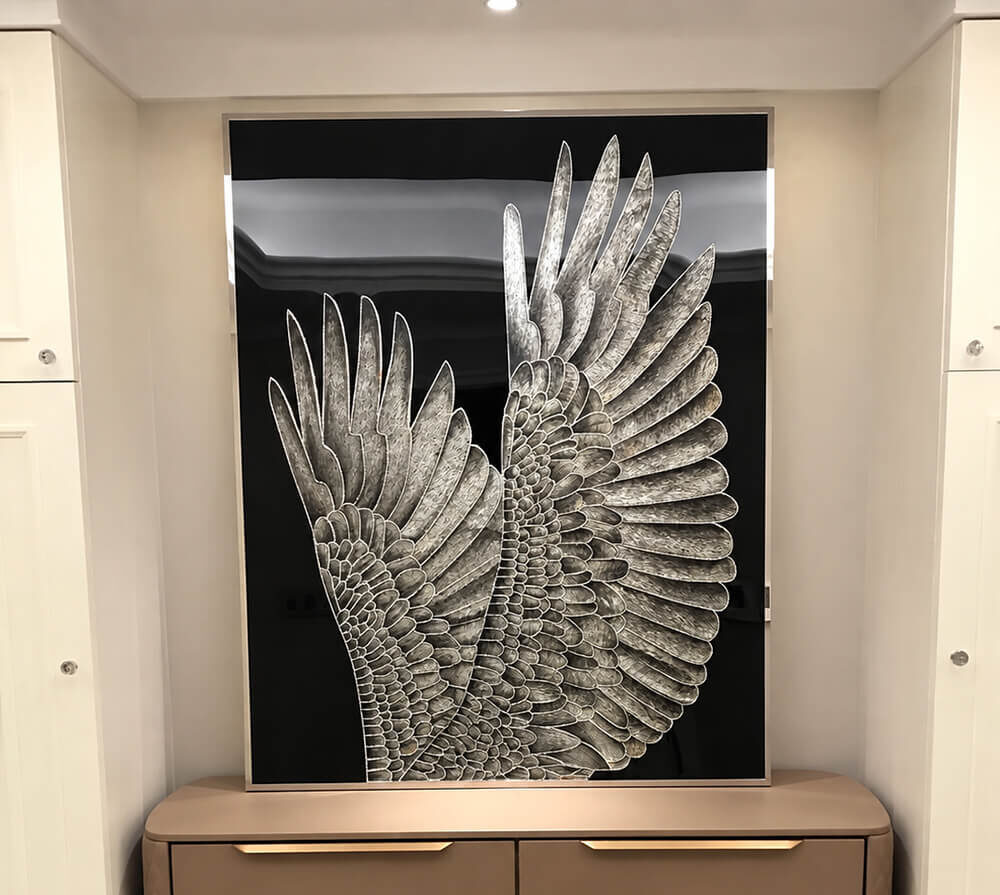
Swarovski crystals can add reflective detail to more than jewelry. In home décor, they can bring points of light and texture to statement pieces. For example, Swarovski crystal peacock wall art pairs crystal accents with a bold decorative design.
A Practical View of Swarovski Crystal
Swarovski’s distinction comes from its cutting expertise, visual style and brand identity, rather than from the rarity of crystal glass. Understanding the difference between crystal glass and laboratory-grown diamonds makes it easier to compare materials, prices and product claims. For many buyers, the appeal lies in the sparkle and design; the right choice depends on what they want a piece to do.