

Soft daylight brings out botanical shapes, while evening lamps can draw attention to metallic details. Black gold botanical wall art offers both, combining dark plant silhouettes, golden leaves, and muted blush foliage in a layered composition.
Seeing Black Gold Botanical Wall Art in Changing Light
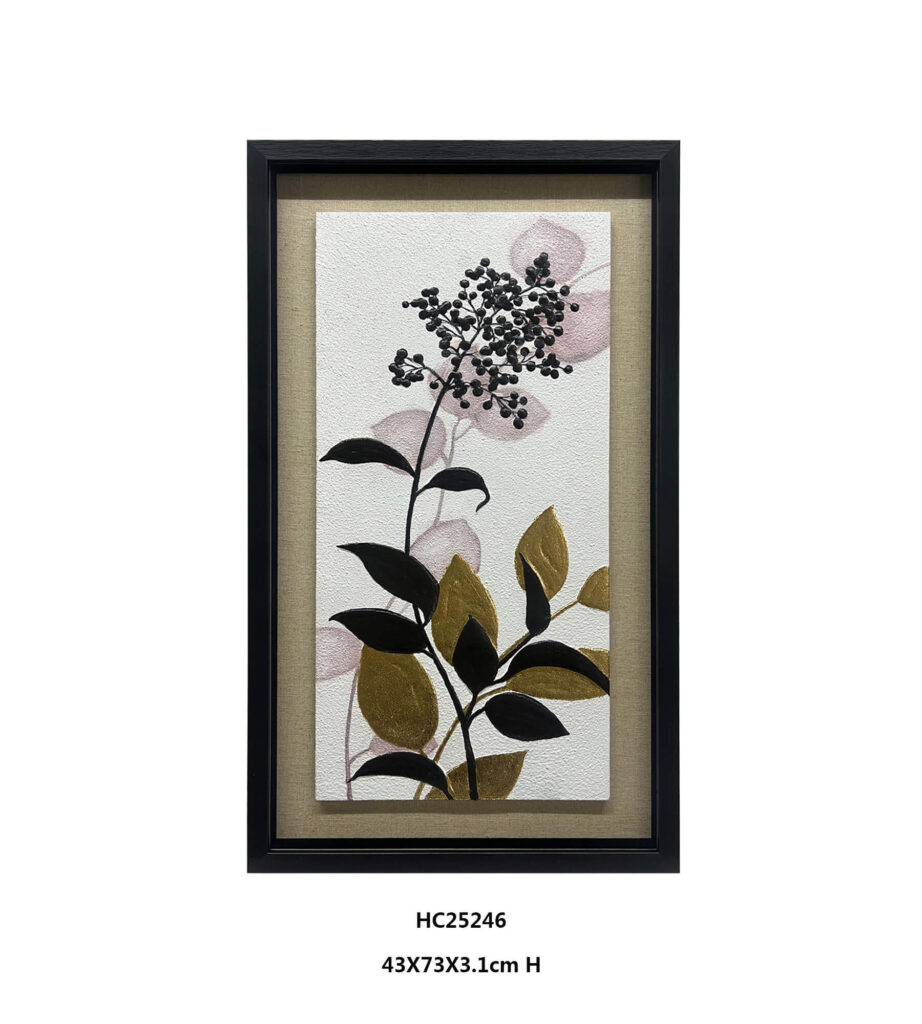
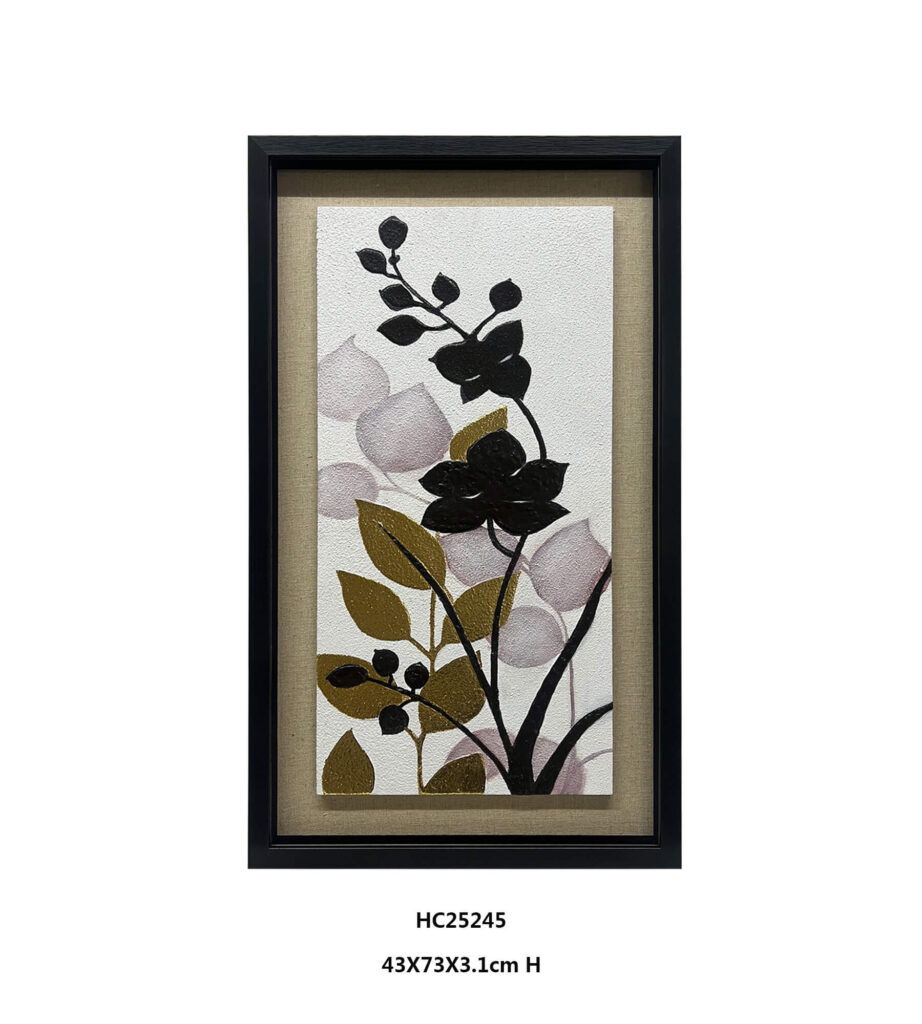
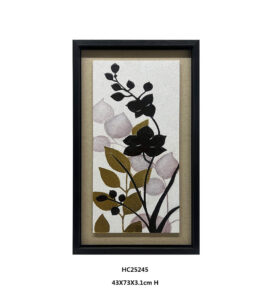
HC25245 and HC25246 feature hand-painted botanical designs with gold leaf and black metal frames. A pale background separates the overlapping shapes, while a warm beige border gives each composition a clear setting. Changes in light can alter which details attract your attention.
Black Gold Botanical Wall Art in Soft Daylight
Start with a wall receiving soft, indirect daylight. Look at the whole palette: black stems define the composition, gold leaves add warmth, and blush foliage creates a quieter layer behind them.
HC25245 draws the eye upward through flower and bud shapes. HC25246 places a rounded botanical cluster above crossing stems and leaves. From your usual viewing distance, check that you can follow these forms clearly.
Nearby cream fabrics or simple wooden furniture can complement the pale background. Keep surrounding patterns restrained so the plant silhouettes remain easy to appreciate.
Side Light Brings Out Gold Leaf Details
Light arriving from one side can reveal variations in the gold leaf’s appearance. Some areas may look brighter as the light or your viewing position changes, giving the metallic foliage a different emphasis.
Walk toward the artwork from the doorway, then pause in front and to either side. Notice whether the highlights complement the leaves or make part of the composition harder to see.
This approach works well for a gold leaf botanical painting in an entryway, where people encounter it from several angles. Choose a position that keeps the overall design clear along those everyday routes.
Evening Lamps and Comfortable Viewing
After dark, view the piece with the lamps you normally use. Begin with a shaded table lamp or an adjustable wall light, then check the artwork from your usual seat.
The Canadian Conservation Institute’s guidance on lighting artworks discusses reflections from shiny surfaces and recommends checking glare along viewers’ approach routes. For this display, apply that principle by checking both the frontal view and the path into the room.
If a reflection distracts from the plant forms, adjust the lamp position or direction. Keep enough surrounding light to see the frame, pale background, and relationship to nearby furniture.
Placement That Suits Your Daily Routine
For vertical botanical wall art in an entryway, assess the piece while standing and walking past. Beside a reading chair, check it while seated. These viewpoints help determine a useful height and lighting direction.
Before hanging, use a paper template to assess the frame’s proportions. Revisit the position during daylight and after the lamps are on. A suitable spot should let you enjoy both the layered design and its gold leaf details.
When comparing other pieces, consider metallic accents alongside color and shape. Wallartura’s botanical and mixed material wall art offers further designs to explore. Assess each option with nearby lamps and furnishings in place, using the lighting you live with every day.