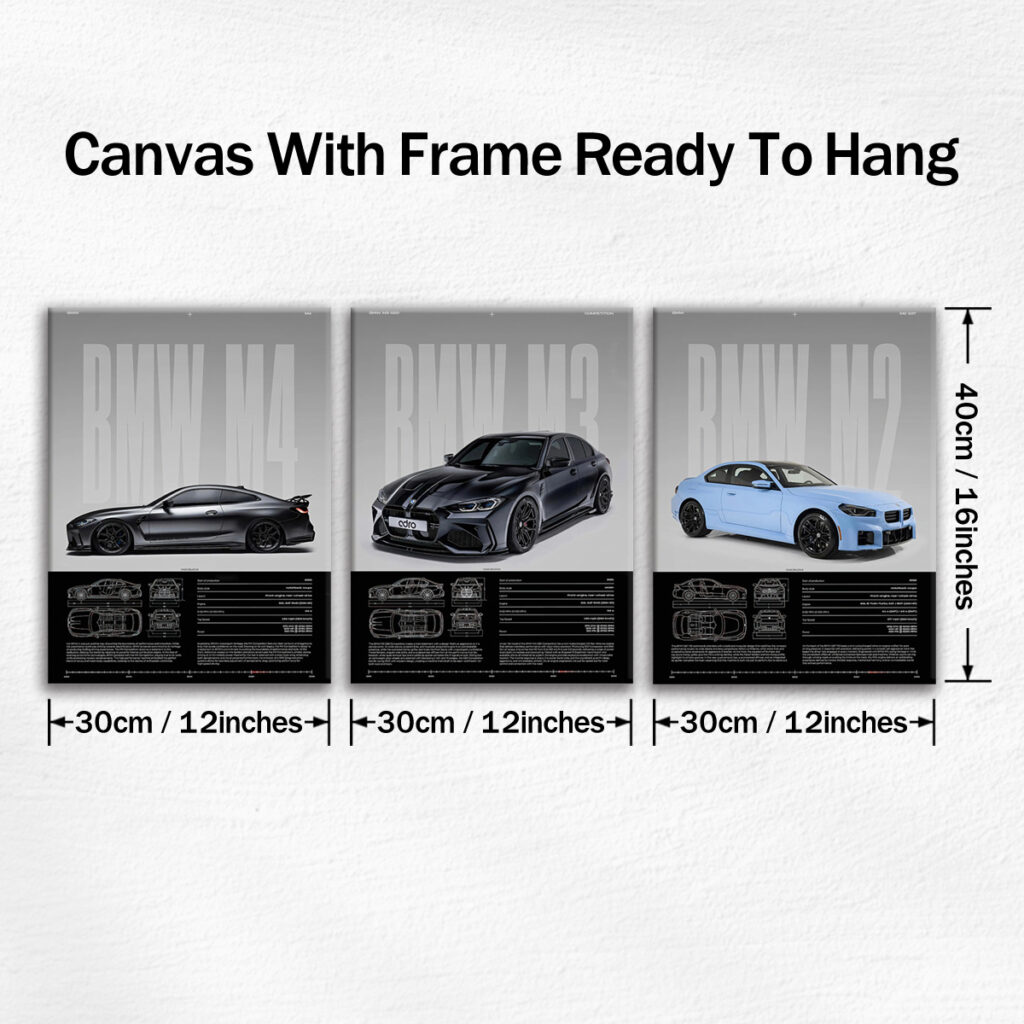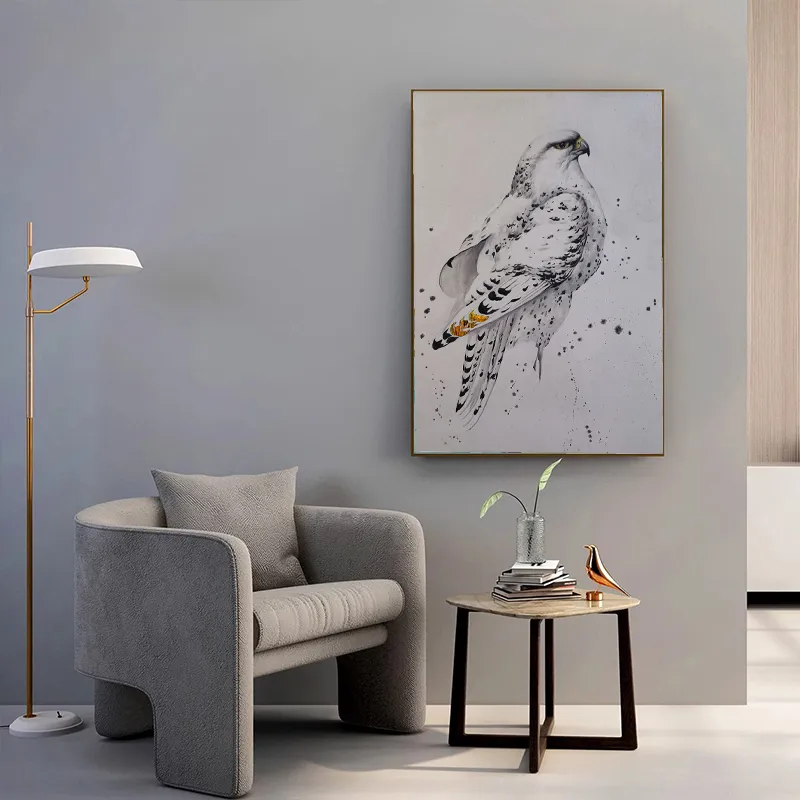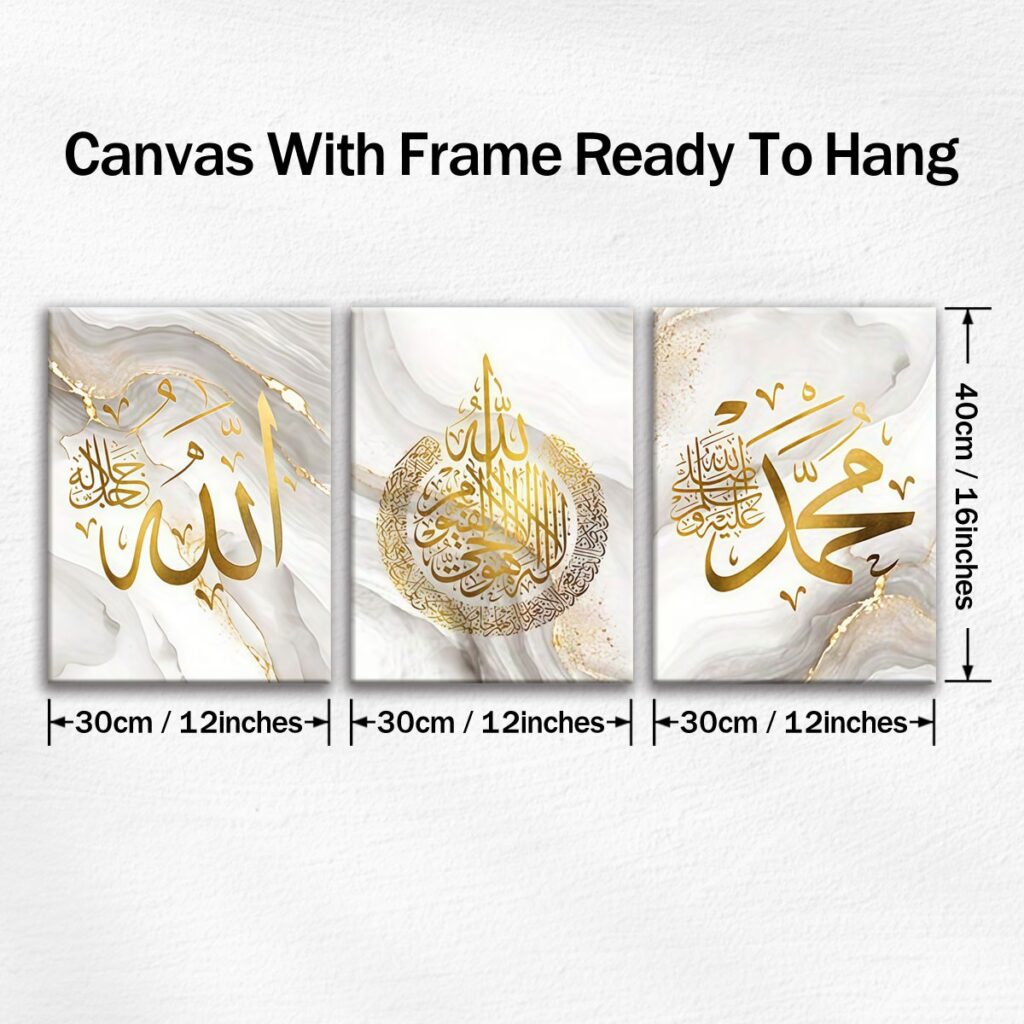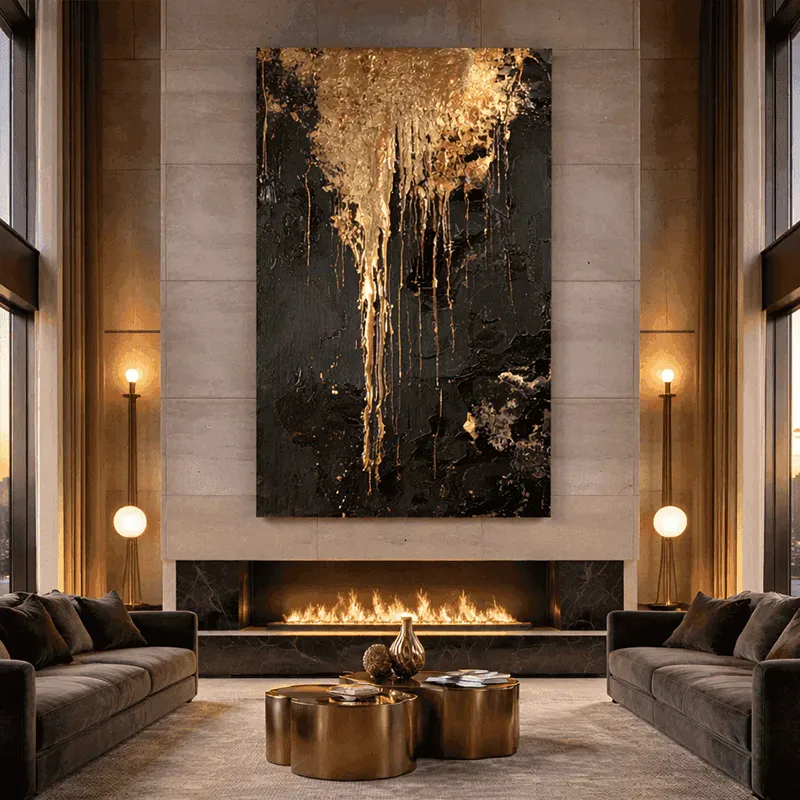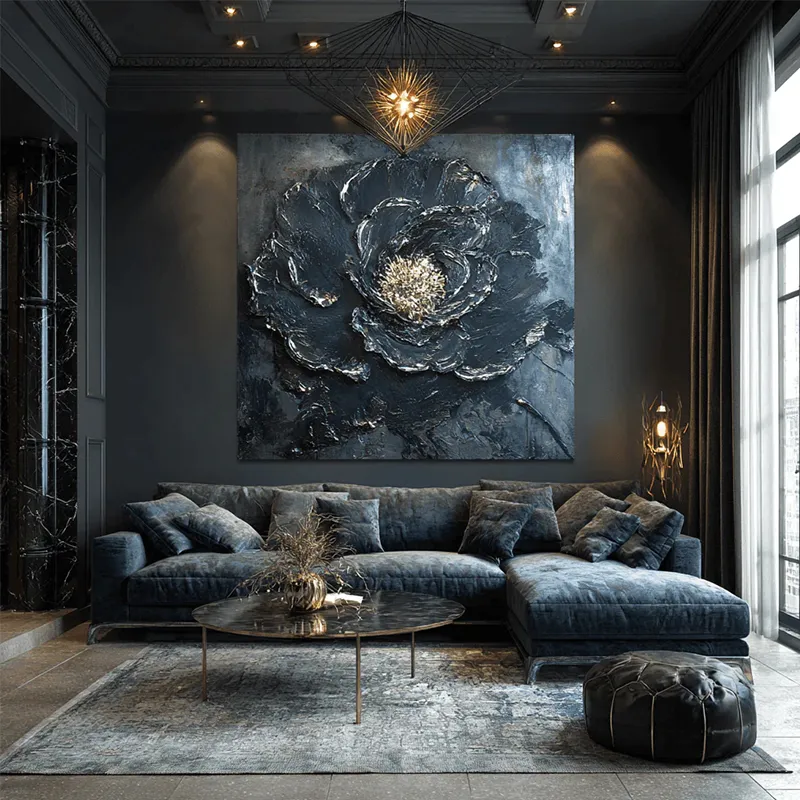
Many people choose wall art above a sofa based on instinct. They see an attractive product photo and place an order, only to discover after hanging it that the artwork looks tiny against a large blank wall, like a patch that does not quite belong.
Nine times out of ten, an unsuccessful arrangement comes down to choosing the wrong size, rather than choosing the wrong artwork. You do not need a background in interior design to get the proportions right. Remember the two-thirds rule, measure your furniture with a tape measure, and you can avoid most sizing mistakes.
In this article, we explain the two-thirds rule for wall art, show you how to calculate the dimensions of a single piece, a three-panel set, or a gallery wall, and cover how high to hang your artwork.
1. What Is the Two-Thirds Rule?
The principle is simple: artwork hanging above furniture should have a total width of approximately two-thirds the width of the furniture beneath it. This applies to both individual pieces and complete arrangements.
You do not need to follow one exact measurement. Aim for between two-thirds and three-quarters of the furniture’s width, or roughly 66%–75%. Even a range of 60%–80% can provide comfortable proportions.
The most common mistake is using the wrong reference point. Measure your sofa, not the entire wall. Many people choose artwork according to the width of the wall, assuming that a wider wall requires a wider arrangement. However, when you look at a living room, you naturally see the artwork and sofa as a group. The artwork should therefore relate primarily to the sofa beneath it.
The wall itself becomes the main reference only when there is no furniture below and the artwork needs to stand on its own.
Why two-thirds? Artwork that is as wide as the sofa, or wider, can make the arrangement feel crowded and top-heavy. Artwork that is too small can look overwhelmed by a substantial piece of furniture.
The two-thirds proportion keeps the artwork noticeably narrower than the sofa while giving it enough presence to connect the two visually. Balanced space on either side helps the arrangement feel intentional.
The calculation is straightforward:
Sofa width × 0.66 to 0.75 = target total artwork width
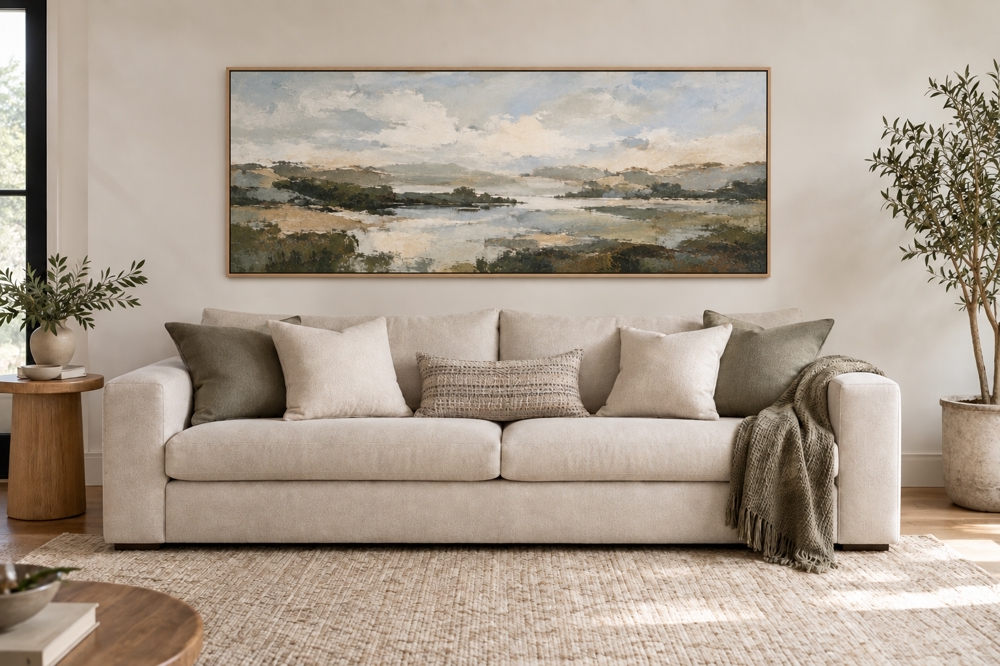
Measure the full width of your sofa, multiply it by 0.66 and 0.75, and use those results as your target range. When shopping, choose the closest available size within that range.
2. Calculating the Size of Single Pieces, Two-Panel Sets, Triptychs, and Gallery Walls
The two-thirds rule works for grouped artwork too. You simply need to consider the overall arrangement.
Single Artwork
A single piece is the easiest to size. Its width should fall within the target range calculated above.
For a living room with a strong focal point, a large horizontal piece is a straightforward choice. One substantial artwork can bring the space together and is relatively easy to position.
Once you have established the right size, consider how the artwork’s colors, materials, and style will fit your room. Our guide to choosing wall art for your living room explains how to bring these elements together.
Two-Panel and Three-Panel Sets
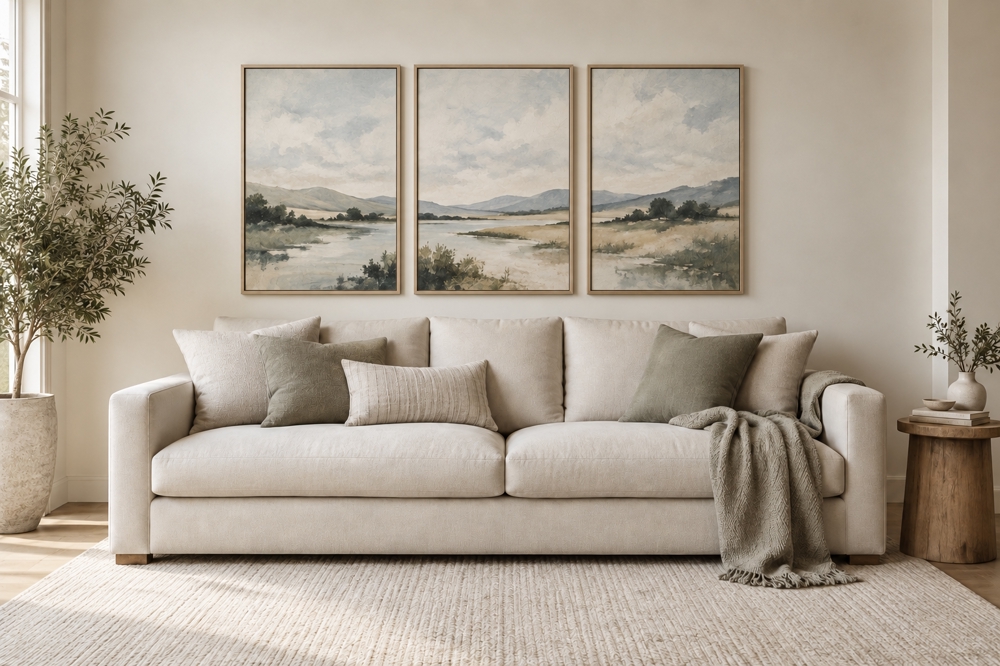
Measure the total span of the arrangement, not the width of one panel.
Start at the outer left edge of the first piece and measure across to the outer right edge of the last piece. This overall span should fall between two-thirds and three-quarters of the sofa’s width.
Leave approximately 5–7.5 cm between adjacent pieces, with a maximum gap of 10 cm. Keep every gap the same width.
If the gaps are too narrow, the arrangement can feel cramped. If they are too wide, the panels can look like separate pieces rather than a coordinated set. Inconsistent or excessive spacing is one of the most common mistakes when hanging a triptych.
Gallery Walls
For a gallery wall, imagine a large rectangle enclosing every piece in the arrangement. The width of that rectangle should follow the two-thirds rule.
Once you have established this outer boundary, arrange the individual pictures inside it.
Limit the grouping to no more than three frame sizes. Too many different sizes can make the display feel busy. Choose one larger piece as the main focal point, then arrange the smaller pieces around it for a more organized result.
3. Artwork Width and Hanging Height Are Separate Decisions
The two-thirds rule determines how wide your artwork should be. It does not tell you how high to hang it.
For height, remember two measurements.
First, leave 15–25 cm, or 6–10 inches, between the bottom edge of the artwork and the top of the sofa back. This gap keeps the artwork from feeling too close when you are seated while maintaining a visual connection with the sofa when viewed standing up.
Second, position the center of the artwork approximately 145–152 cm, or 57–60 inches, above the floor. This places the midpoint close to a natural standing eye level and is a height commonly used in museums and galleries.
In practice, start by positioning the bottom edge approximately 15 cm above the sofa back. Then check whether the center sits around 150 cm above the floor. When these two measurements align, the artwork should be well positioned.
For an additional reference, Framebridge’s guide to art hanging height recommends placing the center of the artwork about 57 inches above the floor and explains how the furniture beneath it can affect the final position.
4. Applying the Rule in Other Rooms
The two-thirds rule is not limited to living rooms. The same principle works elsewhere in the home; you simply change the furniture used as your reference.
Above a Bed
Measure the width of the headboard. Aim for artwork, or a complete arrangement, approximately two-thirds that width, keeping the outer edges within the sides of the headboard.
Above a Console, Sideboard, or TV Stand
Use the width of the cabinet beneath the artwork and aim for an artwork width of roughly two-thirds that measurement.
In entryways with limited vertical space, leave additional room above and below the artwork so the arrangement does not feel crowded.
Above a Dining Table
Apply the same approach by measuring the dining table rather than the wall behind it.
Once you identify the right reference piece, you can use the same formula throughout your home.
Frequently Asked Questions
Can wall art be wider than the sofa?
It is generally not recommended. Artwork wider than the sofa can make the arrangement feel overpowering and visually unbalanced. Keep the artwork narrower than the sofa, ideally between two-thirds and three-quarters of its width.
What size wall art works above an 84-inch sofa?
Choose a single piece or an arrangement with a total width of 56–63 inches, approximately 142–160 cm.
How much space should there be on each side of the artwork?
The artwork should leave approximately one-eighth of the sofa’s width on each side for a balanced arrangement. You do not need to measure these side spaces separately; choosing the right artwork width will create them naturally.
Does the two-thirds rule conflict with the eye-level rule?
No. They address different dimensions. The two-thirds rule determines artwork width, while the eye-level rule places the center approximately 145–152 cm above the floor. Using both helps you plan the complete arrangement.
Final Thoughts
If you already know the artwork size you need, explore the designs in our store. We offer custom sizes, framing options, and OEM and ODM services.
If you are unsure whether to choose a single piece or a three-panel set, or would like a custom arrangement, send us a photo of the space you want to decorate. We will provide professional advice and help you find a suitable solution.