Learning how to hang wall art without nails is especially useful for renters, students, homeowners who frequently redecorate, and commercial buyers who need flexible displays without drilling into finished walls. However, the challenge is not simply making a painting stick to the wall. The hanging method must match the artwork’s weight, frame construction, wall surface, room conditions, and expected display time. Choose the wrong method, and you may end up with peeled paint, a broken frame, crooked artwork, or a painting that suddenly falls.
This guide explains how to hang framed pictures without nails, how to display large wall art without drilling, and how to choose a safer renter-friendly wall art hanging solution. It also addresses another common problem: even the best installation method cannot fix artwork that arrives with inaccurate colors, poor materials, incorrect dimensions, or shipping damage.
Who Needs to Hang Wall Art Without Nails?
Renters are the most obvious audience because many rental agreements limit drilling, screws, anchors, and other permanent wall alterations. Students living in dormitories may face similar restrictions.
However, nail-free wall art solutions are also useful for:
- Homeowners testing a new gallery wall layout
- Interior designers staging apartments and model homes
- Retailers changing seasonal displays
- Hotels refreshing guestroom artwork
- Restaurants updating wall décor
- Offices displaying temporary campaigns or branded artwork
- Event planners decorating short-term venues
- Art collectors who frequently rotate their collections
These buyers often share the same concerns. They do not want to damage painted walls, lose a rental deposit, install permanent hardware, or risk an expensive piece falling.
They may also experience product-related problems. Some buyers cannot find artwork in the exact size, style, color, or material they need. Others receive paintings that look noticeably different from the online product image. Large paintings may arrive with crushed corners, cracked frames, loose canvases, bent metal sections, or damaged surfaces.
A successful wall art project therefore depends on two things: selecting the right installation method and purchasing well-made artwork from a reliable supplier.
1. Use Removable Picture-Hanging Strips
Removable picture-hanging strips are one of the most popular solutions for people researching how to hang wall art without nails. They are particularly suitable for lightweight or medium-weight frames with flat backs.
Because the strips connect the back of the frame directly to the wall, they create a clean appearance without a visible hook. Some interlocking versions also allow the frame to be removed and repositioned more easily.
Before installation, check:
- The complete weight of the artwork and frame
- The strip’s stated weight capacity
- The number of strip pairs required
- Whether the wall surface is approved
- The manufacturer’s curing instructions
- The correct removal procedure
Clean, smooth, dry surfaces usually provide better adhesion than dusty, damp, uneven, textured, or unstable walls. Applying strips to loose paint or exceeding the recommended weight can cause the artwork to fall or pull paint away from the wall.
For a gallery wall, create paper templates for every frame and attach the templates temporarily to the wall. This allows you to test the spacing, height, and overall composition before applying any adhesive.
2. Try Removable Adhesive Hooks
Adhesive hooks work well for frames fitted with hanging wire, sawtooth hangers, D-rings, or hanging cords. They may be easier to adjust than strips because the picture can be lifted off the hook, repositioned, and rehung.
Choose a hook based on the artwork’s total weight rather than the frame’s width or height. Remember that glass, backing boards, solid-wood frames, and decorative materials may make a relatively small picture surprisingly heavy.
Clear hooks can be less noticeable, while larger hooks may leave a visible gap between the frame and the wall. Frame bumpers placed on the lower corners can help keep the artwork level and reduce scratches or marks caused by movement.
Adhesive hooks are convenient, but they are not suitable for every surface. Rough plaster, brick, heavily textured walls, deteriorating paint, and humid environments may reduce their reliability.
3. Use Mounting Putty for Lightweight Art
Reusable mounting putty can be used for postcards, photographs, small posters, children’s drawings, unframed prints, and other very lightweight decorations.
Instead of applying one large piece of putty, use several small pieces around the edges and corners. This distributes the load more evenly and helps prevent the paper from curling.
Mounting putty should not be used for:
- Heavy frames
- Valuable original artwork
- Porous paintings
- Delicate wallpaper
- Textured surfaces
- Materials that may absorb oil
- Artwork positioned above beds or seating areas
This is one of the easiest ways to hang small pictures without nails, but it is a temporary decorating solution rather than a structural mounting system.
4. Hang Artwork From Existing Picture Rails
Some older houses, apartments, galleries, hotels, and commercial interiors have picture rails or suitable molding near the ceiling. Special hooks, cords, or wires can be attached to the rail, allowing pictures to hang at different heights without drilling additional holes into the main wall surface.
Picture rails are particularly useful for:
- Historic interiors
- Rental homes with existing molding
- Gallery-style displays
- Collections that are changed regularly
- Salon-style arrangements
- Commercial spaces with rotating artwork
The arrangement can be updated by changing the cord length or moving the rail hooks. Food52 also identifies molding-based hanging as an effective way to display art without adding new nail holes to the main wall.
Before using this method, confirm that the rail is securely installed and strong enough to support the combined weight. The hooks, cords, wires, and frame hardware must also be suitable for the load.
5. Display Art on a Mantel, Console, or Shelf
Sometimes the safest answer to how to display wall art without nails is not to hang it at all.
A mantel, media console, sideboard, cabinet, deep shelf, or sturdy desk can support framed artwork while allowing it to lean against the wall. This approach creates a relaxed, layered interior and makes it easy to change the arrangement.
Start with the largest artwork at the back. Place one or two smaller pieces slightly in front, allowing the frames to overlap. Complete the arrangement with a restrained decorative object, vase, lamp, or plant.
This method works especially well in:
- Living rooms
- Bedrooms
- Dining rooms
- Hotel guestrooms
- Reception areas
- Retail displays
- Home offices
Use non-slip pads or small frame bumpers to reduce movement and protect the frame and wall. Avoid unstable furniture, narrow surfaces, heat sources, steam, or locations where children and pets could easily knock the artwork over.
6. Lean Large Wall Art Against the Wall
Large framed paintings and oversized canvases can often be displayed directly on the floor. This creates a modern, gallery-inspired appearance while avoiding nails, screws, hooks, and adhesives.
Floor-leaning artwork looks best when the piece is large enough to appear intentional. It can be positioned:
- Beside a console table
- Behind a low lounge chair
- In a wide hallway
- At the end of a staircase
- In an unused living-room corner
- Inside a showroom or studio
A large artwork can also be placed on a stable floor easel to improve visibility and create a more curated presentation.
Use a non-slip pad underneath the frame and make sure the painting cannot slide forward. Floor-leaning art may not be appropriate in narrow walkways or spaces used by young children and pets unless additional anti-tip protection is installed.
7. Use a Freestanding Art Easel
A freestanding easel is an effective option for renters, galleries, showrooms, trade fairs, wedding venues, retailers, artists, and homeowners who prefer a flexible display.
Decorative wooden easels complement residential interiors and traditional paintings. Slim metal stands may be more appropriate for commercial displays, exhibitions, events, and contemporary interiors.
Easels are particularly useful for:
- Custom statement artwork
- Limited-edition paintings
- Wedding welcome signs
- Promotional displays
- Restaurant menus
- Retail product presentations
- Frequently rotated artwork
Choose an easel that supports both the dimensions and weight of the artwork. A lightweight tabletop easel can also display smaller paintings on cabinets, counters, shelves, and desks.
8. Use Tension Rods or Freestanding Grid Panels
A tension rod installed between two suitable surfaces can support lightweight prints and decorations using clips, cords, or S-hooks. Freestanding metal grids and display panels provide another flexible solution for studios, dormitories, offices, temporary exhibitions, and retail stores.
These systems are useful for displaying a mixture of:
- Art prints
- Photographs
- Fabric samples
- Postcards
- Small canvases
- Design sketches
- Notes and promotional materials
Do not overload a tension rod, and make sure the two supporting surfaces can tolerate pressure. For public or commercial spaces, choose a freestanding grid with a stable base that is designed to resist tipping.
9. Choose Lightweight Wall Art
The construction of the artwork has a major effect on how easily it can be installed without nails.
Heavy glass, thick solid-wood frames, dense metal panels, stone decorations, and bulky mixed-media artwork may require permanent hardware. Lightweight stretched canvas, acrylic glazing, slim frames, fabric artwork, and carefully engineered decorative panels are more compatible with removable mounting products.
Customers researching how to hang canvas art without nails should check both the finished weight and the depth of the stretcher frame. A small lightweight canvas may work with suitable adhesive strips, but a large canvas still requires enough contact area and a mounting product approved for the wall surface.
When ordering custom wall art, ask the supplier for:
- Finished product weight
- Frame dimensions and depth
- Back-hanging hardware
- Recommended installation method
- Installation orientation
- Panel spacing
- Layout instructions
- Packaging specifications
For multi-panel artwork, each panel should be clearly identified so the buyer can install the complete composition in the correct order.
How to Choose the Best Nail-Free Hanging Method
Before selecting a method, answer four questions.
What Is the Artwork’s Complete Weight?
Include the canvas, frame, glazing, backing board, metal components, decorative layers, and hanging hardware. Do not estimate the weight from the picture size alone.
What Type of Wall Do You Have?
Smooth painted drywall, glass, tile, finished wood, plaster, brick, wallpaper, and textured walls behave differently. A product that works well on one surface may fail on another.
How Long Will the Artwork Stay in Place?
Temporary exhibition artwork requires a different solution from a painting intended to remain in place for several years.
What Happens If the Artwork Falls?
A lightweight unframed print presents little risk. A large framed painting with glass positioned above a bed, sofa, desk, or restaurant table requires a much more cautious installation approach.
For valuable, heavy, glazed, or fragile artwork, a professionally assessed hanging system may be safer than forcing a completely nail-free solution. Adhesive products are generally best suited to approved surfaces and artwork within their stated load limits.
Common Mistakes That Cause Wall Art to Fall
Many nail-free installations fail because the buyer:
- Chooses a product based on frame size instead of weight
- Applies adhesive to a dusty or greasy wall
- Ignores the curing time
- Installs strips on loose or recently painted surfaces
- Uses adhesive on an unsuitable texture
- Exceeds the product’s stated load limit
- Installs artwork in excessive heat or humidity
- Removes the strip in the wrong direction
- Uses weak frame hardware
- Does not inspect the installation after several months
Improper use and excessive weight can cause adhesive-mounted frames to fall or remove a larger section of paint than a small nail hole would have caused.
Always follow the product manufacturer’s instructions rather than assuming every adhesive hook or strip works in the same way.
Why the Right Wall Art Supplier Matters
Knowing how to hang wall art without nails solves only the installation problem. Buyers still need artwork that matches the room, arrives safely, and looks like the product they approved.
Many customers struggle to find a painting in the exact style, dimensions, orientation, color palette, or material they need. They may spend hours browsing mass-produced artwork without finding anything that works with their furniture or interior design.
Other buyers receive artwork that looks noticeably different from the online image. The colors may be duller, the texture may be flatter, the frame may feel cheaper, or important visual details may be missing.
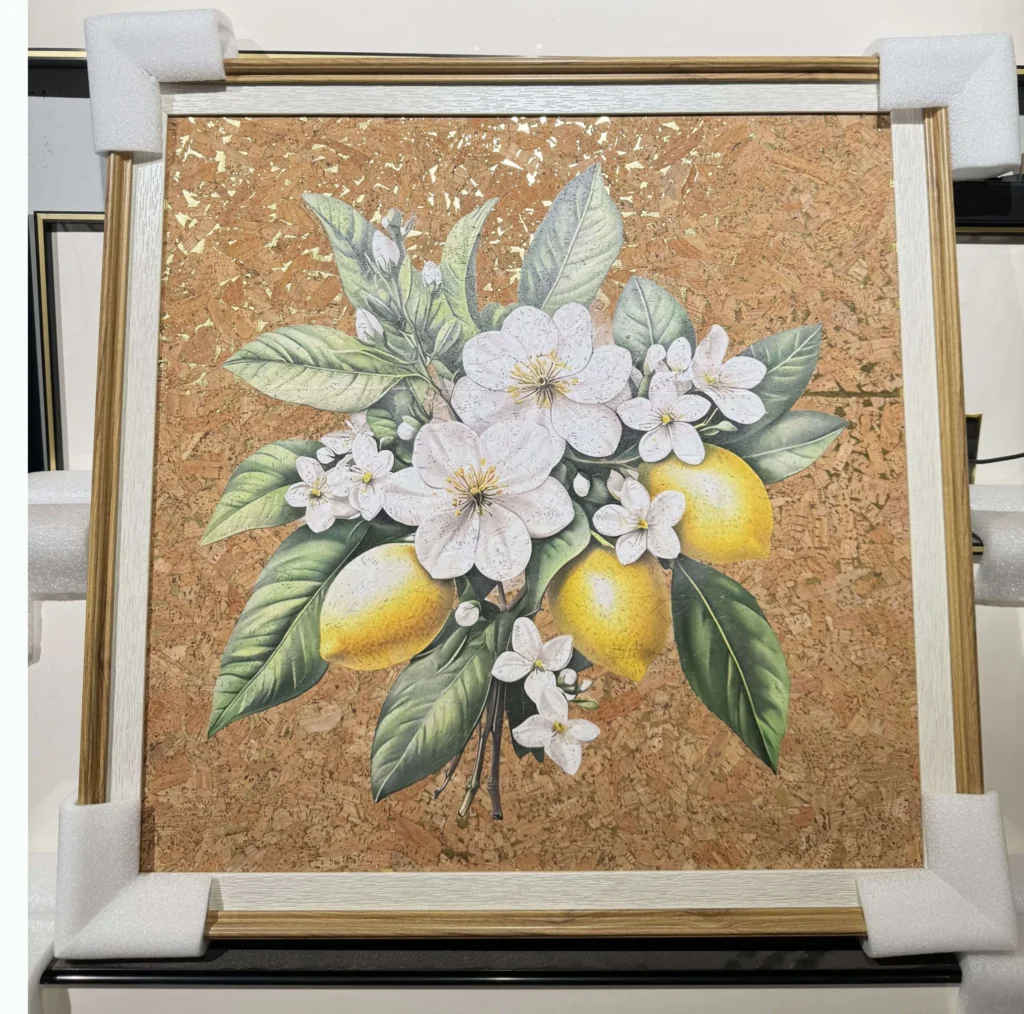
Shipping damage is another major concern. Large canvases, framed paintings, metal wall art, wood artwork, and mixed-media products can be damaged when the packaging does not match the product’s size, weight, and fragility.
Our custom wall art service is designed to address these problems.
Customers can provide room photographs, reference images, wall measurements, preferred colors, material requirements, target quantities, and budget information. We can adjust the artwork’s dimensions, color palette, orientation, frame, and construction to better match the intended space.
For nail-free installations, we can also help buyers consider:
- Lightweight materials
- Slimmer frame structures
- Suitable back-hanging hardware
- Frameless canvas options
- Multi-panel artwork
- Alternative display formats
- Easel-friendly frame designs
Product details, material information, and visual confirmation can be provided before shipment, helping reduce the difference between the approved design and the finished artwork.
Protective corners, foam layers, moisture-resistant wrapping, reinforced cartons, and wooden crates can be selected according to the artwork and shipping method. This helps reduce the risk of cracked frames, crushed corners, scratched surfaces, loose canvases, and bent components.
For interior designers, retailers, wholesalers, hotels, restaurants, offices, and property developers, we can also support custom sizing, coordinated collections, bulk production, private labeling, repeat orders, and project-based packaging.
Final Thoughts
The best method for hanging artwork without nails depends on the wall surface, product weight, frame construction, room conditions, display period, and level of risk.
Removable strips and adhesive hooks may be convenient for smooth walls and suitable lightweight frames. Picture rails, mantels, consoles, ledges, easels, grid panels, and floor-leaning arrangements provide alternatives when adhesives are unsuitable.
Once you understand how to hang wall art without nails, you can decorate rental apartments, homes, hotel rooms, offices, retail stores, and temporary venues with greater flexibility.
However, reliable installation starts before the artwork reaches the wall. Accurate dimensions, appropriate materials, secure frame construction, clear product confirmation, careful quality inspection, and protective export packaging are equally important.
Share your wall dimensions, room photographs, preferred style, color requirements, and intended hanging method with us. We can help develop custom wall art that fits your space, supports your installation plan, and arrives ready for a safer and more attractive display.