

Ice and Steam Collide: Exploring Monet’s The Train in the Snow
Monet’s The Train in the Snow captures a remarkable winter moment in nineteenth-century France. In this painting, Claude Monet combines the noise of the Industrial Revolution with the stillness of a snow-covered landscape. Although its palette appears restrained at first, the work reveals itself as a subtle piece of colorful artwork filled with atmospheric detail.
Argenteuil in 1875: Monet’s Open-Air Studio
In 1871, Monet and his family settled in Argenteuil, a suburb northwest of Paris. During the winter of 1874–1875, he produced a group of sixteen snow-covered landscapes. Among these works, The Train in the Snow stands apart because of its distinctly modern industrial subject.
At that time, railways and steam locomotives were transforming travel, commerce, and daily life across France. Nevertheless, Monet continued to study natural light through plein-air painting. He observed how snow, smoke, and winter air changed the appearance of familiar places.
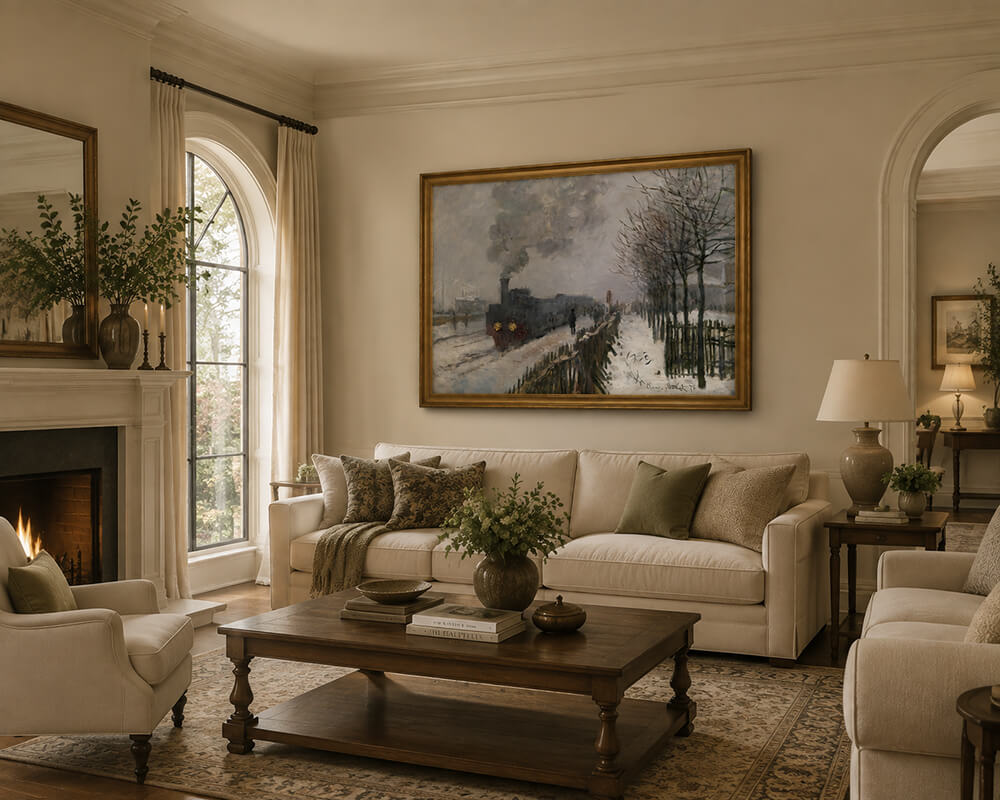
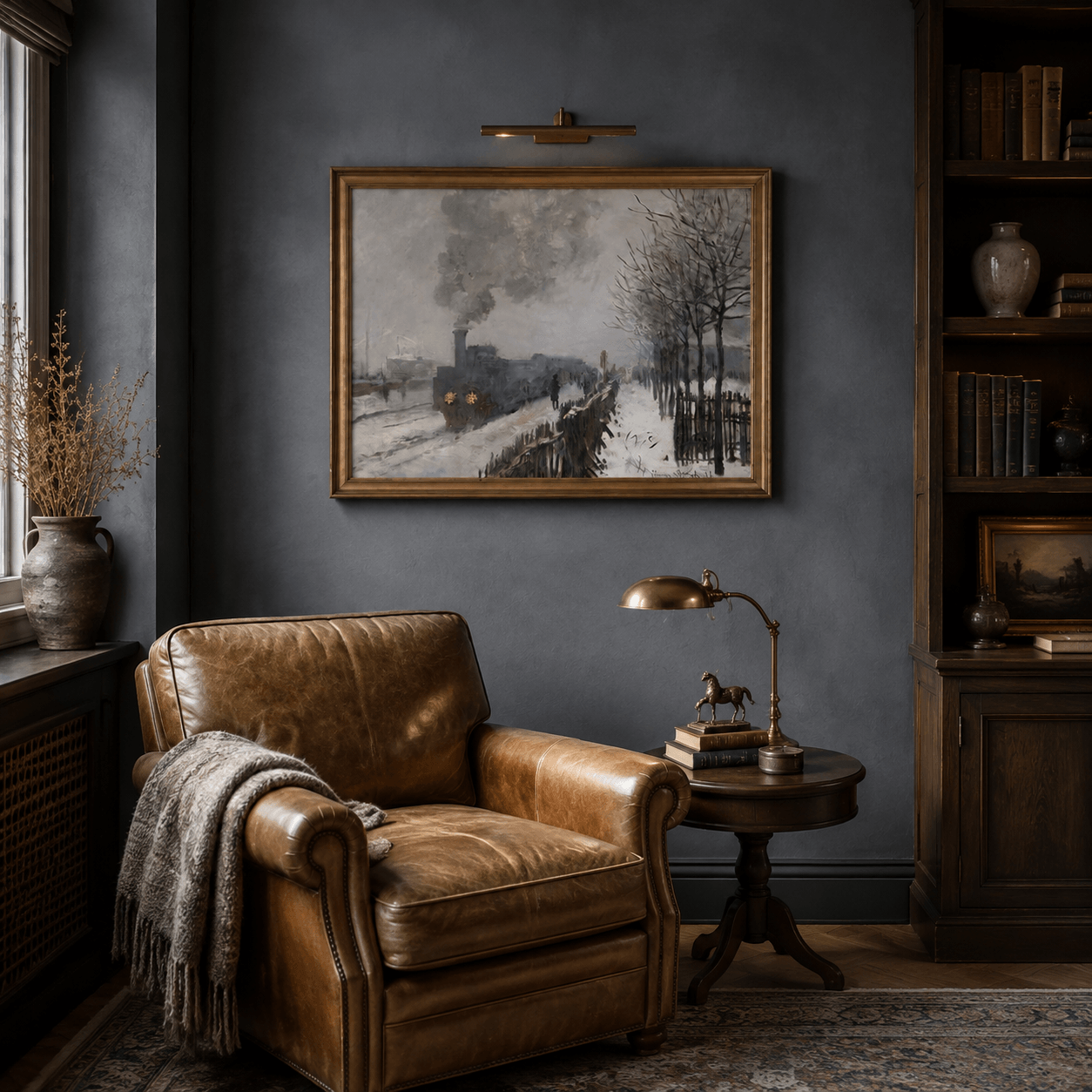
In this composition, a locomotive enters the station through snow and heavy smoke. Meanwhile, the platform, wooden fence, trees, and waiting figures gradually disappear into the cold atmosphere. As a result, the scene feels immediate yet suspended in time. View the official artwork record at the Musée Marmottan Monet.
Impressionist Color: Snow Is Never Simply White
A closer look reveals that the snow is not painted in a single shade of white. Instead, pale gray, blue, violet, cream, and muted pink tones overlap across the ground. Therefore, the surface appears rich, dimensional, and responsive to the changing winter light.
At the same time, the locomotive releases dense gray-brown smoke into the cloudy sky. Its dark industrial form creates a powerful contrast with the softer snow. Moreover, Monet added a small red accent to the front of the engine and touches of yellow to the lights.
These details make the atmosphere appear active and constantly changing. The viewer can almost sense the cold air, moving steam, and approaching train. Consequently, Monet transforms an ordinary railway station into an emotional study of color, weather, and motion.
Nature and Modern Industry in One Composition
The Train in the Snow is more than a railway landscape. The locomotive represents speed, technology, and modern civilization. In contrast, the snow suggests silence, natural continuity, and seasonal change.
However, industry and nature do not compete within the painting. Instead, Monet allows smoke, clouds, snow, and machinery to merge into one visual rhythm. For this reason, the artwork reflects a French society positioned between tradition and modernity.
The subject also anticipates Monet’s Saint-Lazare railway station paintings of 1877. Thus, this work occupies an important place in his exploration of industrial landscapes and changing light.
A Framed Painting for Meaningful Interiors
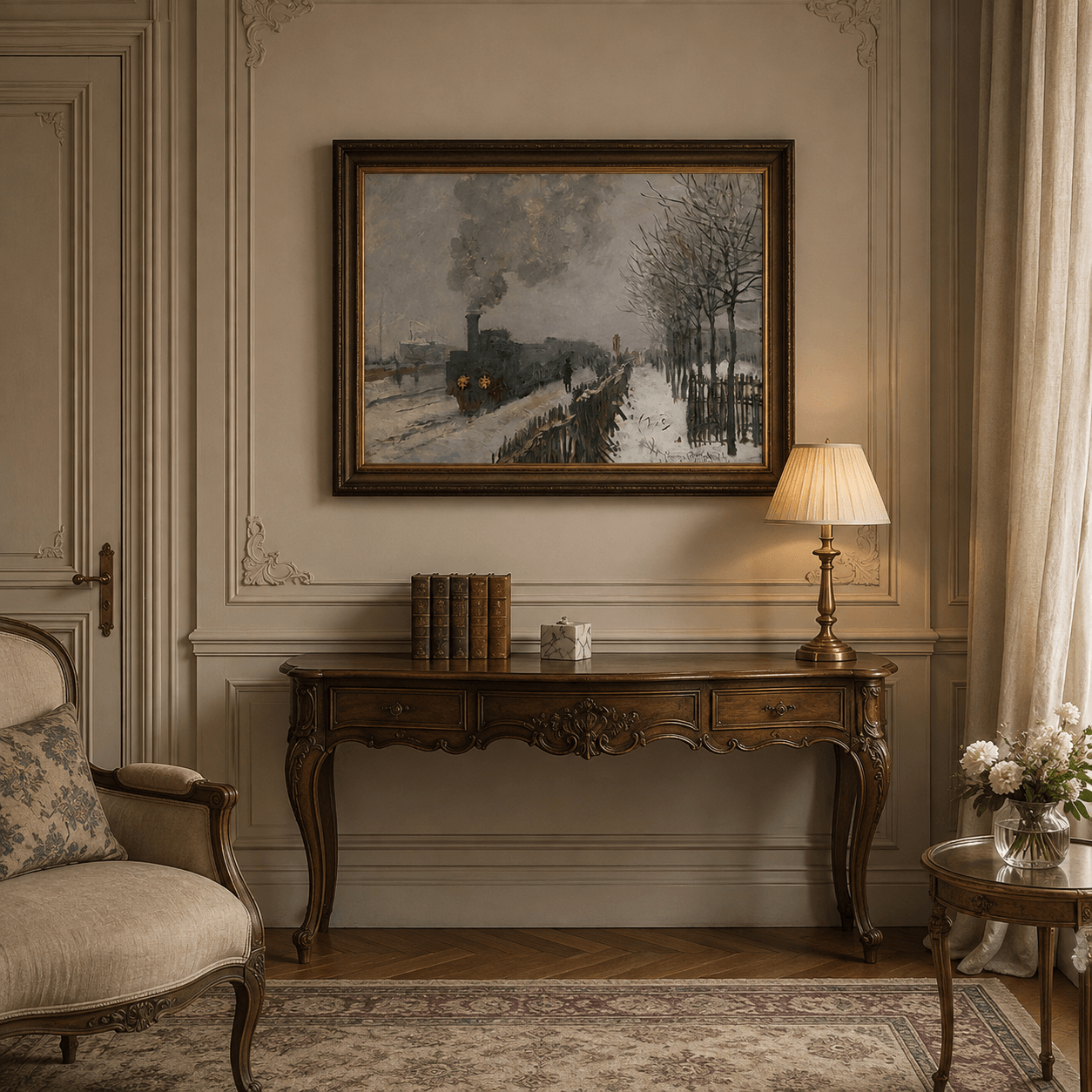
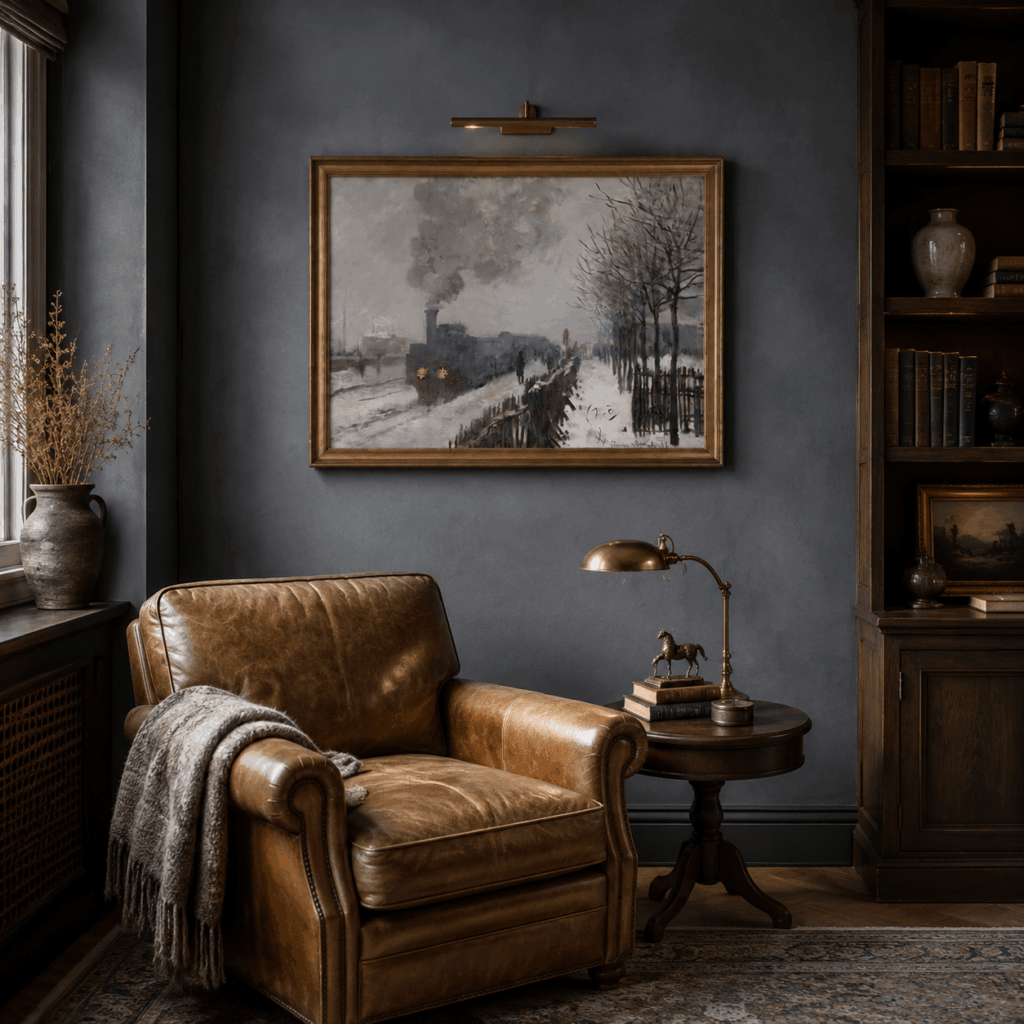
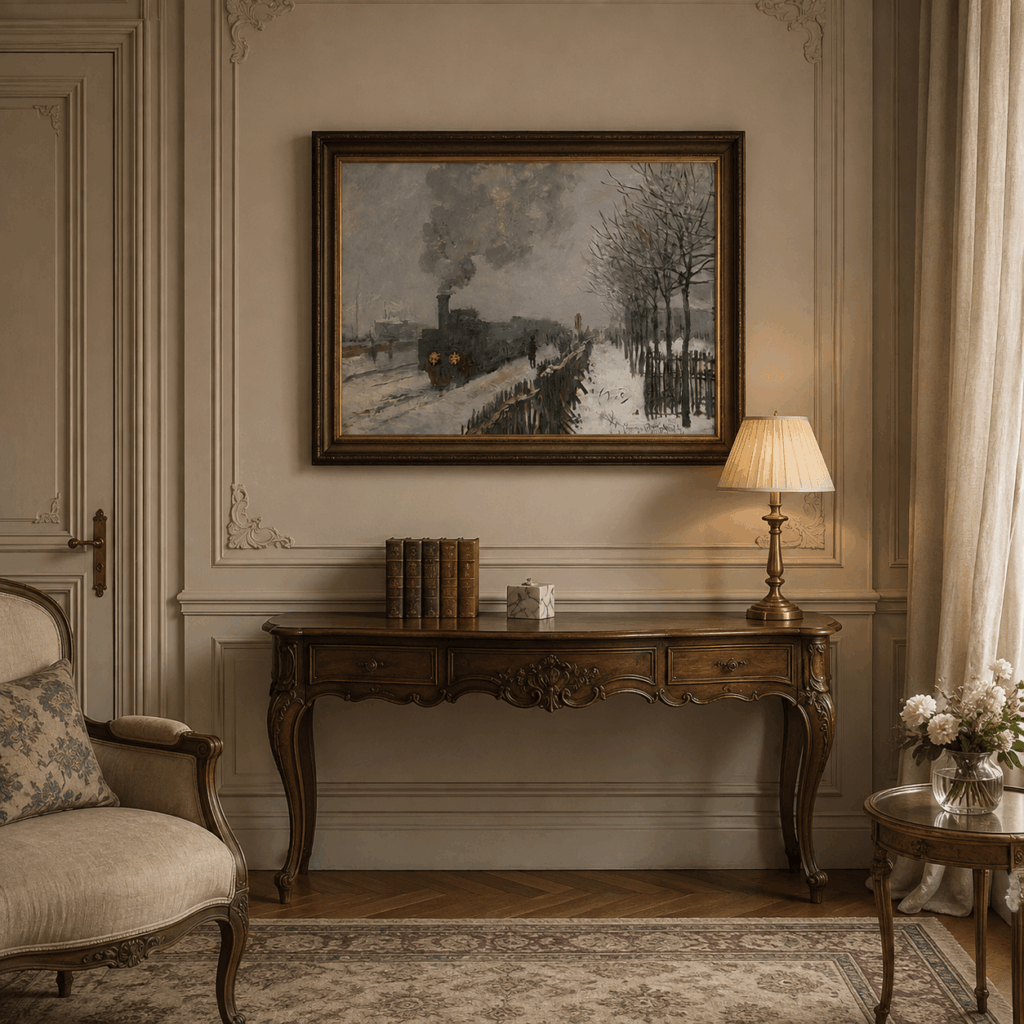
As living room art, this winter scene works well with classic, transitional, and vintage interiors. A dark wooden frame strengthens its historical character, while a lighter frame creates a softer contemporary presentation.
This framed painting can also enhance studies, offices, libraries, hotel lounges, and gallery-inspired spaces. Click here to select a suitable size and frame, then bring this historically meaningful Monet reproduction into your interior project.