Discover the Light, Color, and Calm of Monet’s Water Garden
During his later years at Giverny, Claude Monet transformed his private garden into an enduring source of artistic exploration. The Claude Monet Water Lilies painting series represents a high point of Impressionism, where reflections, flowers, and changing light merge into an immersive visual experience. Today, these works continue to bring tranquillity and elegance to modern interiors while creating unique wall décor with lasting cultural value.
The History and Inspiration Behind Monet’s Water Lilies
The Giverny Water Garden
Monet settled in Giverny in 1883 and gradually developed its gardens into a carefully designed living landscape. He enlarged the pond, cultivated water lilies, and added a Japanese-style bridge. His interest in Japanese ukiyo-e prints also influenced the garden’s asymmetrical arrangement and tranquil atmosphere.
The water garden became his open-air studio. According to the Musée de l’Orangerie, the Water Lilies cycle occupied Monet for nearly three decades and eventually included hundreds of paintings.
A Breakthrough in Impressionism
Rather than following traditional landscape perspective, Monet focused closely on the pond’s surface. The sky appears through reflections, while water, plants, and light seem to occupy the same visual plane.
Consequently, the subject becomes less important than the changing atmosphere. Loose brushwork captures fleeting conditions instead of fixed details, allowing each painting to express a particular moment of light, weather, and season.
Artistic Mastery: Color, Reflection, and Atmosphere
The Dreamy Purple and Blue Palette
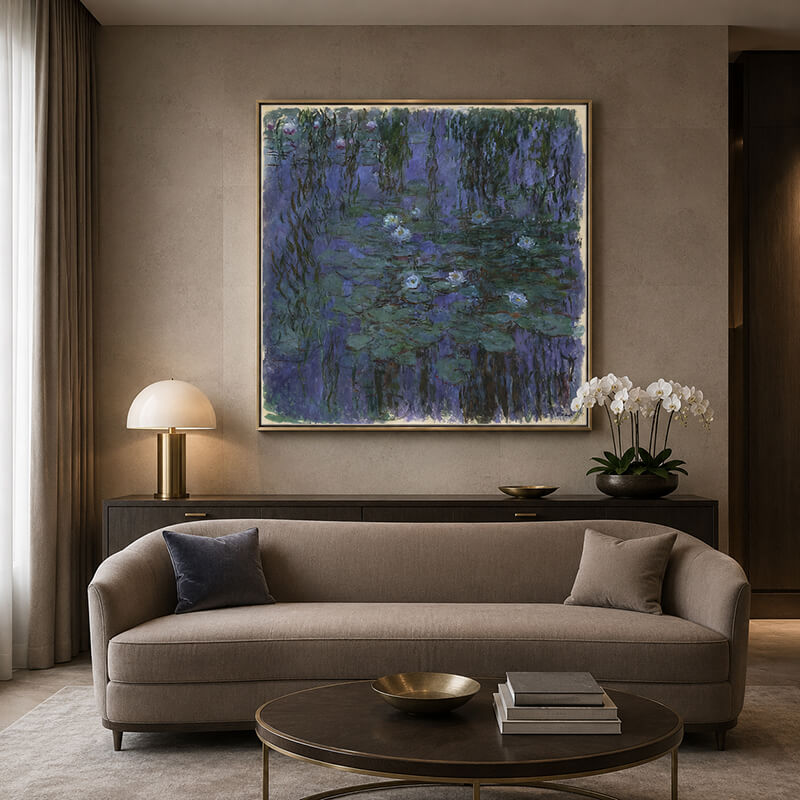
Purple and blue-violet tones create depth throughout the water, while cool greens establish the floating forms of the lily pads. Darker strokes introduce shadow and contrast without making the composition feel heavy.
Meanwhile, white and pale pink water lilies provide delicate highlights. These small areas of brightness guide the eye across the canvas and balance the deeper colors. As a result, the entire scene feels peaceful, layered, and continuously in motion.
The Illusion of Weeping Willows
The long vertical strokes extending across the water suggest reflections of weeping willows. Monet rarely defines the trees themselves. Instead, he represents their movement through broken lines, softened edges, and shifting color.
This rejection of conventional spatial boundaries made his late paintings remarkably modern. Their immersive scale and increasingly abstract surfaces later resonated with artists associated with American Abstract Expressionism.
How to Style Monet’s Water Lilies in Modern Home Decor
Room Placement and Color Matching
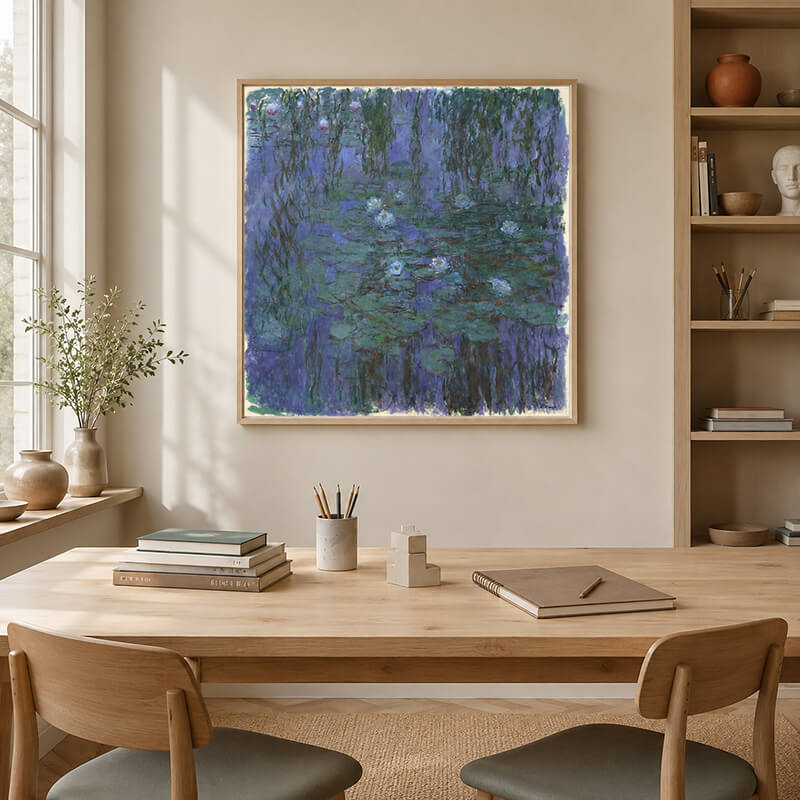
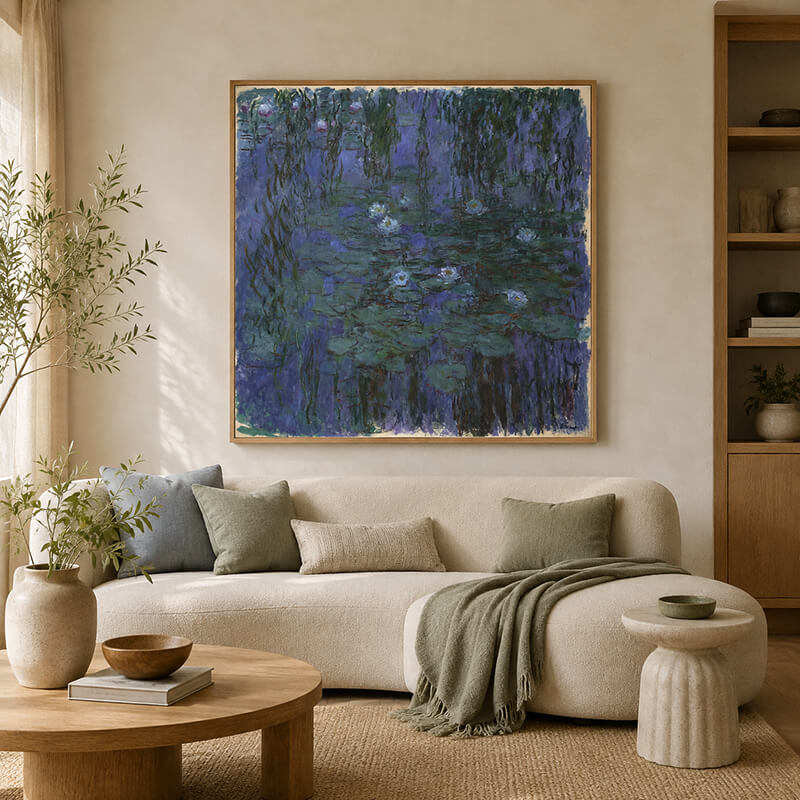
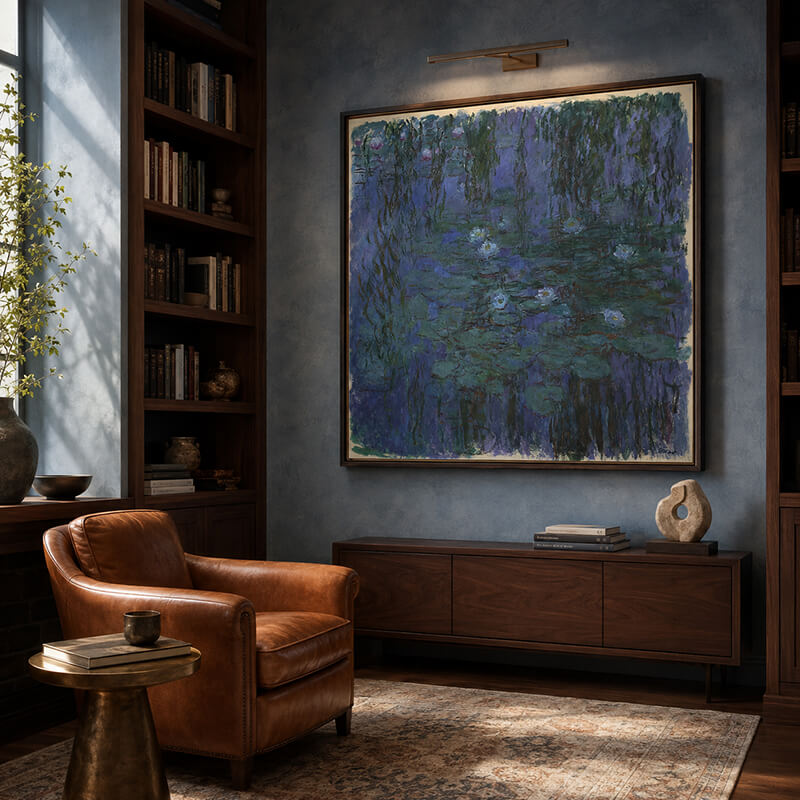
A Water Lilies reproduction works particularly well in a neutral living room, above a bedroom headboard, or inside a tea room, library, or meditation space. For a harmonious interior, combine its blue, purple, and green tones with warm white walls, pale wood, soft gray upholstery, or muted sage accessories.
For a larger feature wall, select dimensions that relate to the furniture below. The artwork should remain visually prominent without overwhelming the room. Explore this Water Lilies oil painting reproduction for customizable sizing and interior display options.
Choosing the Right Framing and Material
An unframed canvas offers a clean, contemporary appearance. In contrast, a slim wooden frame creates natural warmth, while an antique gold frame introduces a traditional museum character. The best choice should complement both the artwork and the surrounding furniture.
Conclusion
Monet’s Water Lilies transcends a simple garden view. Through color, reflection, and expressive brushwork, it offers a timeless experience of nature and light. Choose a high-quality art reproduction to create a calm, refined, and deeply personal interior.