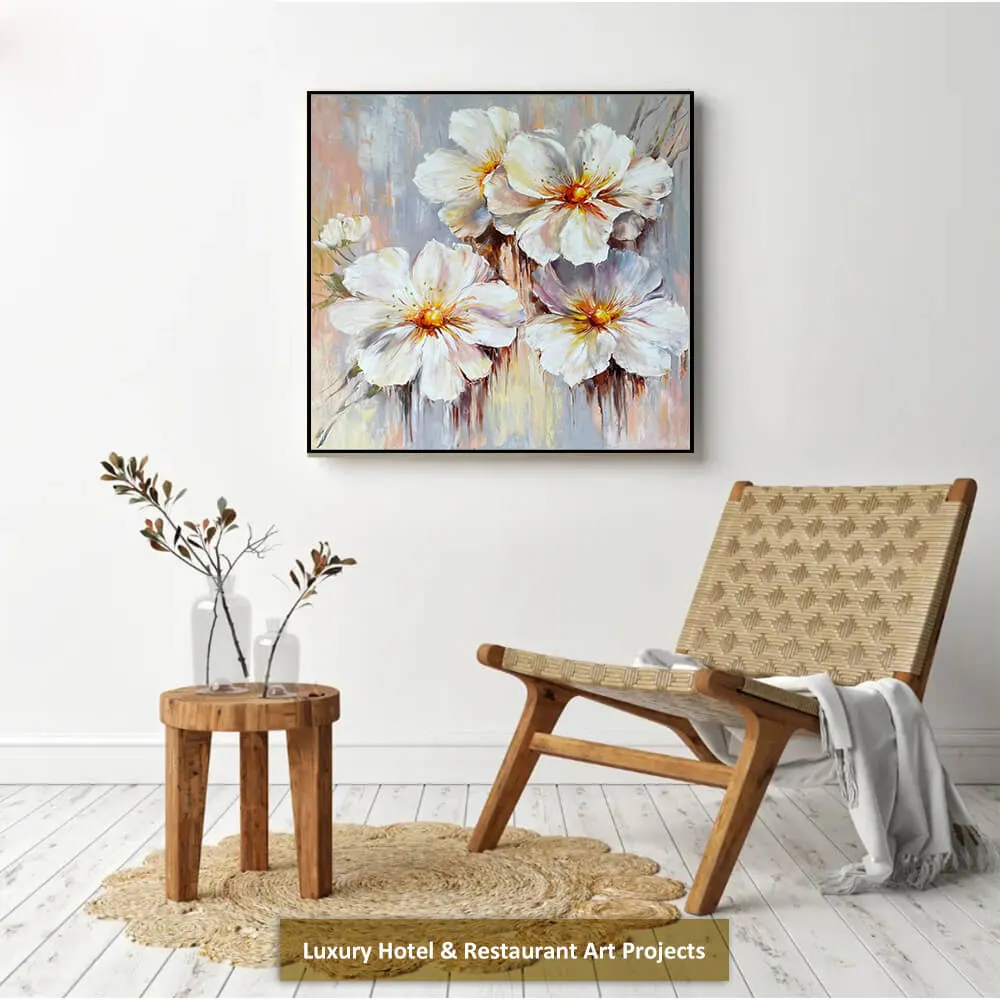
Large wall art has become one of the most popular ways to transform modern interiors. From oversized canvas prints and abstract paintings to photographs, wood wall art and statement murals, large-scale artwork naturally attracts attention and gives an empty wall a stronger visual identity.
Unlike a small framed picture that works mainly as an accent, large wall art can define the atmosphere of an entire room. A single oversized artwork above a sofa, bed or console table can create a more balanced and intentional interior without requiring dozens of smaller decorative pieces.
Large Wall Art: How to Choose the Right Size, Style and Placement for Your Space
Whether you are decorating a living room, bedroom, hallway, office or commercial space, choosing the right dimensions, proportions and materials is essential. This guide explains how to select large-scale artwork and use it effectively in different interiors.
What Is Extra Large Wall Art for the Living Room?
Extra large wall art for the living room generally refers to artwork designed to become the main visual feature of a large wall.
There is no universal size definition, but pieces wider than approximately 100 cm are often considered large, while artwork measuring 120 cm, 150 cm or more may fall into the oversized or XXL category.
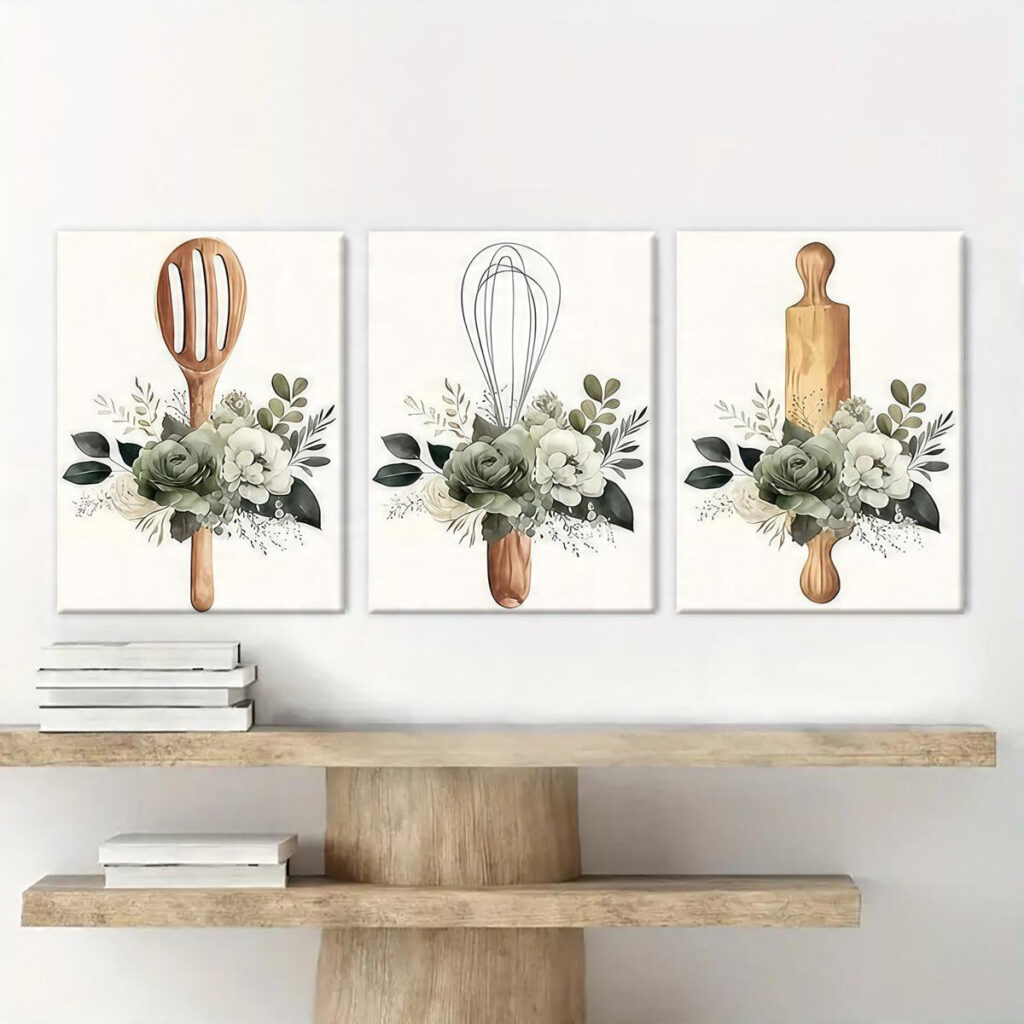
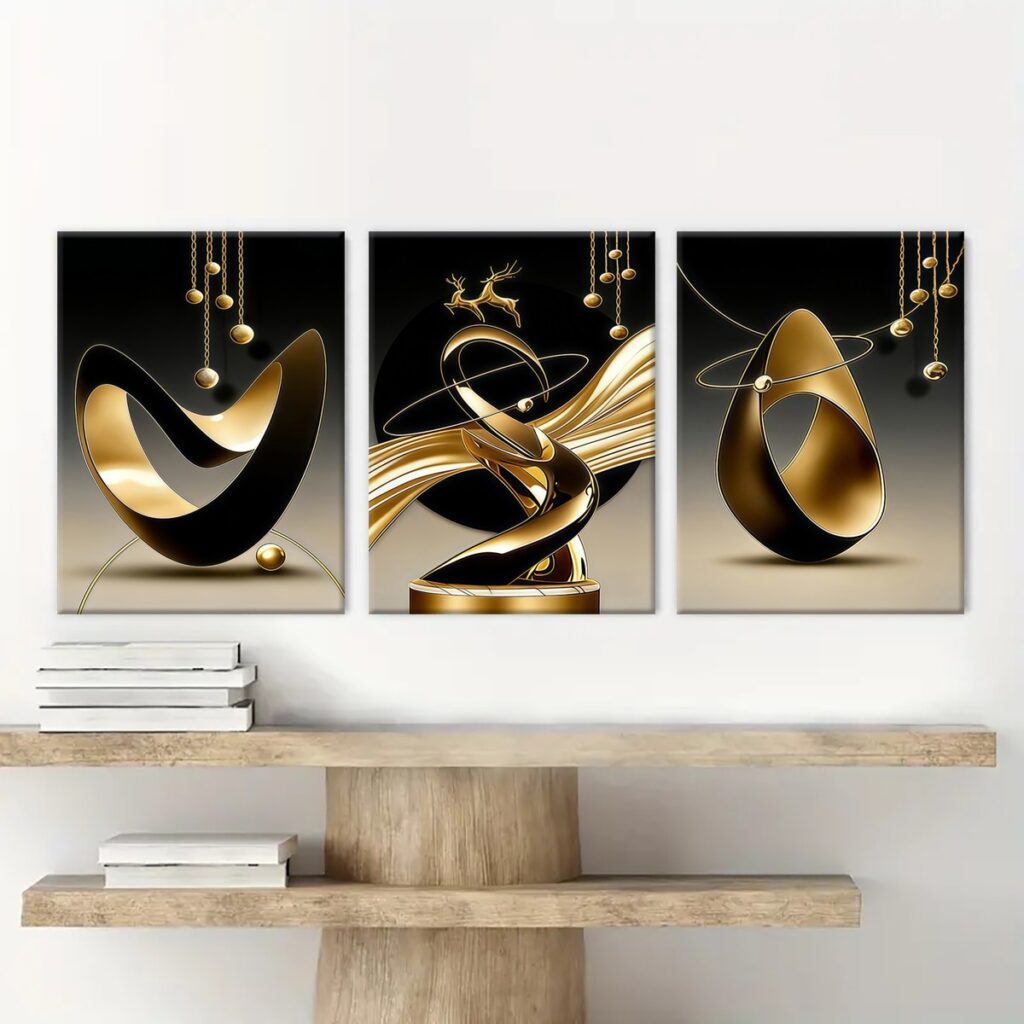
For multi-panel artwork, such as diptychs and triptychs, the combined width can easily exceed 150–200 cm.
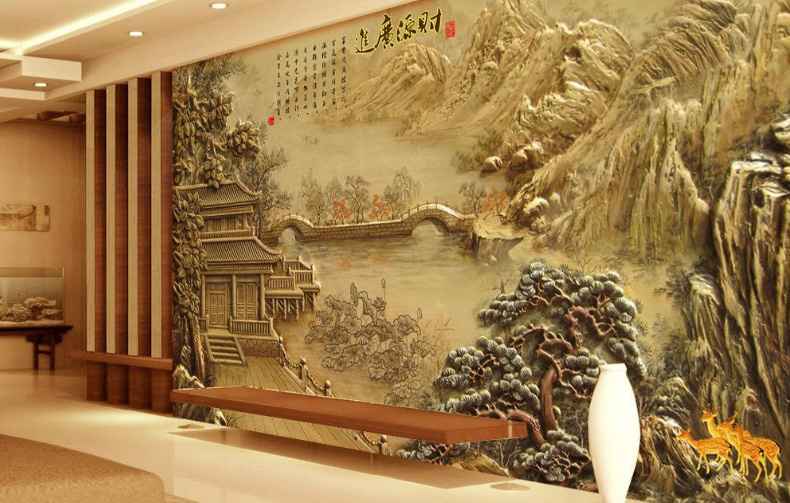
Popular large wall art sizes include:
- 100 × 70 cm
- 120 × 80 cm
- 150 × 100 cm
- 160 × 120 cm
- 180 × 120 cm
- Oversized triptychs measuring 180–220 cm in total width
For especially large walls, custom sizing is often the better option because standard retail dimensions may look too small once installed above a wide sofa or long feature wall.
How Large Should Wall Art Be Above a Sofa?
Scale is one of the most important considerations when selecting living room wall art.
As a general interior design guideline, the artwork or complete arrangement should measure approximately 60%–75% of the width of the furniture beneath it.
For example, if your sofa is 240 cm wide, artwork between approximately 145 cm and 180 cm wide will usually create balanced proportions.
Artwork that is significantly narrower can appear disconnected or seem to “float” above the sofa.
Recommended Hanging Height
Another useful guideline is to position the visual center of the artwork at approximately eye level.
A commonly used gallery reference is around 145 cm (57 inches) from the floor to the center of the artwork, although this should be adjusted according to ceiling height, furniture placement and the dimensions of the piece.
When hanging artwork above a sofa, leaving approximately 20–25 cm (8–10 inches) between the sofa back and the bottom of the artwork generally creates a comfortable visual connection.
The goal is not to follow measurements mechanically, but to make the furniture and artwork feel like one coordinated composition.
Why Oversized Wall Art Works So Well
One of the biggest advantages of oversized wall art is visual simplicity.
Instead of filling a large wall with many small frames, one statement piece can immediately establish a focal point.
Large artwork can also help:
- Anchor a sofa, bed or dining table
- Add color to neutral interiors
- Make tall walls feel more balanced
- Create a stronger sense of scale
- Introduce texture and material contrast
- Reinforce a specific interior design style
For minimalist interiors, a large abstract canvas can provide visual interest without creating clutter.
In luxury interiors, materials such as resin, carved wood, porcelain or metal can introduce additional depth and texture.
Looking for Inexpensive Large Wall Art?
Large artwork does not necessarily need to be expensive.
If budget is important, large canvas wall art, printed artwork and multi-panel sets are often more economical than original hand-painted paintings or collectible artwork.
Canvas prints are particularly popular because they are lightweight, easy to transport and available in many dimensions.
Another cost-effective solution is a triptych. Instead of producing one extremely large panel, an image can be divided into three coordinated sections. This can reduce transportation difficulties while still creating a strong oversized effect.
DIY options can also work well. High-resolution photography, textile wall hangings, framed fabric, geometric wood panels and simple abstract paintings can fill large walls without requiring a major investment.
However, buyers should compare the final installed size rather than relying only on product descriptions such as “large” or “oversized.”
A listing described as large may still look small on a four-meter-wide wall.
Always check the dimensions in both centimeters and inches before ordering.
Large Vertical Wall Art for Tall and Narrow Spaces
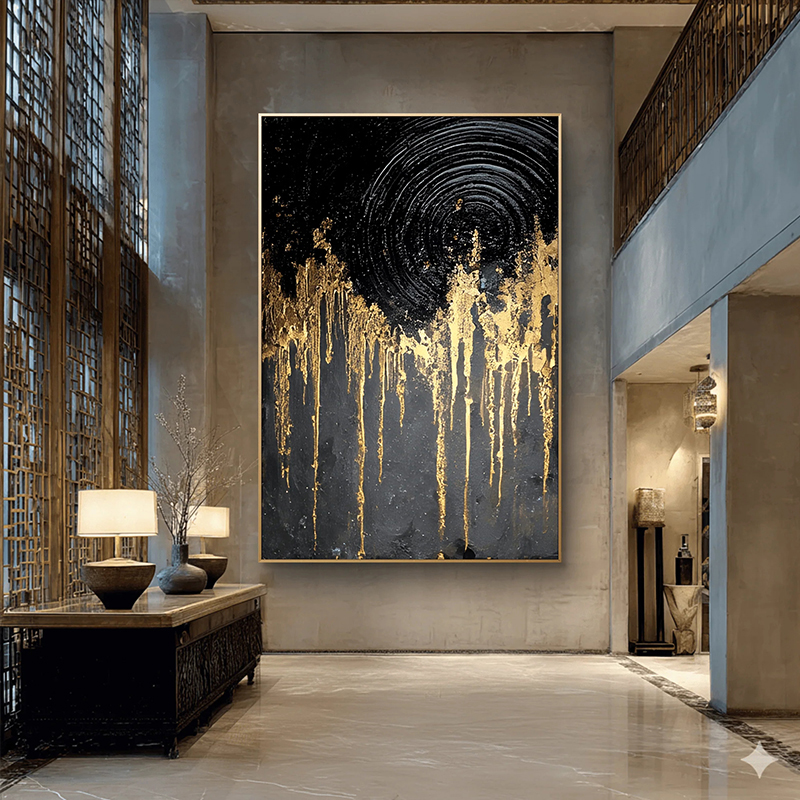
Not every oversized artwork needs to be horizontal.
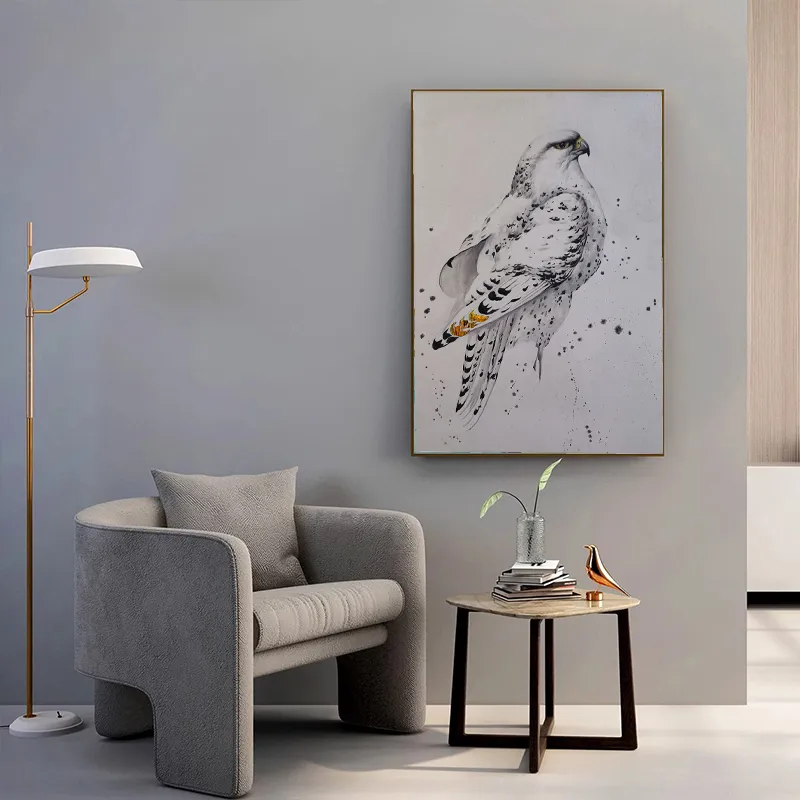
Large vertical wall art works especially well in spaces where the available wall is tall but relatively narrow.
Common locations include:
- Entryways
- Staircases
- Hallways
- Spaces between windows
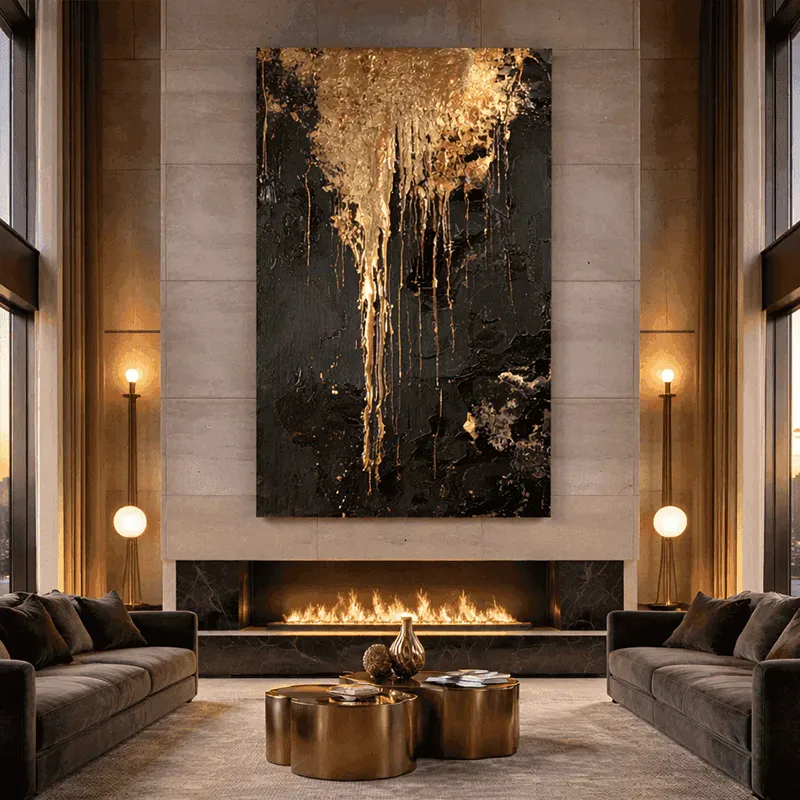
- Beside fireplaces
- Double-height living rooms
- Bedroom corners
- Hotel corridors
- Office reception areas
Vertical artwork naturally directs the eye upward, emphasizing ceiling height and making a room feel more architectural.
A tall abstract painting can add movement to a modern interior, while carved wood or textured wall art can introduce additional dimensionality.
For narrow walls, one large vertical artwork is often more effective than several small frames stacked on top of one another.
Choosing the Right Material for Large Wall Art
The material affects not only appearance but also weight, texture, price and installation.
Large Canvas Wall Art
Canvas remains one of the most versatile choices for oversized decoration.
It works particularly well for:
- Abstract designs
- Landscapes
- Photography
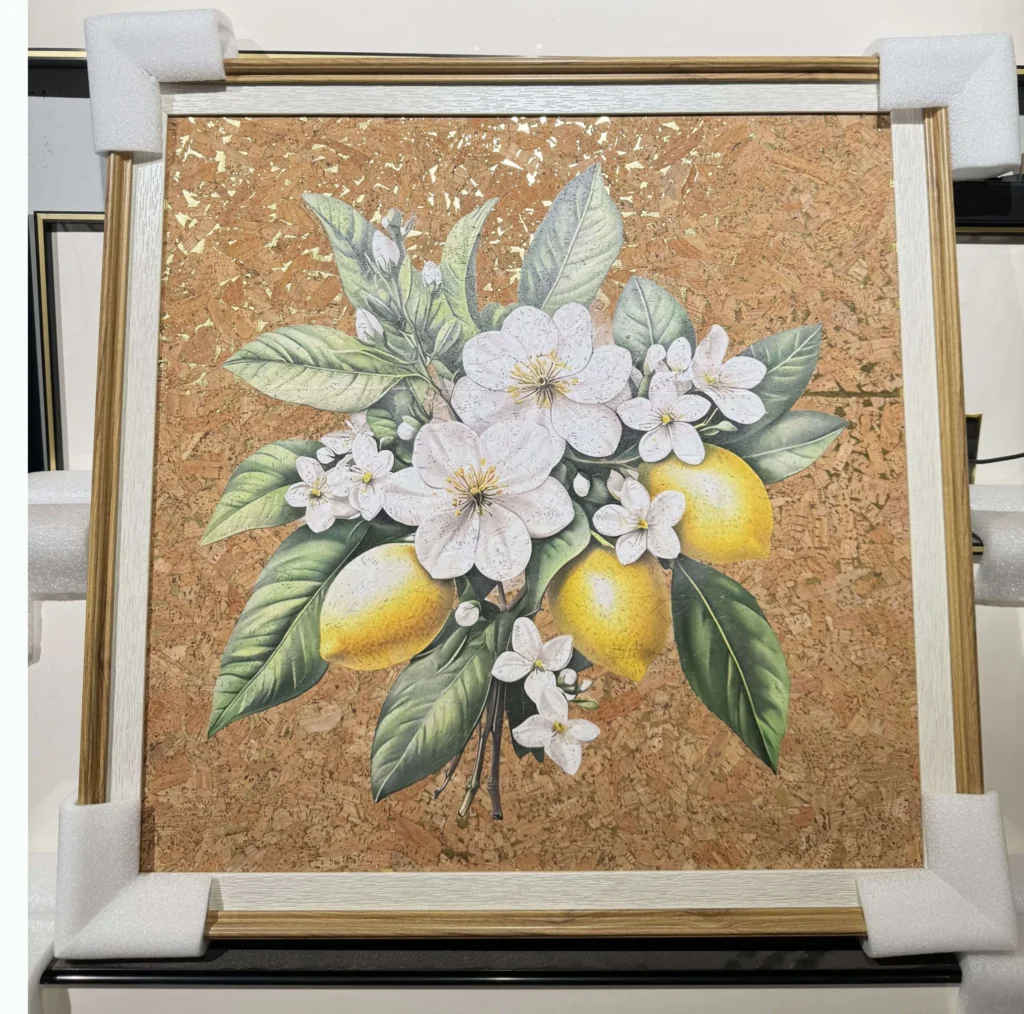
- Botanical artwork
- Reproductions
- Contemporary interiors
Because canvas can be stretched over lightweight wooden frames, very large dimensions are easier to manufacture and install.
Wood Wall Art
Wood adds warmth and natural texture to interior spaces.
Large carved or relief-style wooden artwork works particularly well in Bohemian, rustic, contemporary and luxury interiors.
Unlike flat prints, dimensional wood surfaces interact with changing light throughout the day.
Metal Wall Art
Metal artwork creates a cleaner and more architectural appearance.
It is frequently used in modern homes, offices, restaurants and hotels where designers want something more dimensional than a traditional framed print.
Resin and Textured Wall Art
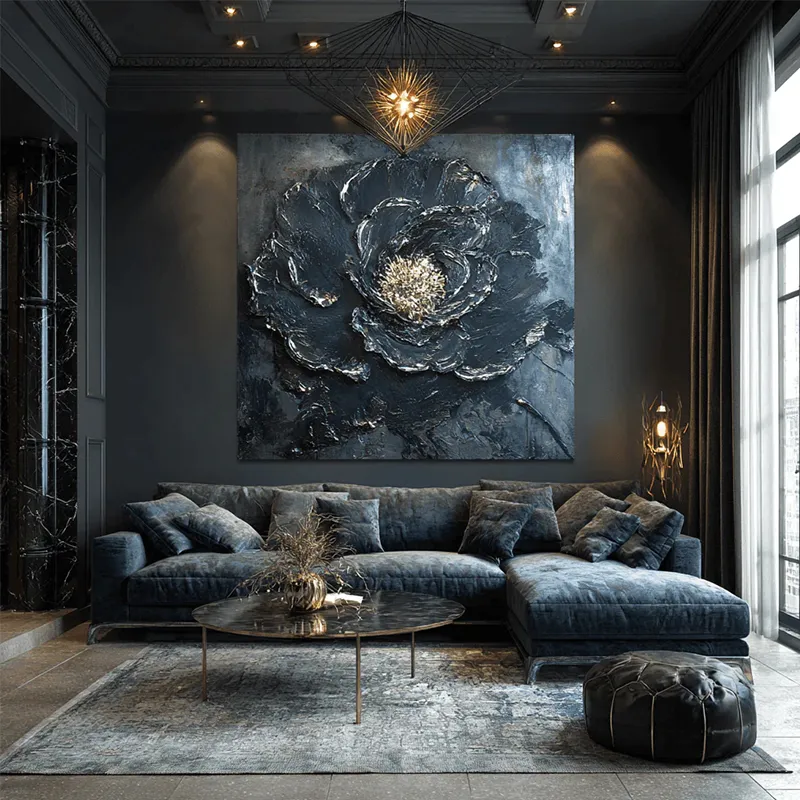
Resin artwork has become increasingly popular in statement interiors because its glossy finish, layered pigments, crystals and textured elements create strong visual depth.
Large resin pieces work especially well above sofas, dining tables and reception desks where lighting can highlight the surface.
Large Wall Art vs. Full-Wall Murals
Large framed artwork and murals create different visual effects.
A traditional oversized artwork remains a separate decorative object mounted on the wall. A mural, by contrast, can extend across most or all of the wall surface.
Murals can be hand-painted, digitally printed or produced using textured materials.
They are especially effective when the designer wants the wall itself to become part of the artwork.
For example, a large landscape mural can visually expand a compact room by creating a sense of depth. Architectural scenes, forests, coastlines and abstract perspectives can make an enclosed space feel more open.
In European-inspired interiors, designers sometimes use a dramatic mural or oversized artwork on one feature wall while keeping the surrounding walls relatively neutral. This creates contrast and allows the artwork to become the dominant visual element.
How to Choose Large Wall Art for Different Rooms
The best artwork should respond to both the size and function of the room.
For a living room, horizontal statement pieces generally work well above sofas and media units.
In bedrooms, large artwork above the headboard can help visually anchor the bed.
Dining rooms can accommodate stronger colors and dramatic compositions, while entryways benefit from artwork that immediately establishes the personality of the interior.
Commercial environments require slightly different considerations. Hotels, restaurants, offices and retail spaces often have larger walls and longer viewing distances, making oversized custom artwork particularly suitable.
In these environments, designers may also coordinate artwork dimensions, colors and materials with furniture, lighting and architectural finishes.
Custom Large Wall Art for Oversized Spaces
Standard retail sizes are not always suitable for large residential or commercial walls.
For spaces requiring artwork wider than 150–200 cm, custom large wall art provides greater flexibility.
Custom production can include adjustments to:
- Width and height
- Orientation
- Colors
- Materials
- Frames
- Surface finishes
- Multi-panel layouts
- Artwork designs
This is particularly useful for interior designers, hotels, commercial projects, furniture retailers and homeowners working with unusual wall dimensions.
Instead of selecting artwork first and hoping it fits the room, custom sizing allows the artwork to be designed around the architecture.
Final Thoughts
Large wall art is more than a way to fill an empty wall. When the proportions, colors and materials are chosen carefully, one oversized piece can define the entire character of an interior.
Start by measuring the wall and nearby furniture, then determine whether horizontal, vertical or multi-panel artwork best suits the available space.
For most living rooms, keeping the artwork approximately 60%–75% of the width of the furniture below it provides a useful starting point.
Finally, consider material as carefully as size. Canvas offers versatility and affordability, while wood, metal, porcelain and resin can bring stronger texture and visual depth.
Whether you choose a large canvas print, an abstract painting, dimensional wall sculpture or custom oversized artwork, the most successful piece should feel proportionate to the room and naturally connected to the surrounding interior.