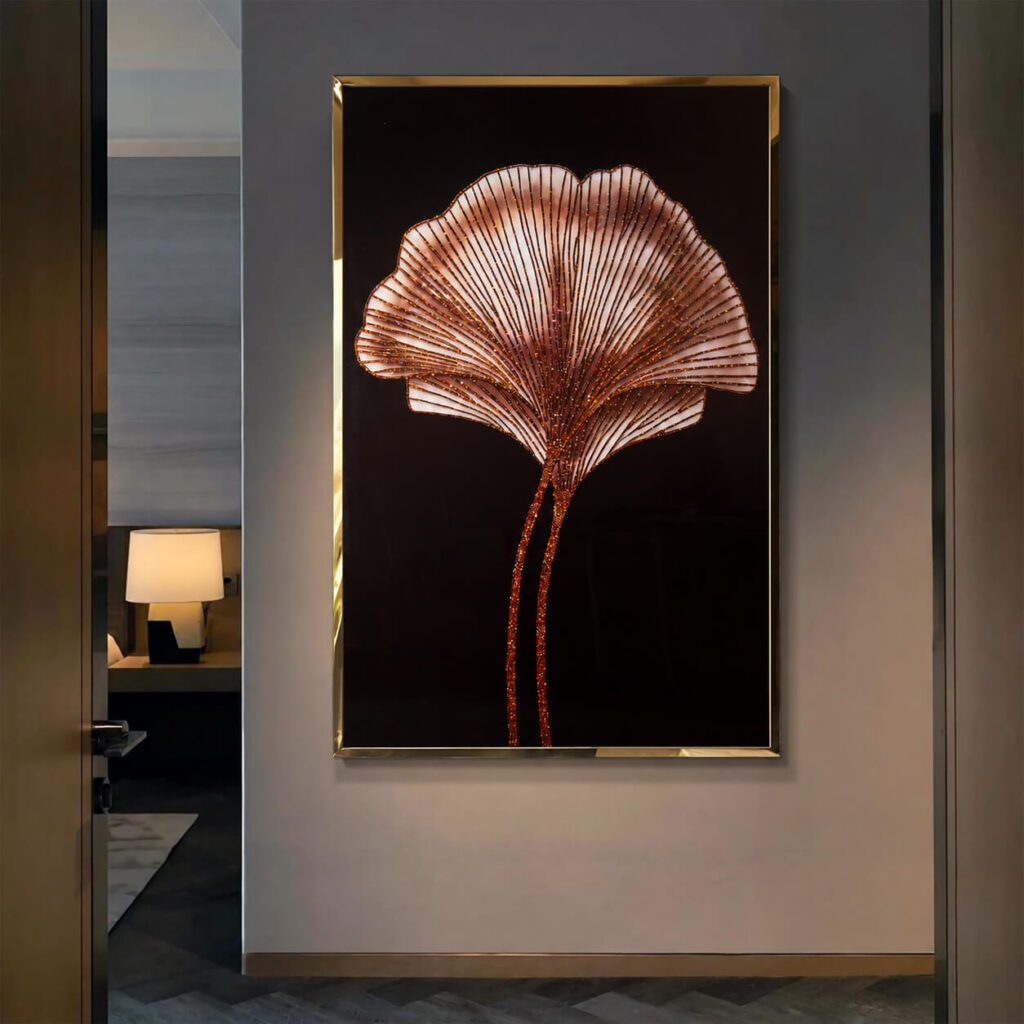
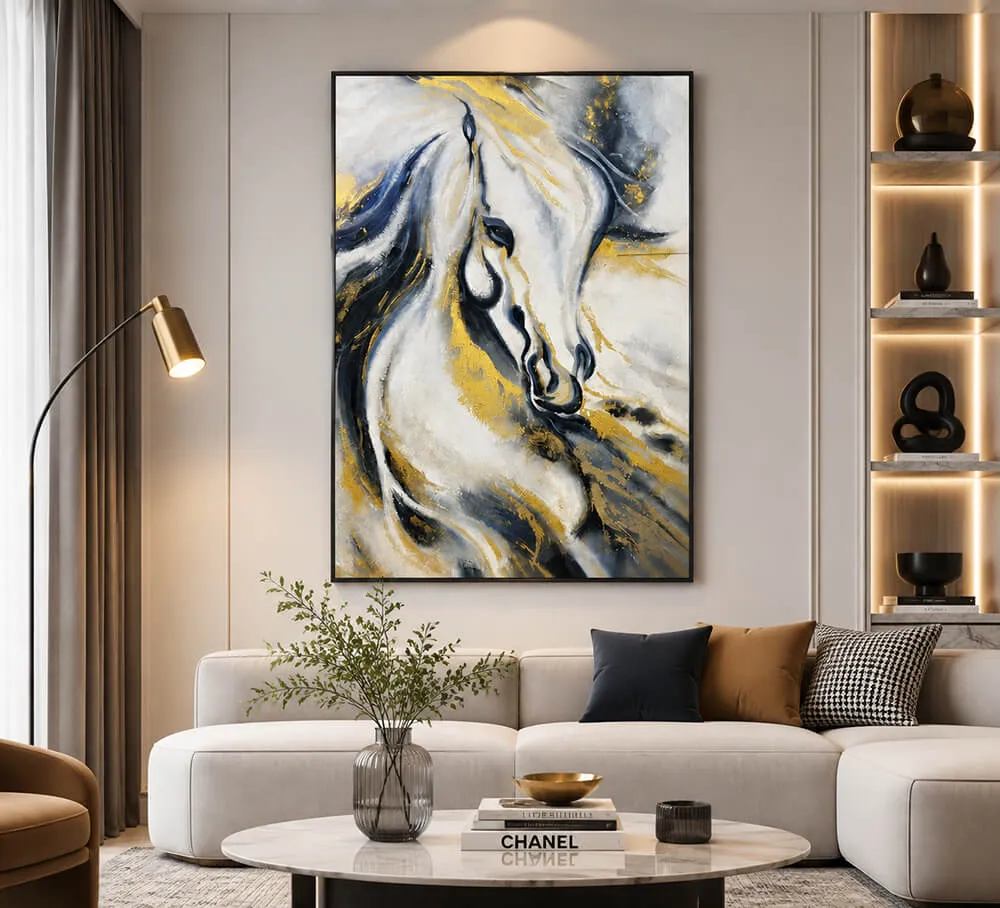
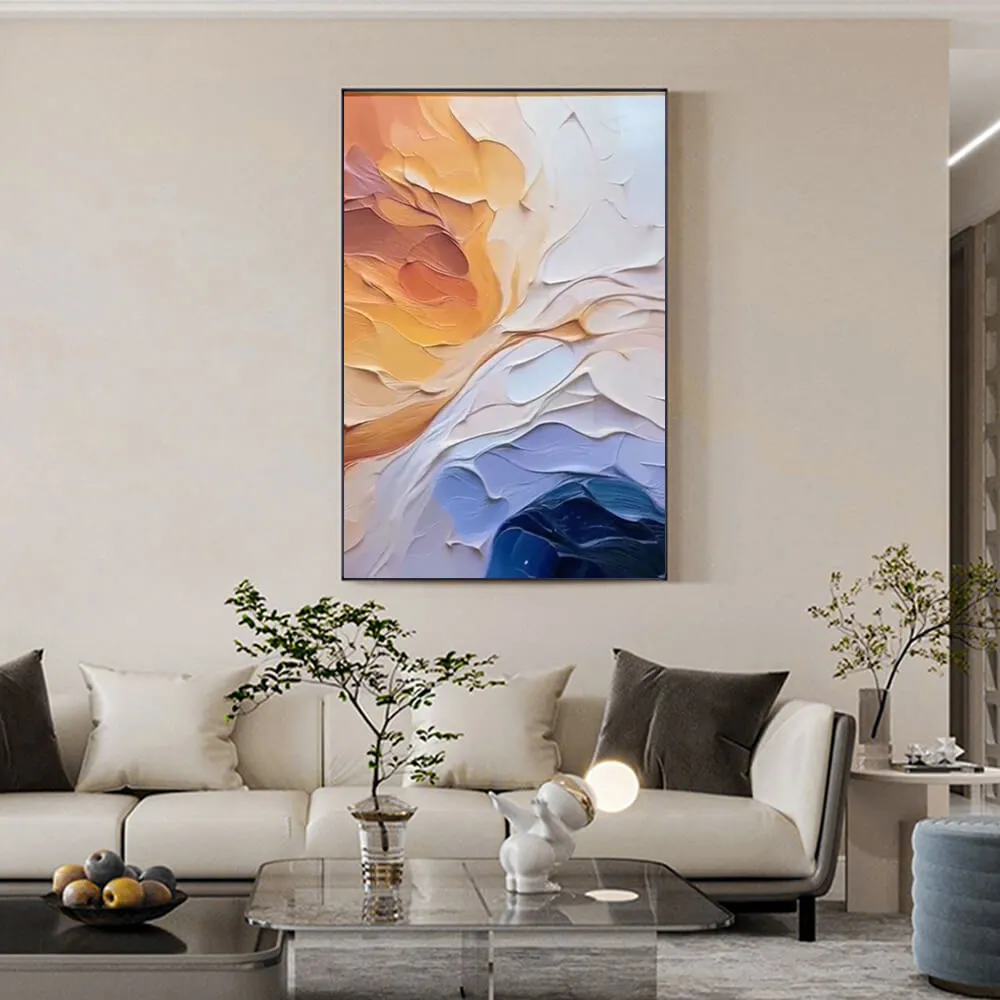
Wood-carving decorative paintings have become increasingly common in high-end residences, villas, hotels, guesthouses, clubs, offices, and commercial spaces in recent years.
Compared to ordinary printed paintings, the biggest feature of wood carving decorative paintings is that they not only express artistic effects through color and patterns, but also utilize natural wood grain, carving depth, openwork structures, and hand-finished surface treatments to create true three-dimensional layers on the wall.
However, customers who purchase or customize wood carving decorative paintings for the first time often encounter many practical questions. For example, what kind of wood should be chosen? Should it be machine-carved or hand-carved? Will solid wood crack? How thick should the wood carving be? How are large wood carving decorative paintings produced?
Below, Stellora Wall Art provides detailed answers to the 5 most frequently asked questions.
1. What kind of wood is generally used for wood carving decorative paintings?
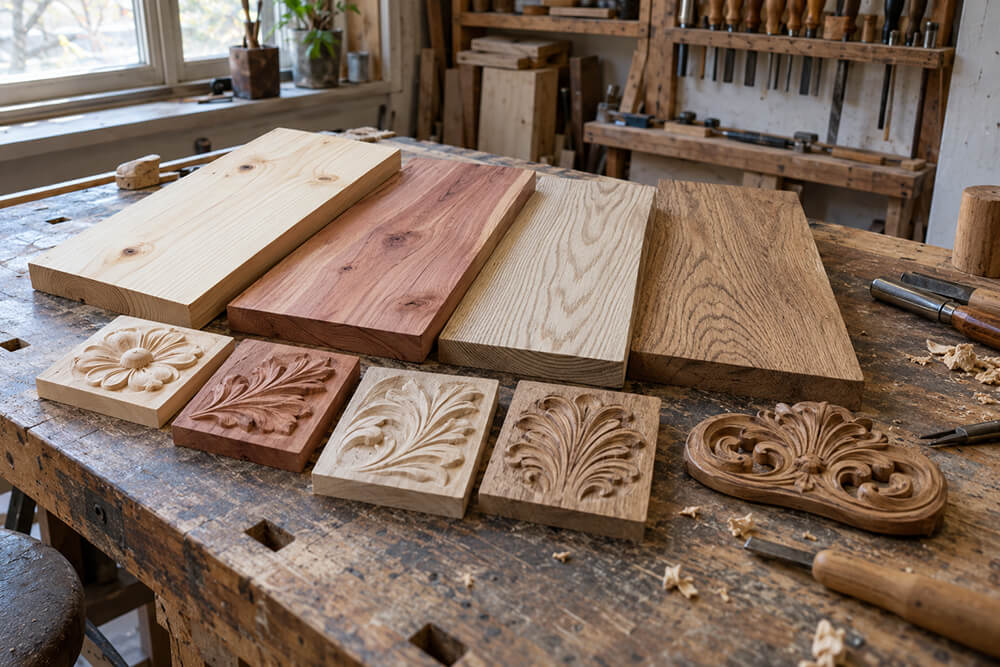
There is no fixed standard wood for wood carving decorative paintings, as different works have different requirements for grain, hardness, weight, cost, and carving effect.
Commonly used materials include pine, cedar, rubberwood, ash, oak, and other natural solid woods. In addition, some large-scale projects may utilize plywood, MDF, or a combination of solid wood and engineered wood.
If clients prioritize natural wood grain and a high-end feel, solid wood is usually a better choice.
For example, ash and oak have distinct natural grain patterns. After staining, varnishing, or wood wax oil treatment, they can create a sophisticated visual effect, making them ideal for modern, natural, wabi-sabi, and high-end villa spaces.
Methods like pine and cedar are relatively lightweight and easier to process, making them suitable for larger decorative paintings.
However, more expensive wood is not always better.
Truly professional wood carving production requires comprehensive consideration of the artwork’s size, carving depth, installation method, transportation environment, and the client’s budget.
For example, a large hotel room wood carving, if made entirely of heavy solid wood, while using high-quality materials, might result in excessive weight, increased transportation costs, and greater installation difficulty.
Therefore, Stellora Wall Art typically selects the most suitable materials based on the specific needs of the project, rather than simply pursuing a particular type of expensive wood.
2. Is the wood carving/decorative painting machine-carved or hand-carved?
This is a question that clients are very concerned about.
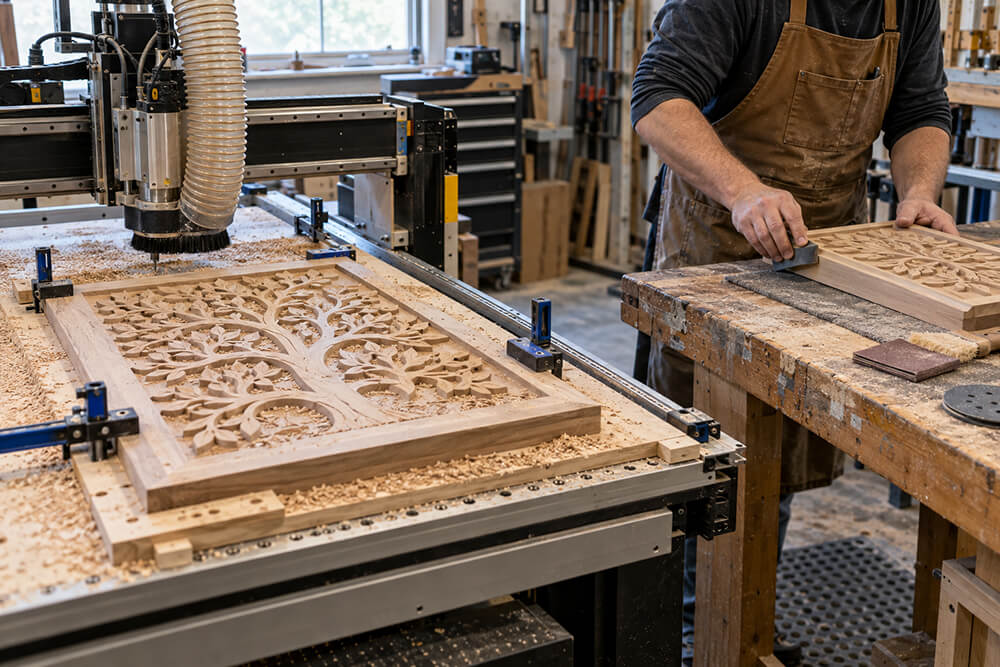
In fact, many high-quality wood carving/decorative paintings now use a production method of “machine processing + manual finishing.”
CNC carving equipment can precisely process wood according to computer design files, especially when creating geometric patterns, complex textures, repetitive structures, and batch orders, ensuring consistency in size and pattern between different products.
For hotel and commercial projects with dozens, hundreds, or even larger quantities, this consistency is crucial.
However, machine carving does not mean the product is finished.
After CNC processing, many high-end products still require extensive manual finishing, including edge sanding, groove trimming, surface polishing, aging, staining, and hand finishing.
The machine provides precision, the hand provides texture.
For example, some natural-style wood carvings, if entirely machine-processed, may have an overly regular surface, while manual sanding and texture finishing allow the work to have more natural variations.
Therefore, truly excellent modern wood carvings are not simply a matter of “handmade” versus “machine-made,” but rather a matter of whether the two techniques are combined effectively.
3. Will wood carvings crack?
Wood is a natural material and is affected by changes in air humidity and temperature.
Therefore, from a material perspective, any natural solid wood carries a certain degree of risk of shrinkage, expansion, or slight cracking.
However, professional factories can significantly reduce this risk through their production processes.
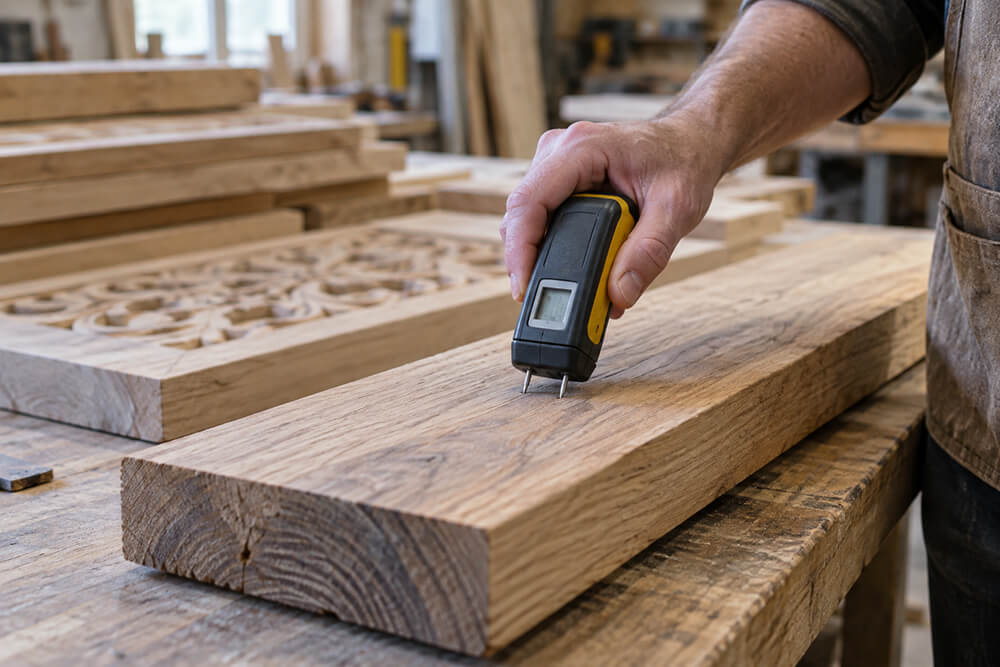
Firstly, controlling the moisture content of the wood is crucial.
Before formal processing, the wood needs to be thoroughly dried to maintain its moisture content within a relatively stable range. If the internal moisture content of the wood is too high, the product is prone to warping or cracking due to rapid water loss after being transported to a drier country.
Secondly, structural design is important.
For large wood carvings, using a single thick piece of wood is not always the best choice.
Often, using multiple pieces of solid wood joined together, a back support structure, or a multi-layered structure can improve overall stability.
Especially for large pieces exceeding 100 centimeters, the importance of structural design even surpasses the price of the wood itself.
In addition, surface coatings, wood wax oil, or protective varnishes can reduce direct moisture exchange between the wood and the outside air, improving the long-term stability of the artwork.
Therefore, whether a high-quality wood carving is prone to cracking largely depends on the wood treatment and manufacturing process, not just the wood itself.
4. How thick should a wood carving be?
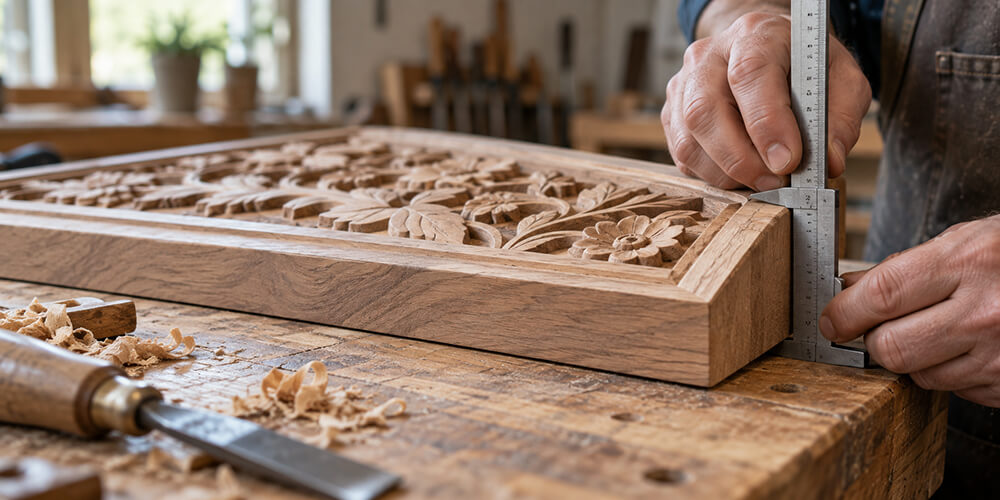
The thickness of a wood carving mainly depends on the design style.
For modern minimalist styles or shallow relief products, a particularly thick design is usually unnecessary; about 2-5 cm is sufficient to create good visual depth.
If the artwork requires a pronounced relief effect, multi-layered construction, or a three-dimensional openwork structure, the thickness may need to be increased further.
However, it’s important to note that thicker wood carvings do not necessarily equate to higher quality.
Increasing the product thickness will simultaneously increase weight, material costs, packaging size, and international shipping costs.
For example, a large 100×150 cm wood carving, if made solely to increase thickness using a large amount of solid wood, may end up being very heavy without significantly improving the visual effect.
Therefore, Stellora Wall Art emphasizes “visual depth” rather than simply increasing material thickness when designing wood carvings.
Through bas-relief, multi-layered designs, shading structures, and openwork designs, a rich three-dimensional effect can be achieved even when the overall thickness of the work is kept within a reasonable range.
This design is particularly important for hotel projects and international shipping.
5. Can wood carvings be made in very large sizes?
Absolutely.
Common sizes for wood carvings include 60×90 cm, 80×120 cm, 100×100 cm, and 100×150 cm, and larger sizes can also be made depending on the project.
However, as the size of the work increases, the production method needs to change.
The biggest challenge for large wood carvings is usually not “whether they can be carved,” but rather stability, weight, packaging, and transportation.
For example, a large wood carving over 200 cm in diameter, if constructed entirely from a single board, would not only be extremely heavy, but the wood would also be more prone to deformation in different environments.
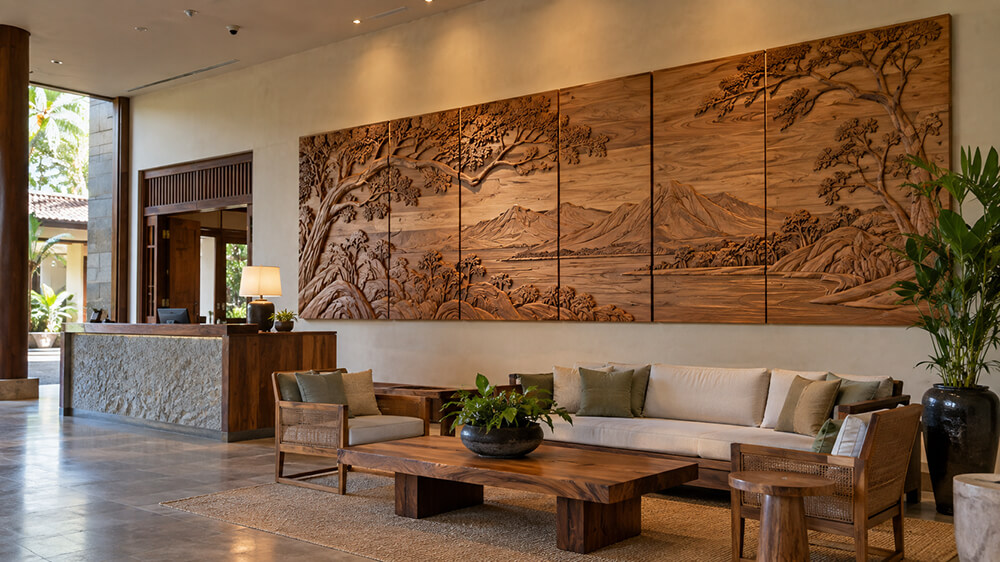
Therefore, large wood carvings typically employ modular designs, hidden joints, or multi-panel structures.
After installation, the artwork remains a complete piece of art from the front, but it can be divided into multiple independent packages for transport.
This method significantly reduces the risk of damage during transportation and facilitates on-site installation.
For high-ceilinged living rooms in villas, hotel lobbies, clubhouse feature walls, and large commercial spaces, complete wood-carved art walls can be developed according to wall dimensions.
For example, triptychs, quintets, or even combinations of multiple modules can be used to create complete wall art installations through different depths, textures, and arrangements.
Stellora Wall Art: Wood-carved Decorative Paintings are Not Just Sculptures, But Structural Designs
Truly high-quality wood-carved decorative paintings are not simply about carving patterns on a wooden board.
From wood selection and moisture content control to CNC machining, hand sanding, surface treatment, structural design, and final installation methods, every step affects the quality of the artwork.
Especially for large-scale wood-carved decorative paintings and commercial projects, visual effects, product weight, long-term stability, and international shipping must be considered simultaneously.
Stellora Wall Art can provide solid wood carvings, bas-reliefs, multi-layered woodwork, openwork wood carvings, and large-scale custom-made wood-carved art walls according to different client needs. Whether it’s a villa, hotel, guesthouse, club, or a furniture brand, design firm, or decorative painting dealer, we can customize development based on size, pattern, material, color, and project budget.
For wood carving decorative paintings, true high-end isn’t just about using expensive wood, but about achieving a reasonable balance between materials, design, craftsmanship, structure, and spatial effect.