
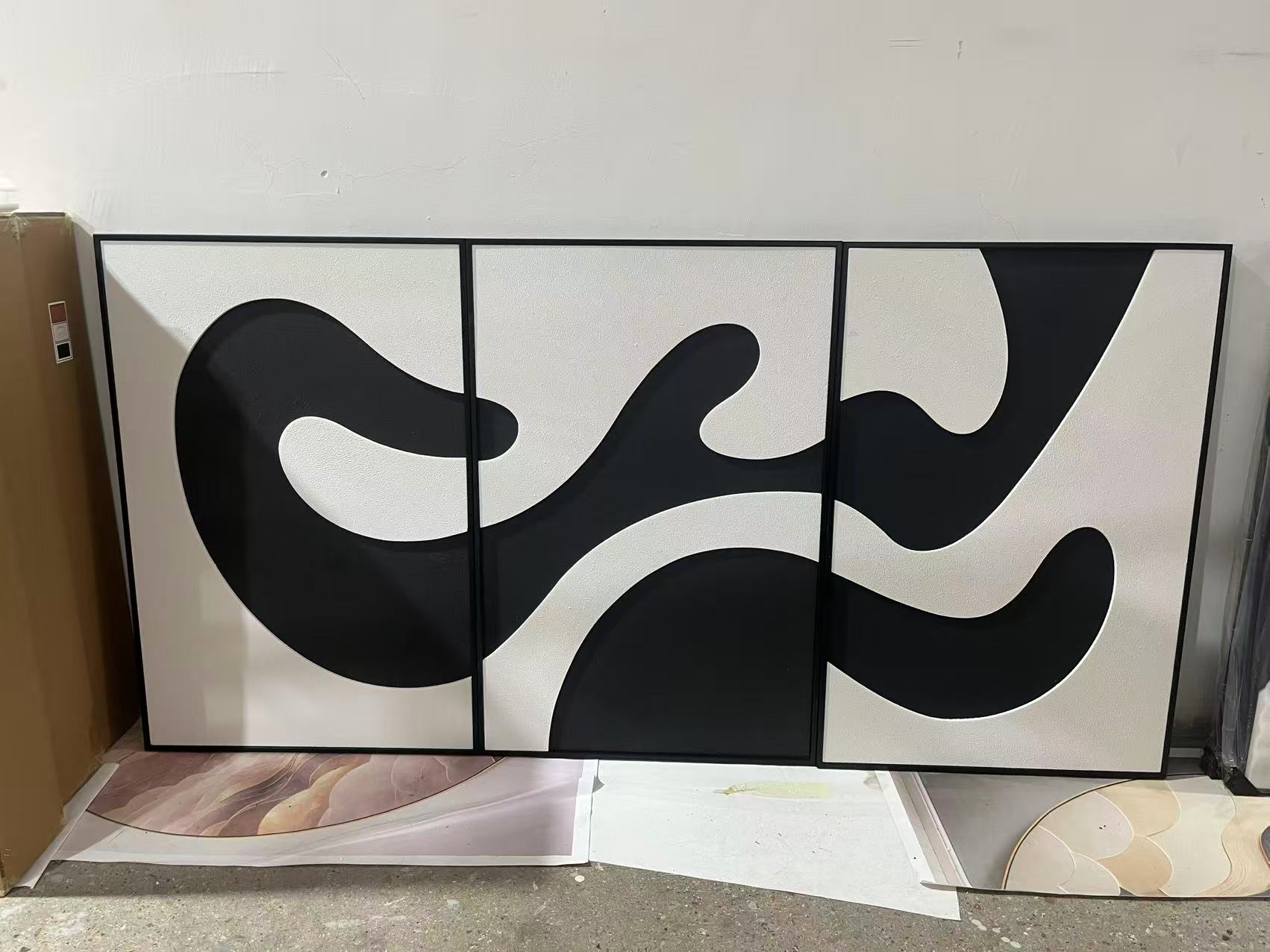
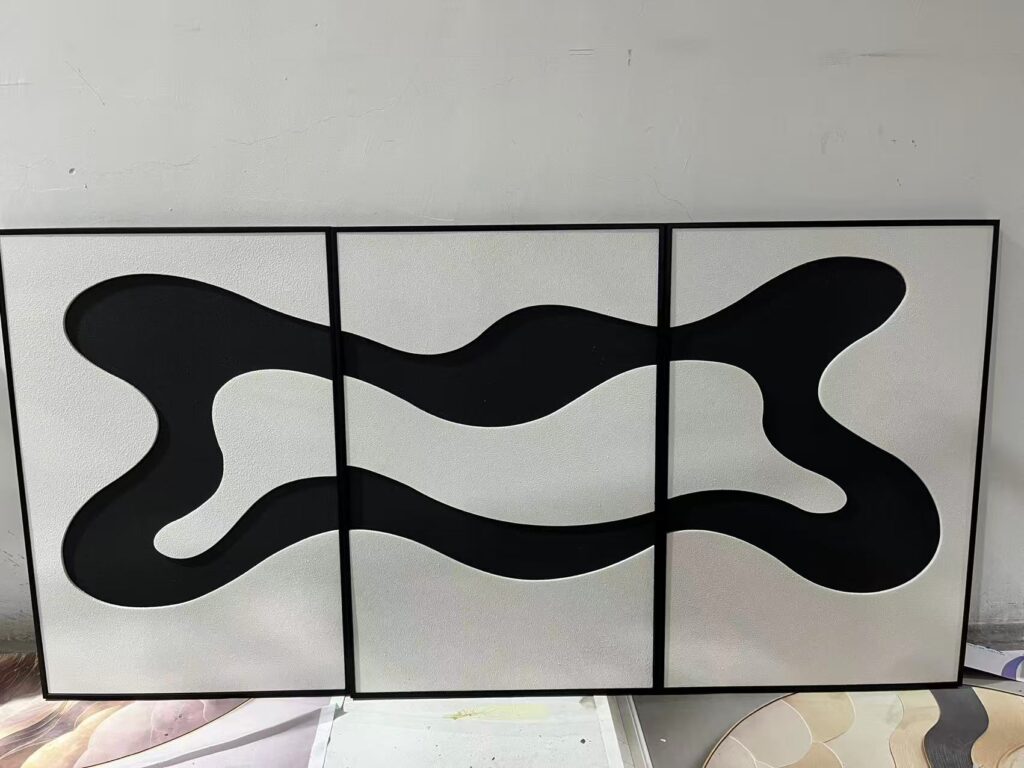
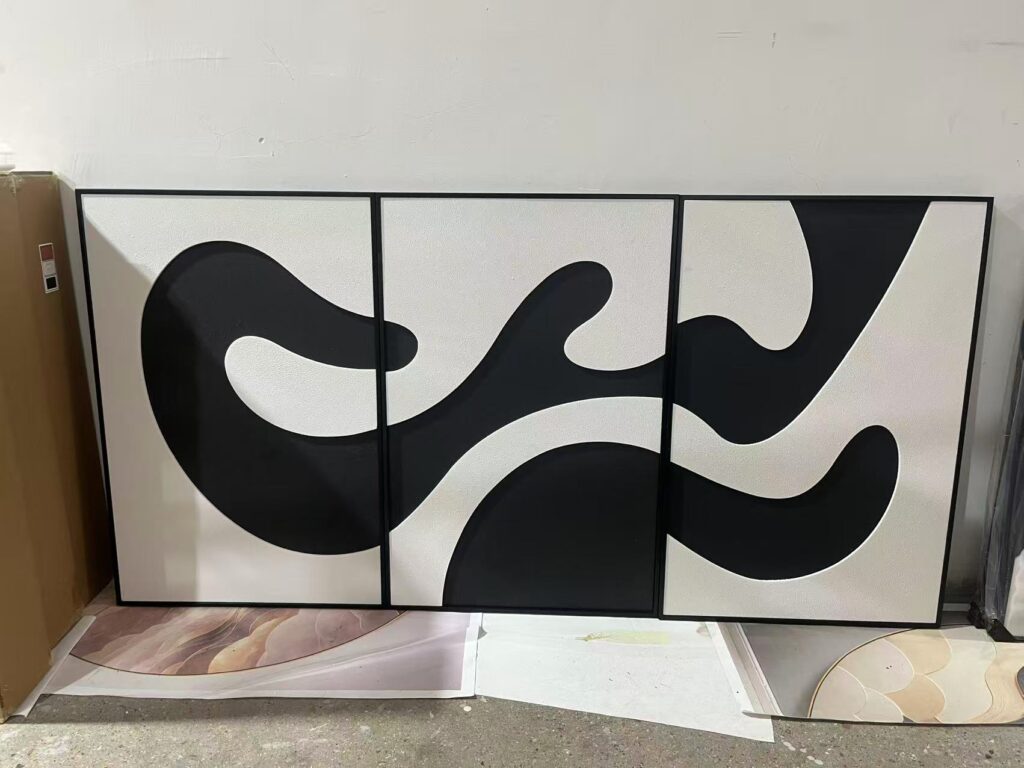
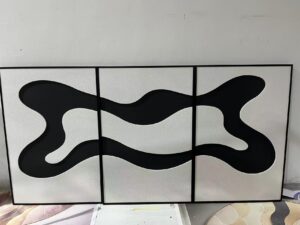
Black and White Abstract Wall Art turns three separate frames into one flowing composition. Bold curves and textured white surfaces create a sequence of movement and pause, giving the wall a clear visual rhythm.
Follow the Curves Across a Black and White Triptych
Begin at the left panel and trace a black shape toward its edge. Then look for its continuation in the next frame. The individual panels contribute to a larger composition, so their order matters as much as their separate designs.
Movement in Black and White Abstract Wall Art
Broad black forms create sweeping turns, while narrower bands carry the eye sideways. In one arrangement, the shapes curl around generous white areas. Another uses longer horizontal curves to connect the three panels.
As a result, the composition can feel expansive or more tightly gathered. When choosing a textured monochrome wall art set, follow the entire sequence and consider the movement you want above your furniture.
White Space in Abstract Wall Art
White areas help define the black contours. The Whitney Museum’s guide to positive and negative space distinguishes the subject from the surrounding space. Here, white can read as both a background and a distinct curved form.
Look closer, and the granular white surface adds another point of interest. For accompanying pieces on nearby walls, browse Wallartura’s other material paintings for textures that echo this detail. Repeating a surface quality can connect different artworks within the room.
Frame Spacing and the View from the Room
The slim black frames mark pauses between the curves. Keep their top edges aligned, then test even gaps that allow the shapes to remain visually connected. Before hanging, lay out the complete group in its intended order.
In living rooms, assess the triptych’s full width alongside the sofa or cabinet below. Wallartura’s living room wall paintings guide offers further advice on relating artwork scale to furniture.