Architectural images add more than color to a room. They also bring height, history, and a clear focal point. Cathedral architecture canvas wall art uses church scenes and warm tones to give modern homes and commercial spaces a strong visual identity.
Cathedral Architecture Canvas Wall Art for Refined Spaces
A Strong Architectural Focus
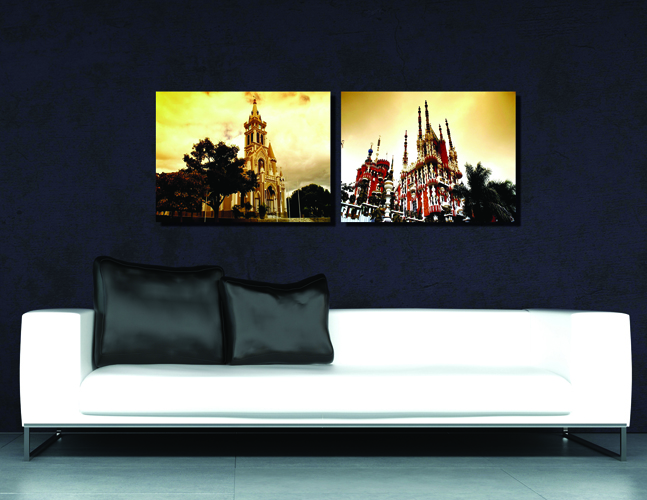
This canvas artwork shows European church and cathedral buildings with pointed towers, tall lines, and detailed fronts. Warm yellow, red, and dark colors create a bold, film-like effect. As a result, the artwork feels more personal than a simple abstract print.
Above a modern sofa, the tall towers balance low horizontal furniture. The same design can also support a console, reading corner, reception desk, or hallway.
Warm Colors for Modern Rooms
The dark background makes the warm building colors stand out. At the same time, the black and neutral areas work well with white upholstery, wood furniture, and soft lighting. Therefore, the artwork can add depth without making a room feel crowded.
Gothic Design with Cultural Meaning
Pointed arches, tall towers, and rich details often appear in Gothic and Neo Gothic church design. These features create a sense of height, craft, and history. For more background on European Gothic cathedral heritage, see UNESCO’s overview of Cologne Cathedral.
This cultural context helps viewers see the artwork as architectural decor with historical character, not only as a building image.
Living Room and Home Applications
For homeowners, this design suits living rooms, studies, hallways, and home offices. In particular, buyers searching for canvas wall art for living room decor can place it above a sofa or console.
It also works well as a strong accent in a neutral room or a darker, more dramatic interior.
Office and Hospitality Applications
Meanwhile, the same design works as office wall art in reception areas, meeting rooms, boutique hotels, restaurants, and cultural venues. The building theme creates a clear sense of place.
In addition, designers, retailers, and project buyers can use it in spaces that need a refined visual theme.
Placement and Project Planning
Before hanging the artwork, compare its total width with the furniture below it. Then keep the display at a comfortable viewing height. If buyers display coordinated pieces, they should keep equal gaps and treat the group as one visual unit.
Our wall art arrangement guide explains practical points about size, spacing, and layout.
Finally, confirm the size, orientation, color balance, frame type, and packaging before production. This step helps homeowners, interior designers, hotel teams, and distributors select artwork that fits both the room and the order plan.