Claude Monets „Lavacourt im Schnee“ (1881): Analyse und Geschichte des Meisterwerks

Preis: $298

Artist / Designer: Claude Monet
Produktbeschreibung:
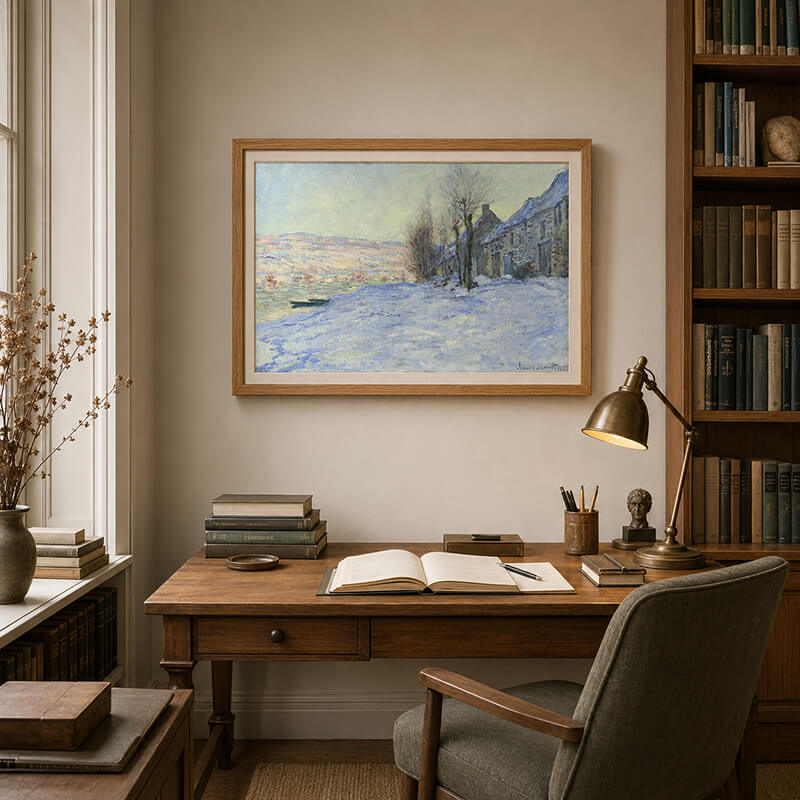
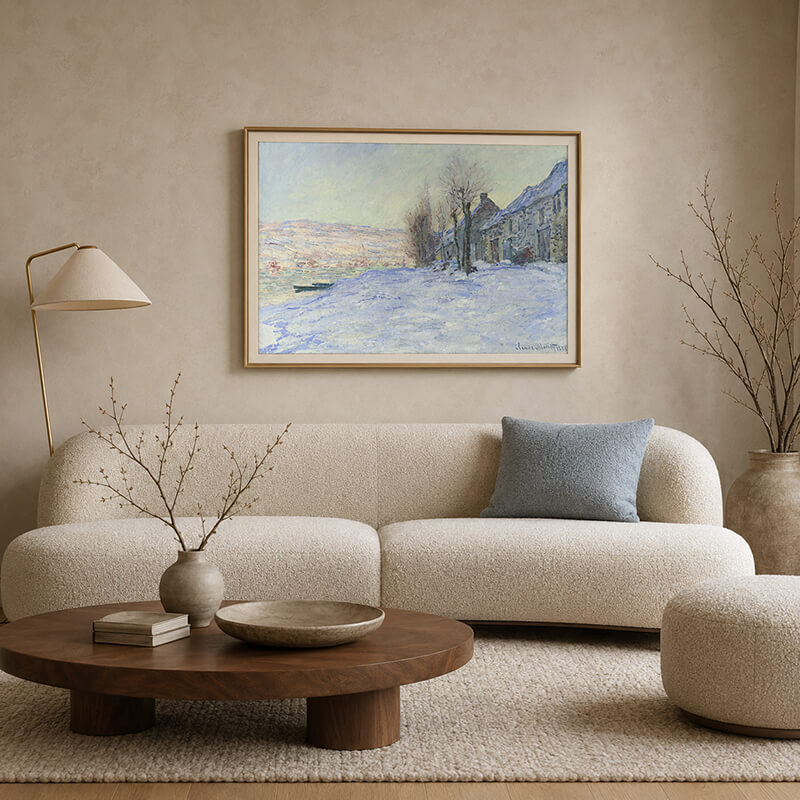
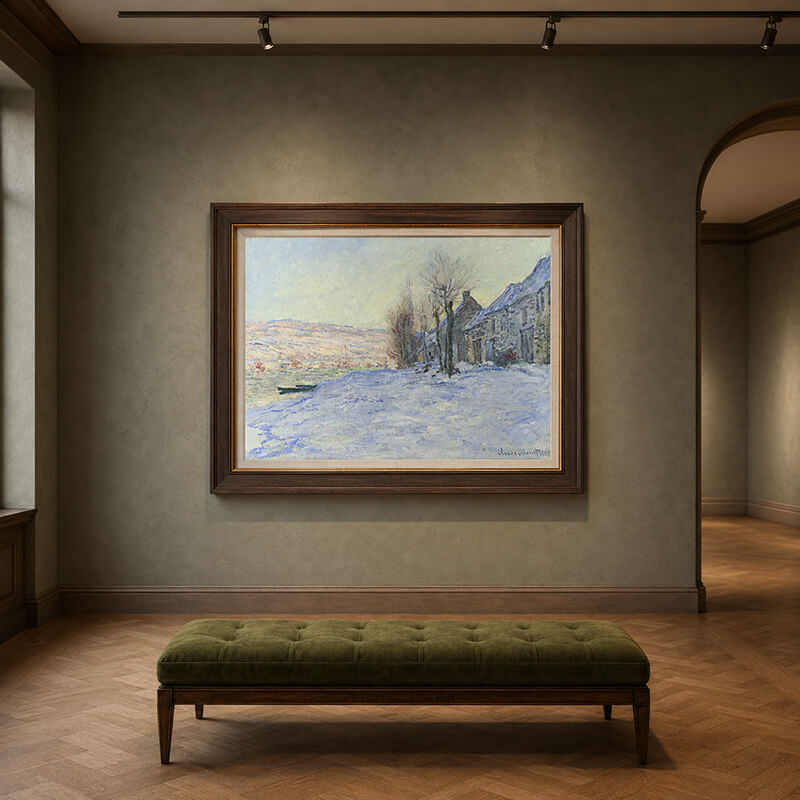
Inspired by Claude Monet’s 1881 Impressionist masterpiece Lavacourt under Snow, this exquisite decorative wall art beautifully captures the serene winter tranquility of a riverside village along the Seine. Moving beyond traditional plain white, the artwork skillfully employs a soft, luminous color palette—blending subtle lavender, icy blues, and delicate pink tones—to depict the changing reflections of winter light and shadow. Slender trees and rustic stone cottages stand harmoniously against the snowy riverbank, creating a poetic, atmospheric, and deeply immersive visual effect. Ideal for modern homes, luxury hotels, fine restaurants, galleries, and upscale commercial interiors, this piece brings classic sophistication and timeless elegance to any room.

Mindestbestellmenge: 1 Stück
Verfügbare Größen: Standard- und Sondergrößen erhältlich
Material: Wood / Canvas
Farbe: Standard- oder Sonderfarben
Stil: Impressionist / Classic Landscape
Rahmenoptionen: Gerahmt
Abtastzeit: 5–10 Werktage
Produktionszeit: 5–10 Werktage
Anpassung: Design, Größe, Farbe, Material, Rahmen, Logo, Etikett und Verpackung
Verpackung: Schaumstoffpolsterung, Eckenschutz, Exportkarton oder Holzkiste
Versand: DHL, FedEx, Luftfracht, Seefracht oder beauftragter Spediteur
OEM & ODM: Verfügbar
Qualitätsprüfung: Umfassende Prüfung vor dem Versand

Monet Lavacourt under Snow 1881: Light, Color, and Winter Silence

Monet Lavacourt under Snow 1881 invites viewers into a landscape transformed by frost, reflected light, and subtle color. Claude Monet does not treat winter as a blank white surface. Instead, he builds the snow from blue, violet, cream, and pale pink, revealing how light changes even the coldest scene. The result is quiet, atmospheric, and distinctly Impressionist.

Historical Context of Monet Lavacourt under Snow 1881

Monet beside the Seine

Lavacourt is a small hamlet on a bend of the Seine, opposite Vétheuil, where Monet lived from 1878. Here, he moved away from urban subjects and studied the rural landscape through changing seasons. The river, village buildings, and fields became a natural laboratory for observing weather and light.

The National Gallery, London,  dates the picture to about 1878–81. Although Monet inscribed it 1881, the museum notes that he may have painted it during the severe winter of 1879–80, when the Seine froze.

A Period of Artistic Transition

Monet faced financial hardship after moving to Vétheuil. However, the quieter environment encouraged him to concentrate on landscape and paint outdoors more consistently. He also returned to similar views under different conditions, anticipating the serial method that later shaped his haystack and water-lily paintings.

Impressionist Snow Light and Color

Blue and Violet within the Snow

The foreground appears white at first glance, yet Monet overlays it with cool blue and lavender strokes. These colors suggest shadow, uneven ground, and the crisp atmosphere beside the river. Meanwhile, pale pink and cream tones brighten the distant bank, where weak sunlight warms the snow. Therefore, color temperature creates depth without detailed modelling.

Monet rejects the idea that snow has one fixed color. Instead, every area responds to light, distance, and surrounding forms. This sensitivity gives the landscape a living surface despite its stillness.

Brushwork and Composition

Broad, loose strokes describe the heavy snowbank in the foreground. In contrast, sharper vertical marks define the bare trees and dark cottages on the right. The horizontal composition leads the eye toward the river and distant hills, while the buildings provide visual stability.

Furthermore, the small dark boat interrupts the pale palette and anchors the left side. Monet balances open space with compact architecture, making the scene feel observed rather than staged.

Significance within Monet’s Winter Landscapes

Like The Magpie, Lavacourt under Snow shows Monet turning winter weather into a study of light. However, this painting feels less narrative and more immersive. Its restrained palette and broad snowfield focus attention on atmosphere, temperature, and perception.

For collectors exploring extra-large wall art for living room interiors, the horizontal composition works especially well on wide walls. Its cool palette can complement warm wood, cream upholstery, muted gray, and soft blue accents without making a room feel harsh.

A Lasting Winter Impression

Monet Lavacourt under Snow 1881 transforms an ordinary riverside village into a meditation on winter light. By finding blue, purple, pink, and warmth within the snow, Monet teaches viewers to look beyond familiar assumptions. Which detail or color captures your attention most? Share your impression in the comments.


Gestalten Sie ein einzigartiges Wandkunstwerk, das ganz auf Ihr bevorzugtes Design, Ihre Wunschgröße, Farbe, Ihr Material und Ihren Stil zugeschnitten ist. Nachdem Sie die Details zur individuellen Gestaltung und das Angebot bestätigt haben, können Sie Ihre Bestellung sicher über PayPal, Visa, Mastercard, Maestro, American Express, Discover, JCB, UnionPay, Apple Pay, Alipay, WeChat Pay, Zelle, Western Union, Diners Club International oder Bitcoin abschließen.

Kontaktieren Sie uns noch heute, um Ihr individuelles Wandkunstprojekt zu starten.

Wir bieten flexible internationale Versandlösungen für individuelle Wandkunst an, einschließlich der Zustellung durch führende Versanddienstleister wie FedEx, DHL und UPS. Je nach Bestellumfang, Bestimmungsort und Lieferanforderungen stehen außerdem Luftfracht, Seefracht, Expressversand und Haus-zu-Haus-Lieferung zur Verfügung.

Jedes Kunstwerk wird sorgfältig mit verstärkten Ecken, feuchtigkeitsbeständiger Verpackung und einer sicheren Außenverpackung geschützt, um sicherzustellen, dass es sicher und in einwandfreiem Zustand bei Ihnen ankommt. Die Versandoptionen und -kosten werden Ihnen vor Abschluss Ihrer Bestellung bestätigt.

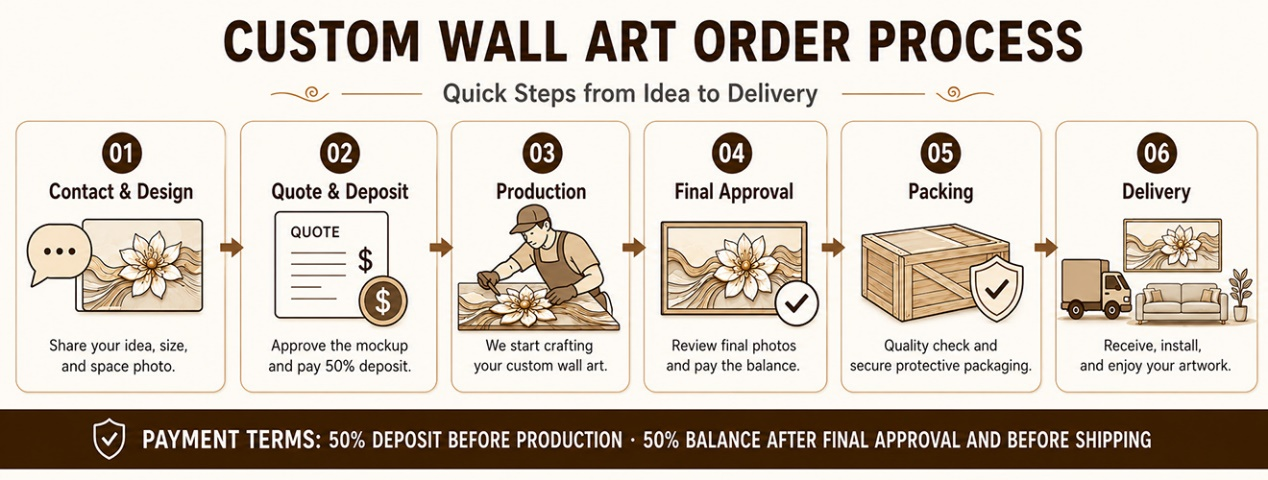
So bestellen Sie Ihre individuelle Wanddekoration

① Teilen Sie Ihre Idee mit

Senden Sie uns Ihr gewünschtes Design, die Größe, die Farbe, das Material sowie ein Foto des Raums, in dem das Kunstwerk ausgestellt werden soll.

② Angebot und Entwurf anfordern

Wir werden Ihre Anforderungen prüfen und Ihnen ein detailliertes Angebot zusammen mit einem Entwurfsmodell zur Freigabe vorlegen.

③ Bestätigen und die Anzahlung für 50% leisten

Sobald das Design und der Preis bestätigt sind, leisten Sie bitte eine Anzahlung in Höhe von 50%, damit die Produktion beginnen kann.

④ Handgefertigte Produktion

Unser kompetentes Team fertigt Ihre Wanddekoration sorgfältig gemäß dem genehmigten Entwurf, den Maßen und den Anforderungen an die Oberflächenbehandlung an.

⑤ Endkontrolle und Restzahlung

Nach der Fertigung senden wir Ihnen aussagekräftige Fotos oder Videos zur endgültigen Freigabe zu. Der Restbetrag in Höhe von 50% ist vor dem Versand zu begleichen.

⑥ Sichere Verpackung & weltweiter Versand

Ihr Kunstwerk wird sorgfältig geprüft, mit einer verstärkten Verpackung geschützt und sicher an Ihre Adresse versandt.

Laden Sie Ihr Lieblingsfoto hoch und lassen Sie daraus ein individuelles Wandbild anfertigen – Ölgemälde, Kunstwerke aus Kunstharz, Tierporträts, Familienporträts und vieles mehr, ganz auf Ihren Stil abgestimmt.