Sourcing Blue and White Shard Vase Art for European Projects
Porcelain Shard Floral Vase Wall Art can create a distinctive mid-to-high-end collection, but loose shards, damaged raised flowers and scratched gold frames can quickly reduce a buyer’s margin. European importers, retailers and project buyers should therefore evaluate construction, consistency and packaging before comparing quotations.
More Than a Printed Floral Vase Picture
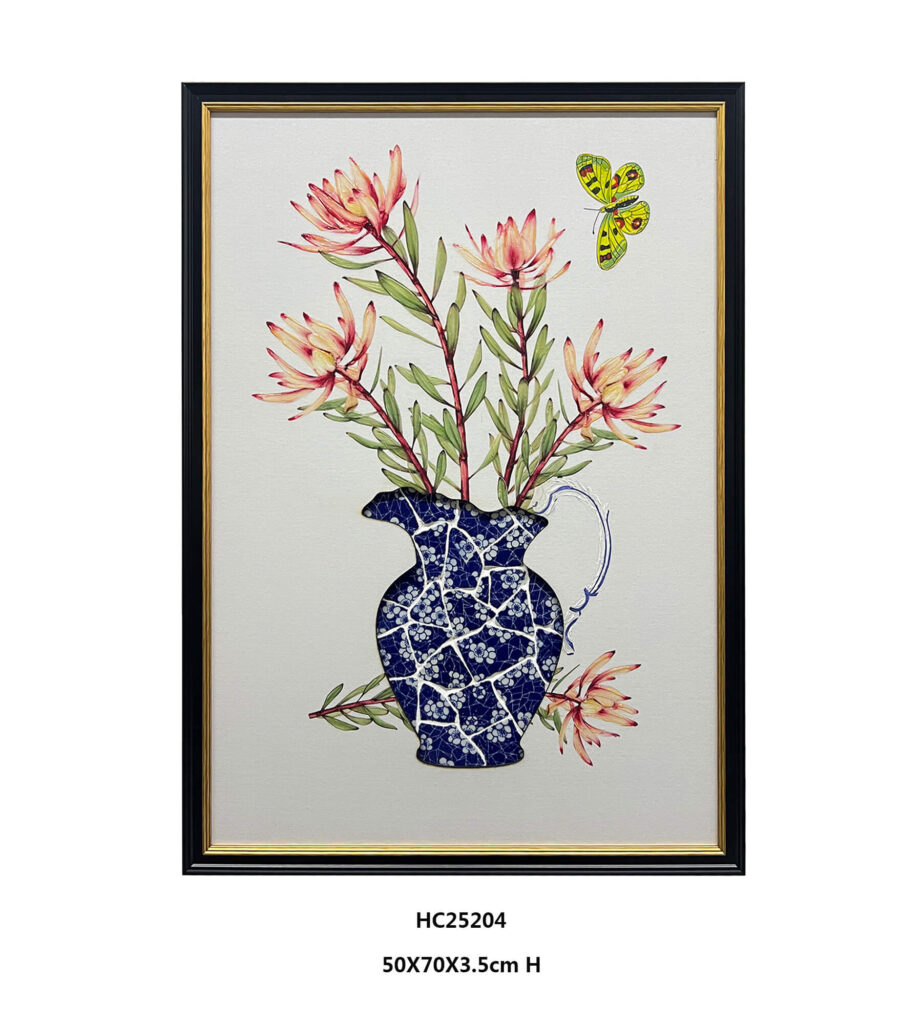
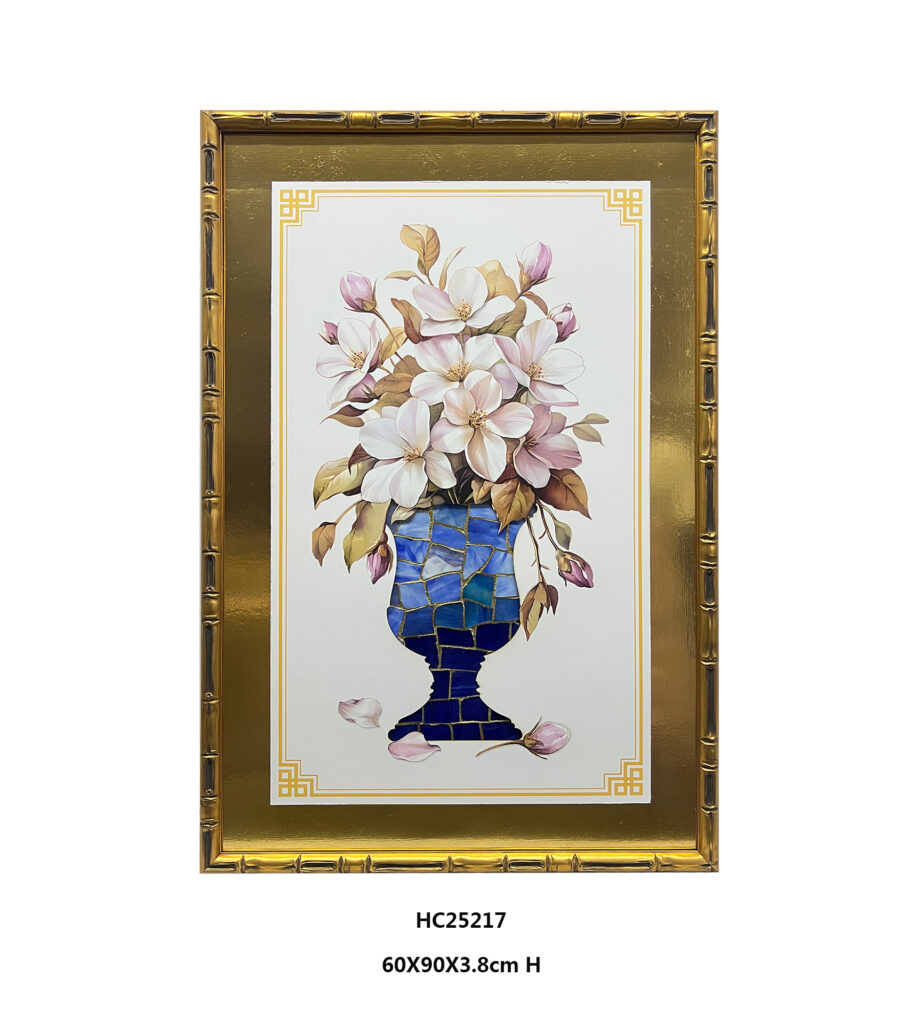
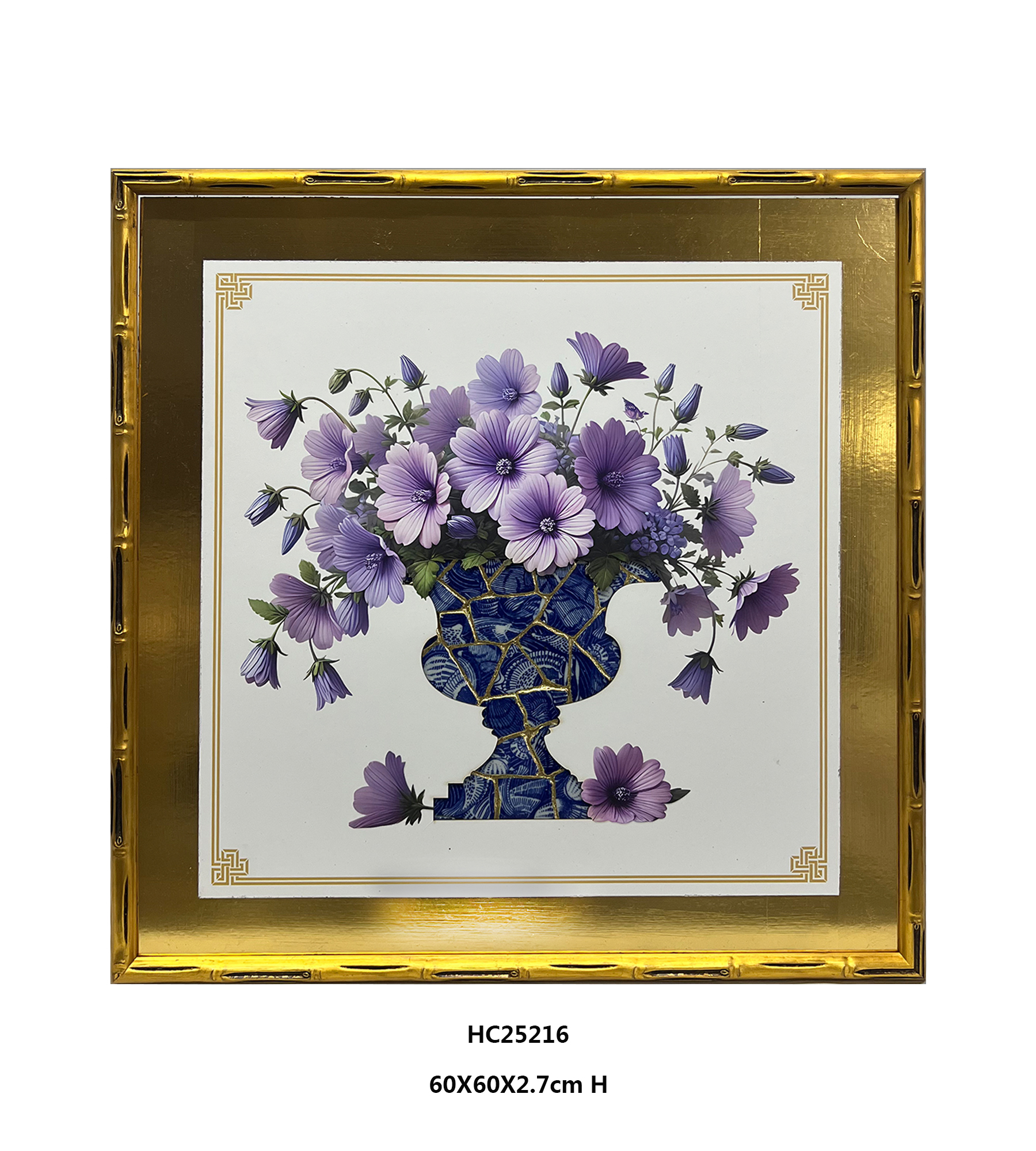
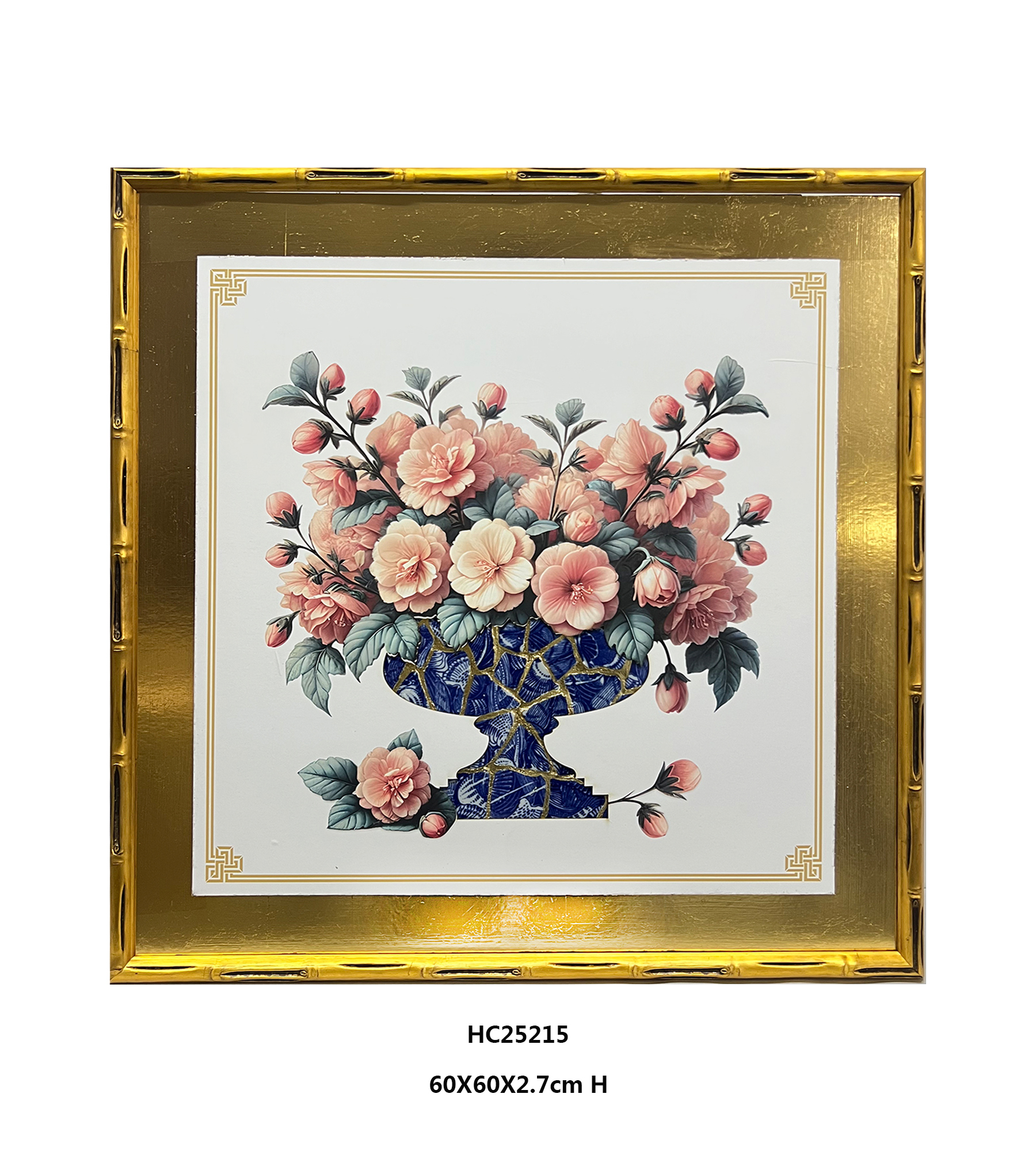
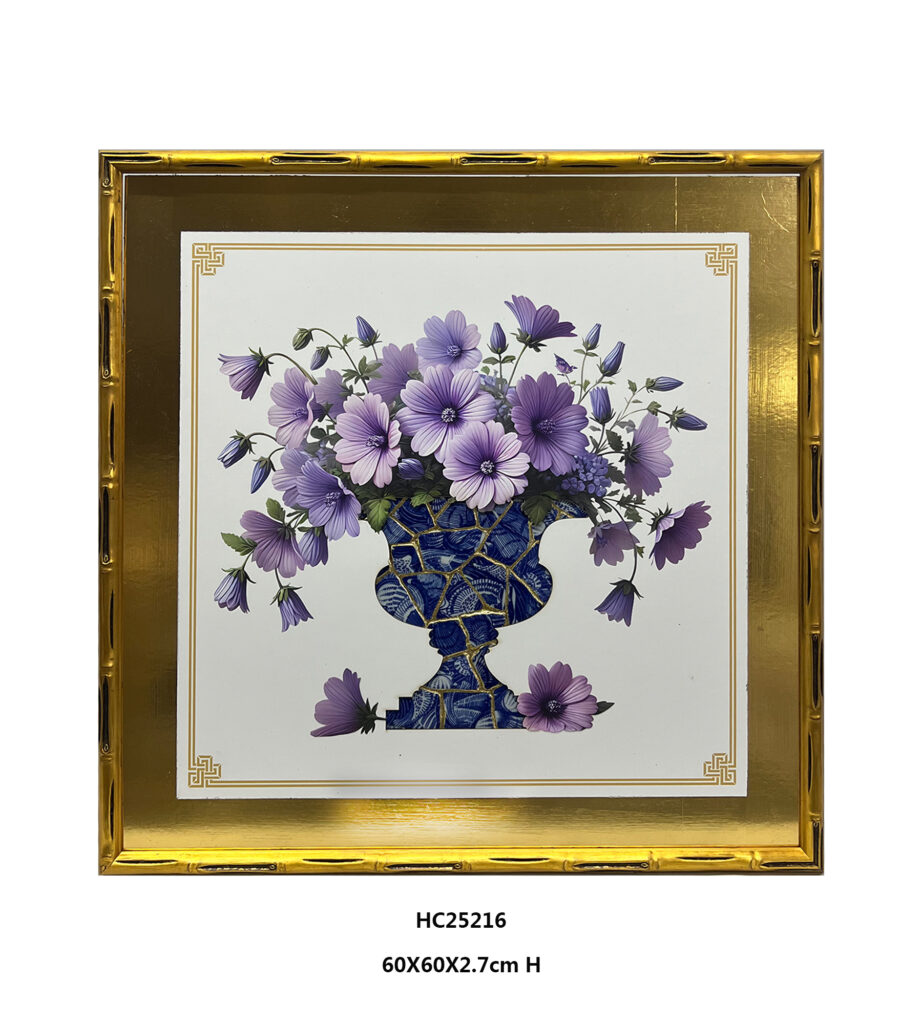
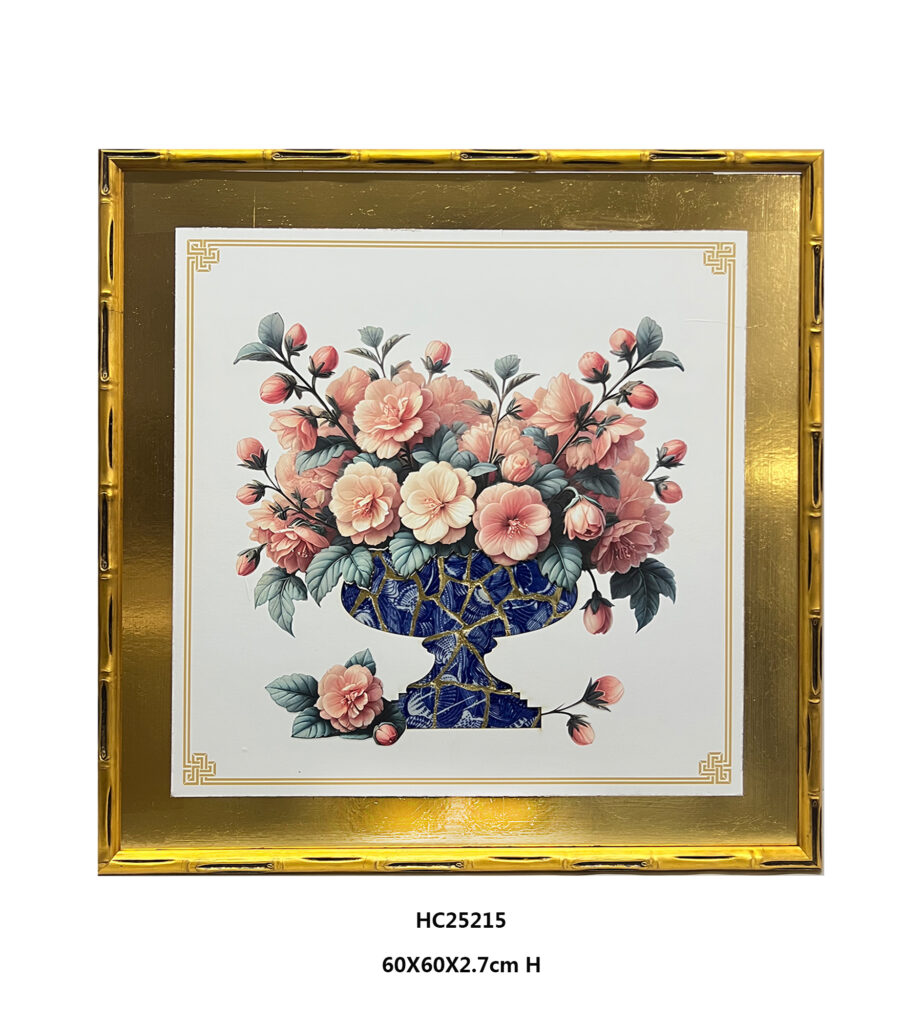
These 60 × 60 × 2.7 cm artworks combine blue-and-white porcelain fragments, dimensional flowers, a gold-toned background and a bamboo-style frame. The first design uses warm pink blooms, while the second uses a cooler purple floral palette. Both pieces create a coordinated range without requiring buyers to sell them only as a fixed pair.
The vase is formed from individual porcelain shards rather than printed as a flat image. Gold-coloured joints visually connect the fragments and add contrast. Meanwhile, raised flowers bring depth to the composition. This construction separates the product from canvas prints, posters and complete ceramic vases.
Buyers planning a broader assortment can compare related formats in our porcelain wall art collection.
Two Colourways for Coordinated Retail Ranges
The pink design suits classic, transitional and warm neutral interiors. It can work above consoles, in dining areas or as a feature piece in boutique home décor displays. In contrast, the purple design gives buyers a softer and slightly cooler option for bedrooms, hotel rooms and refined residential projects.
Together, the two designs help retailers build a consistent collection while testing different colour preferences. A mixed-SKU trial order can also reduce early inventory risk. Buyers may then increase quantities for the stronger colourway based on store or online sales data.
The designs have a recognisable visual identity rather than a generic printed floral motif. However, suppliers should still control artwork files, colour references and sample versions so that later orders remain consistent.
Quality Control for Porcelain Shard Floral Vase Wall Art
The approved sample should become the production reference. It should record the vase outline, main shard layout, flower position, frame finish, dimensions, weight and packaging method. For handmade elements, buyers should define an acceptable variation range instead of demanding unrealistic visual duplication.
During production, quality inspectors should check shard adhesion before final assembly. They should also examine flower completeness, visible glue, frame alignment, corner gaps, scratches and colour differences. In addition, the hanging hardware should sit level and pass an agreed pull test.
Before packing, inspectors can compare finished units under consistent lighting. A photo record linked to the SKU and version number gives both parties a practical reference for claims, replenishment and future modifications.
Packaging Must Protect Raised Surfaces
The projecting flowers and hard porcelain edges require more than a standard picture carton. Direct pressure on the front surface can deform petals or loosen the mosaic, while insufficient corner protection can damage the gold frame.
A suitable packing plan may include a clean protective bag, non-contact front clearance, shaped cushioning, four corner protectors and a reinforced outer carton. Carton labels should match the packing list and identify the SKU, quantity, dimensions and handling direction. CBI’s guidance on European buyer requirements for home decoration products also highlights product safety, technical information, labelling and packaging as relevant sourcing considerations.
For bulk orders, buyers should request a packaging sample or packed-product drop test before shipment. They should also review carton volume because oversized packaging increases freight, warehousing and fulfilment costs.
Customisation and Repeat-Order Control
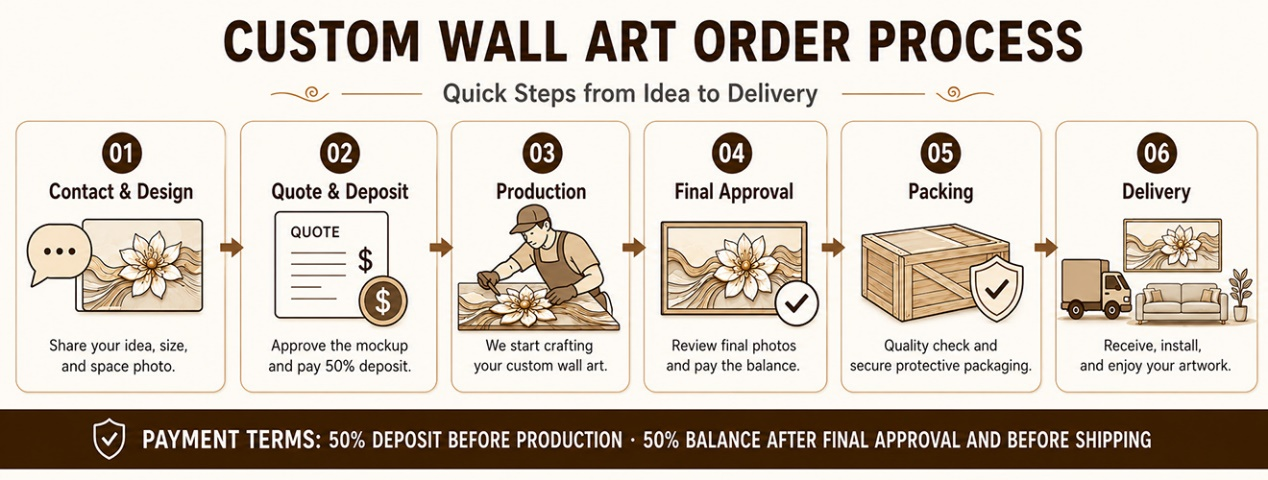
OEM and ODM options may cover artwork size, flower colour, porcelain pattern, frame finish, background, branding and carton design. Nevertheless, every approved change should receive a new version number. The purchase order, sample label, inspection report and packing list should all use the same version.
A reliable hotel wall art supplier should also confirm production capacity and milestone dates before accepting a project order. Useful checkpoints include material preparation, first-unit approval, mid-production inspection, packing completion and shipment booking. This structure helps buyers identify delays early instead of discovering them near the installation date.
For repeat orders, suppliers should retain colour references, artwork files, frame specifications and packaging records. If a material becomes unavailable, the supplier should submit an alternative for approval rather than making an unrecorded substitution.