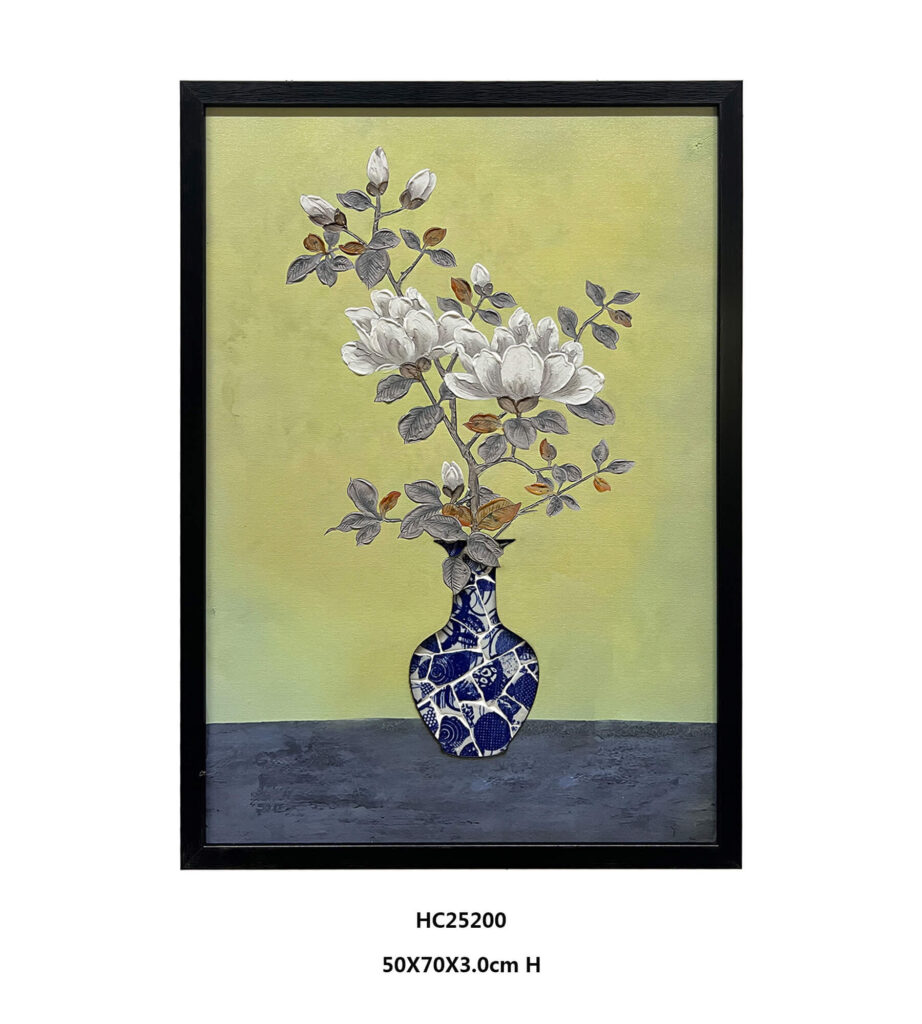
Reliable White Floral Porcelain Shard Wall Art for European Buyers
A strong first sample does not always lead to a reliable repeat order. For European retailers and project buyers, the real test comes when the next batch must match the approved colours, flower depth, porcelain layout and frame size. White Floral Porcelain Shard Wall Art also needs tighter control than a flat canvas print because it combines real ceramic pieces with raised floral details. Therefore, repeatability should be reviewed before price alone.
Build a Repeatable Product Standard
First, buyers should approve both a physical sample and a written specification. The document should record the finished size, flower height, porcelain shard structure, background colour, frame finish, hanging hardware and packaging method.
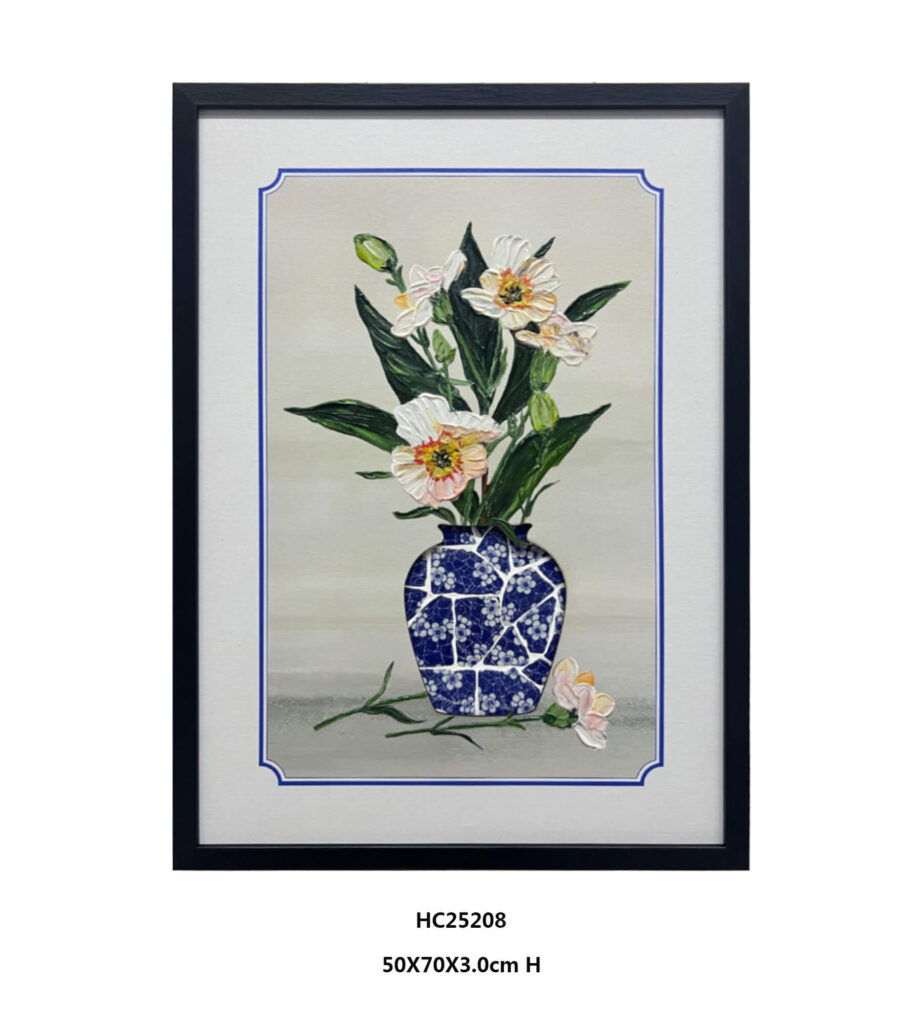
For these 50 × 70 × 3 cm designs, buyers should also set an acceptable colour range. In addition, clear reference photos can show the approved flower position and overall balance. This makes later inspections more objective.
Plan the Pair as a Retail Assortment
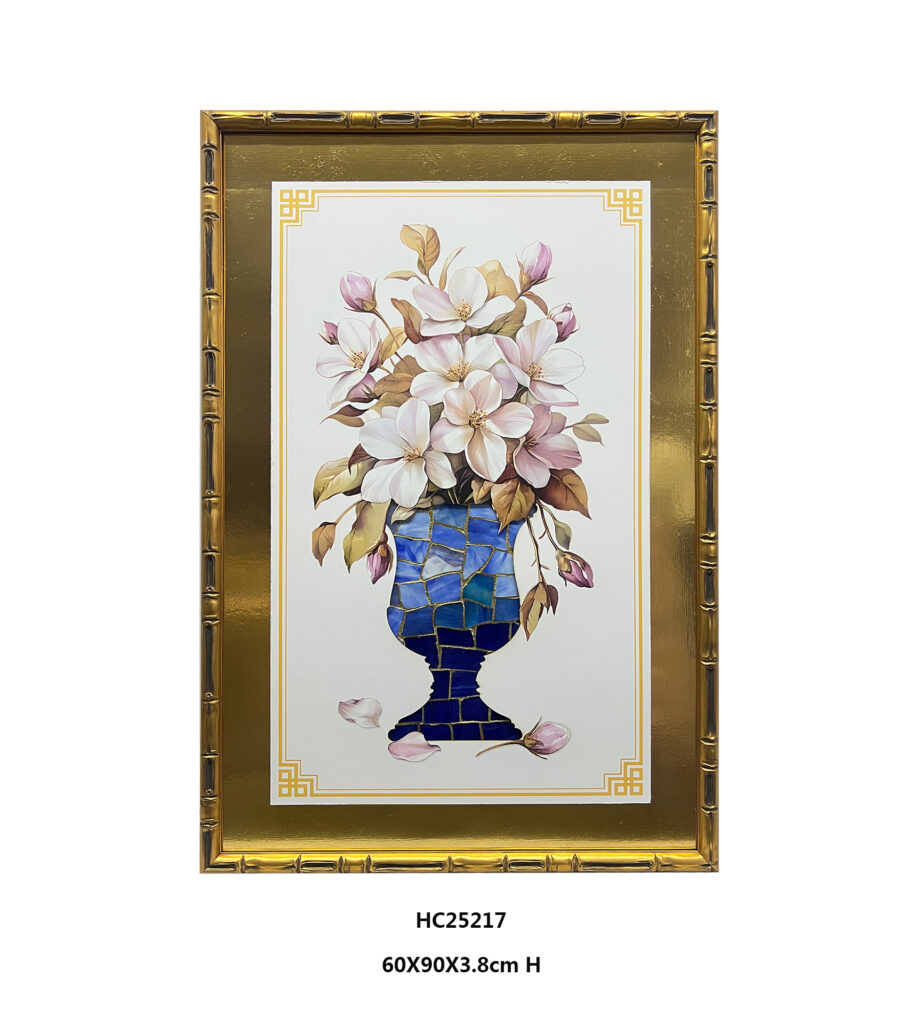
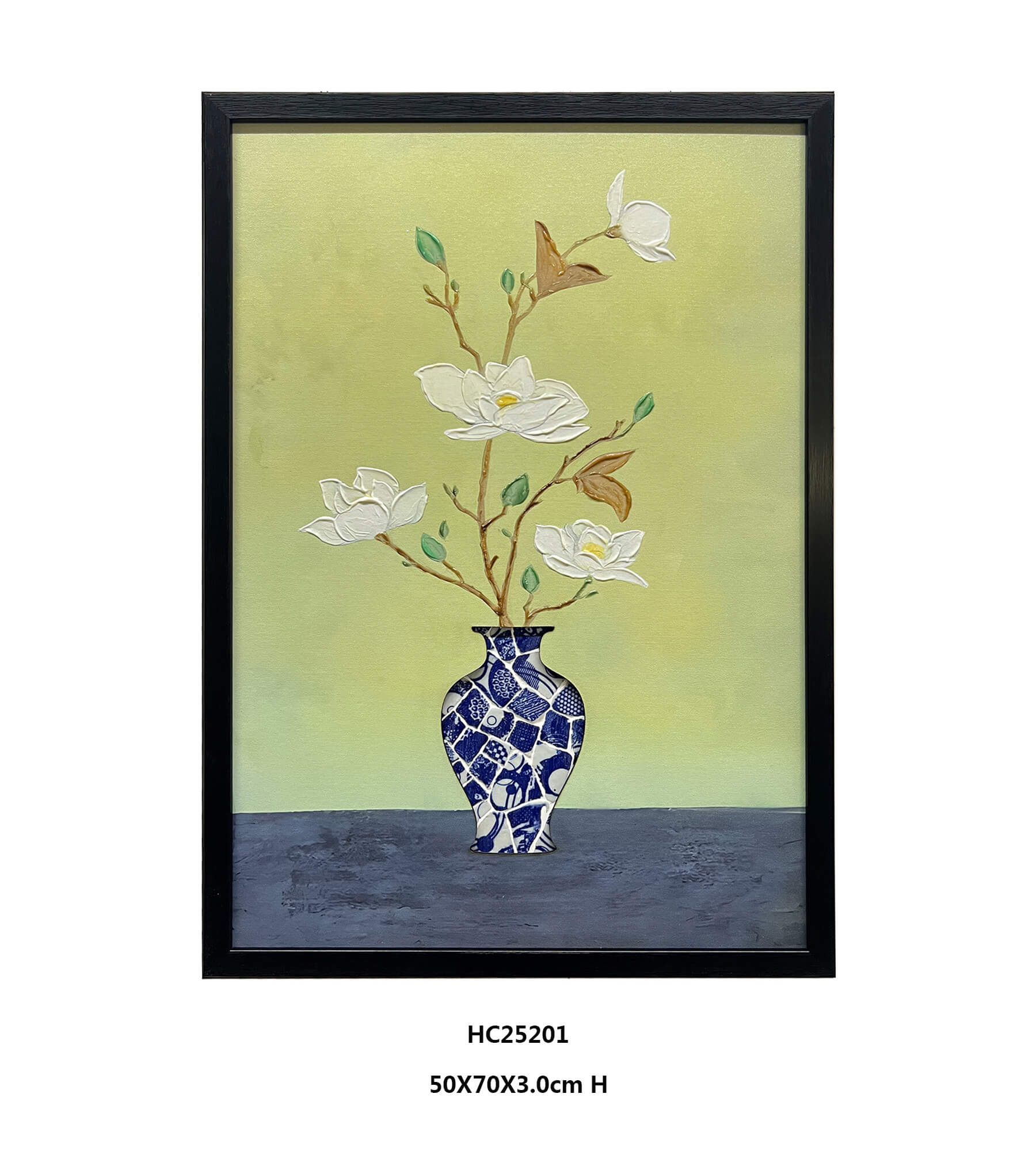
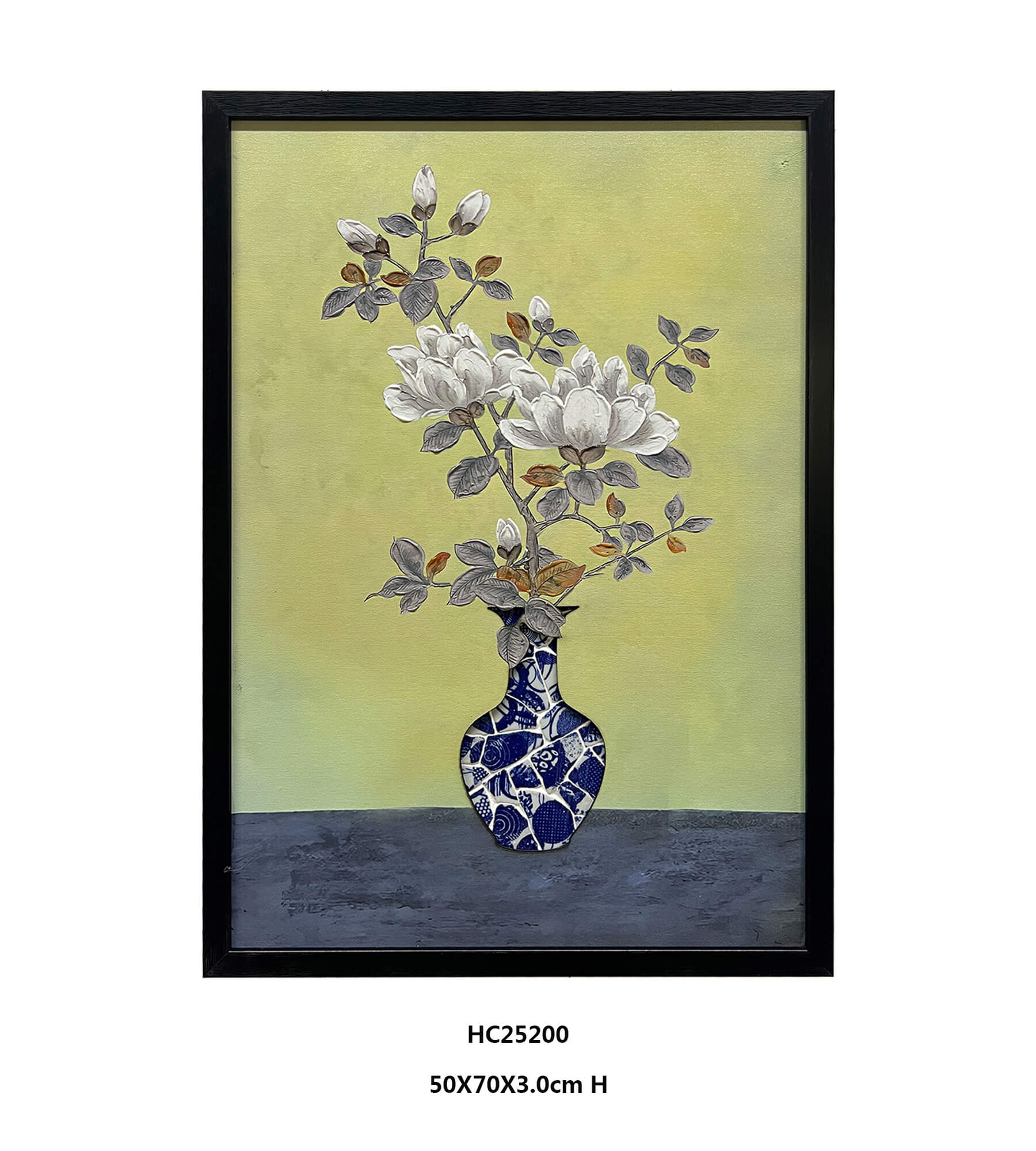
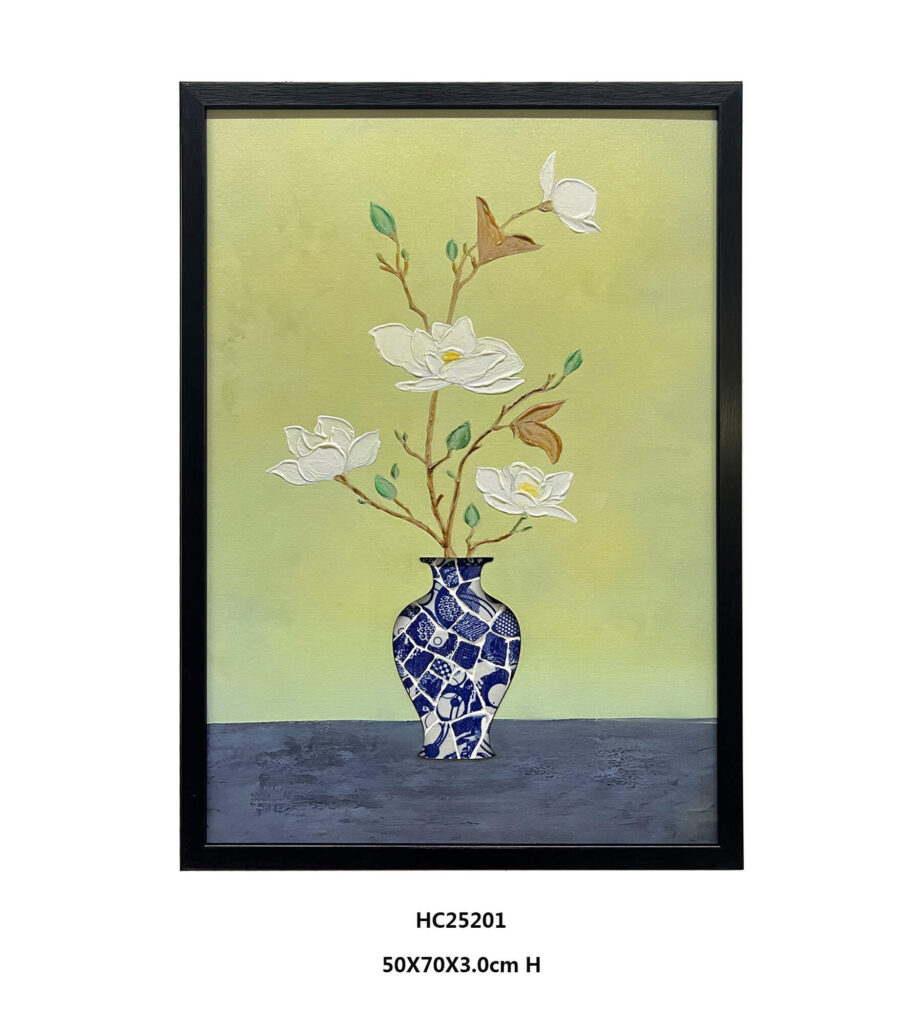
The two designs can work as individual products or as a coordinated pair. One presents fuller white blossoms, while the other uses a lighter magnolia branch layout. As a result, retailers can create one collection without offering two identical images.
Buyers should decide the order ratio according to store size, customer profile and display plan. Meanwhile, matching labels, cartons and frame finishes can connect the SKUs. Our floral porcelain shard vase wall art collection shows how different flowers can share one material and colour direction.
Verify the Production Points That Affect Reorders
Repeat-order control starts before final inspection. The factory should check incoming porcelain pieces, background colour, flower components and frame materials before assembly. During production, QC should cover shard adhesion, flower condition, frame corners, dimensions and hanging hardware.
Moreover, buyers should request dated inspection photos or batch records. The ISO quality management principles highlight process control and evidence-based decisions. Therefore, buyers should assess the production records behind the goods rather than rely only on general quality claims.
Manage OEM ODM Changes by Version
OEM and ODM changes need a clear version number. For example, a new background colour, frame profile, logo or size should appear on an updated specification before production starts.
However, each change may also affect material use, MOQ, lead time and carton dimensions. The supplier should explain these effects before approval. In addition, old and new components should remain separated to prevent mixed versions within one shipment.
Validate Packing Before Shipment
Porcelain shards and raised flowers require more protection than printed canvas. Therefore, buyers should review a trial-packed unit before bulk packing begins. Foam layers, surface protection, frame corner guards and individual cartons should match the product structure.
Buyers should also confirm carton size, gross weight, pallet use and loading method. These details help calculate freight cost and reduce damage claims. Finally, packing photos and carton marks should match the approved order documents.
Prepare a Clear Project Enquiry
For an accurate proposal, send the required quantity, ratio between the two designs, preferred size, destination port and delivery date. Also include any OEM branding, frame or packaging request.
We can then prepare a practical sample, production and packing plan. Which repeat-order issue matters most to your business—colour control, material consistency, mixed versions or transit protection?