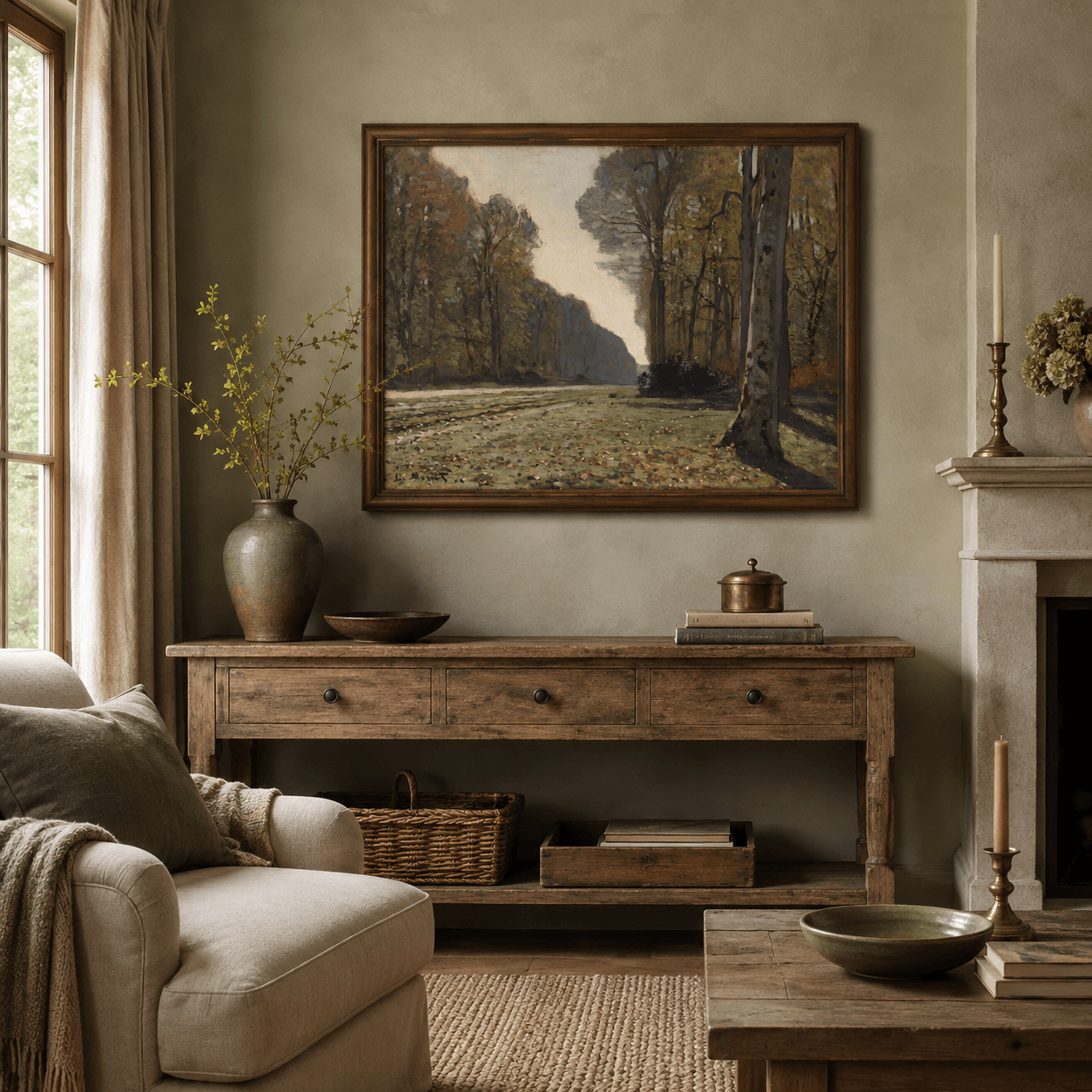
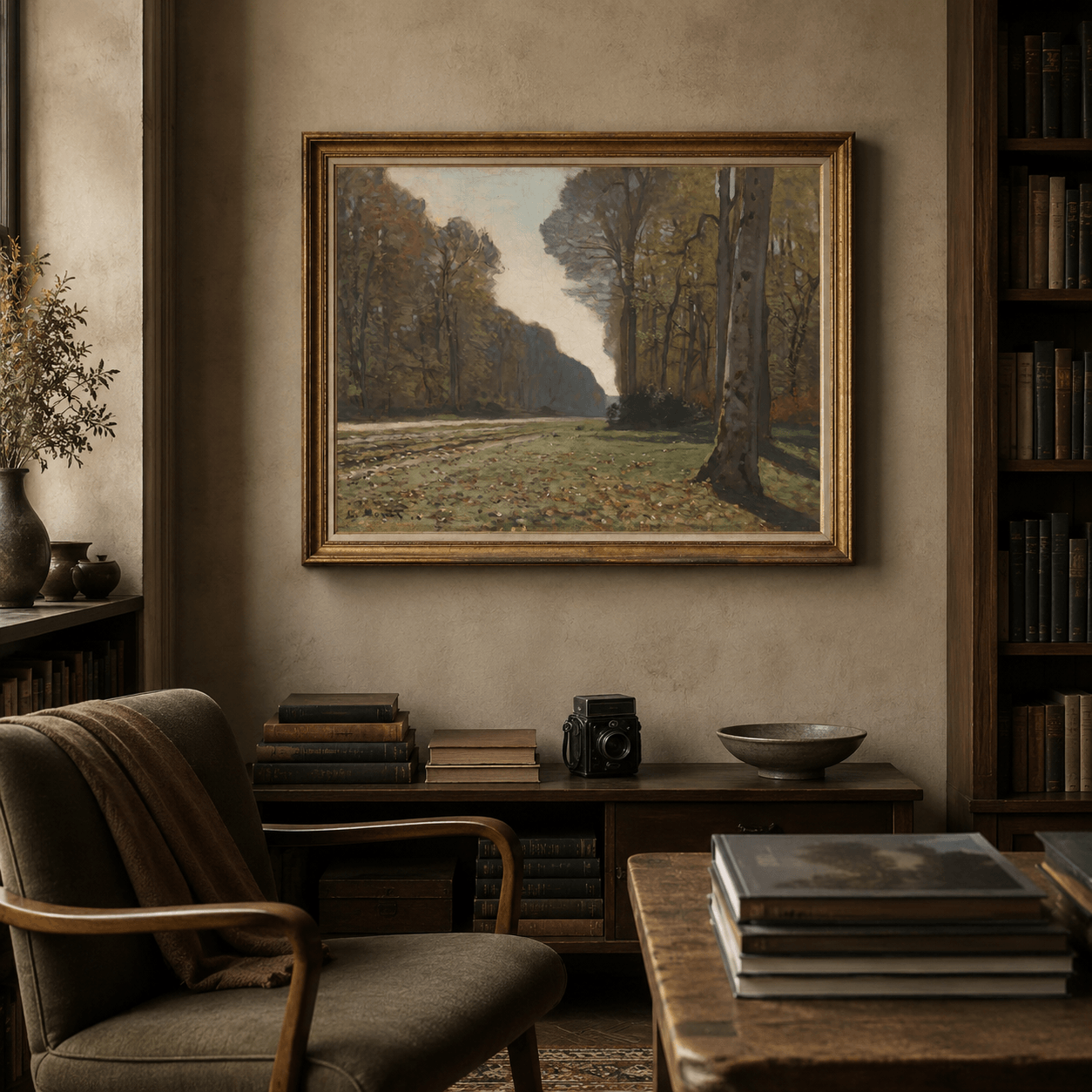
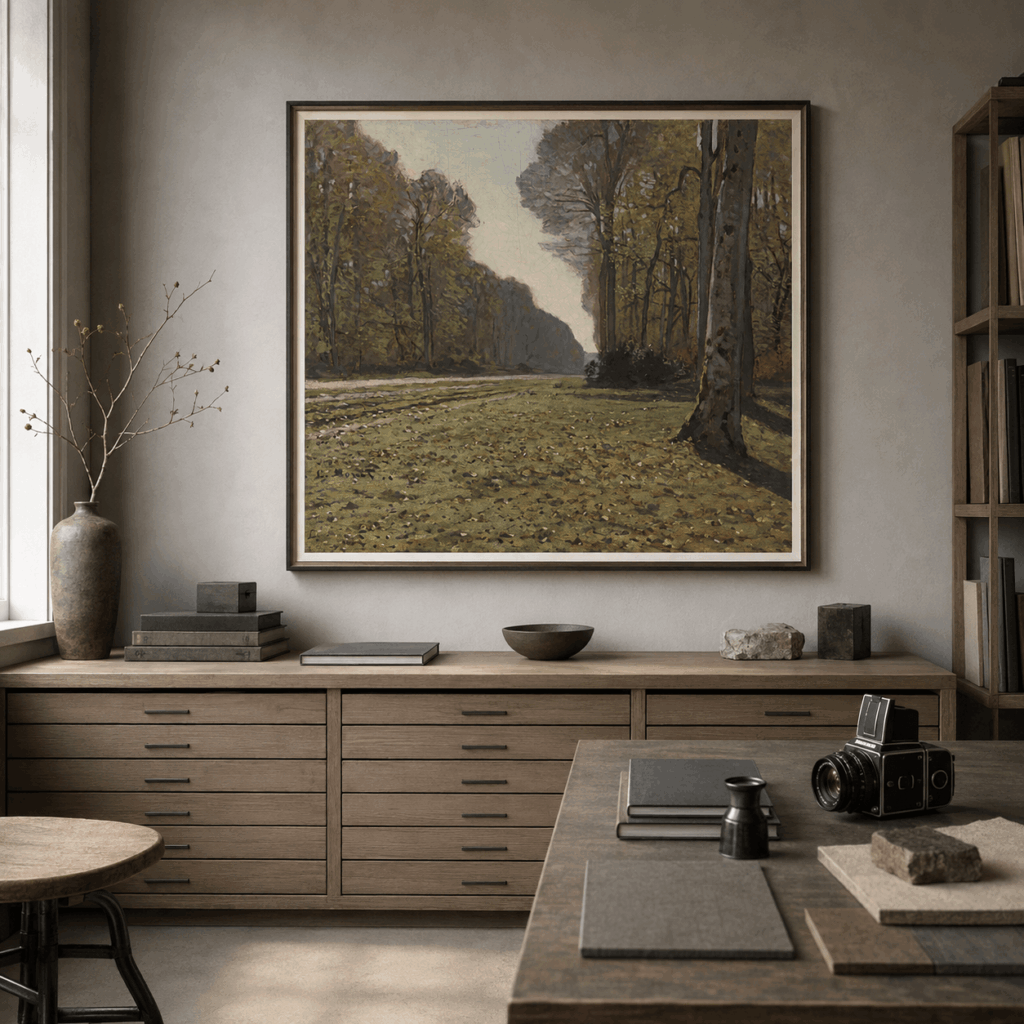
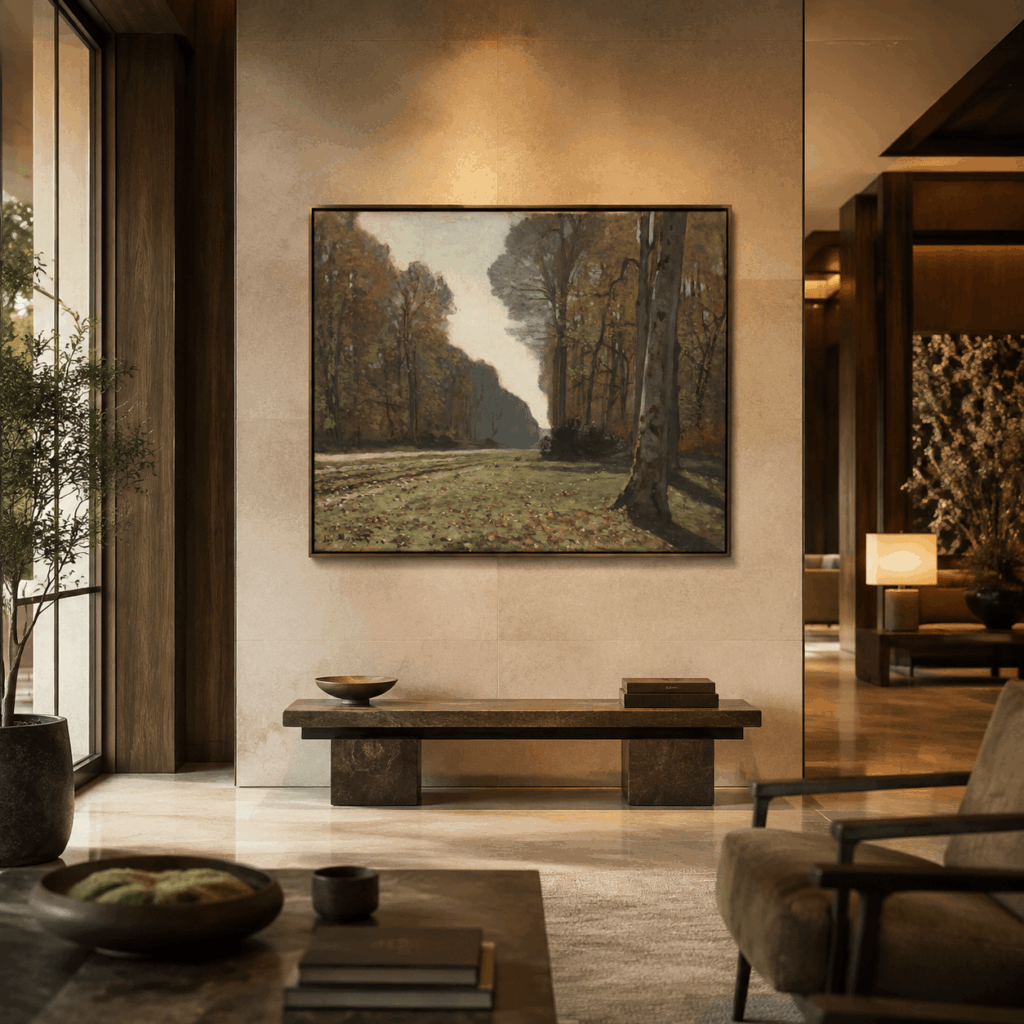
A hotel lobby converts architecture into a first impression. Therefore, its artwork should do more than fill an empty wall. Monet hotel lobby wall art gives hospitality interiors a recognizable cultural reference, a calming visual rhythm, and a refined focal point. Moreover, it allows hotel owners, design directors, and procurement managers to combine artistic impact with reliable customization and project delivery.
Monet Hotel Lobby Wall Art for Memorable Hospitality Interiors
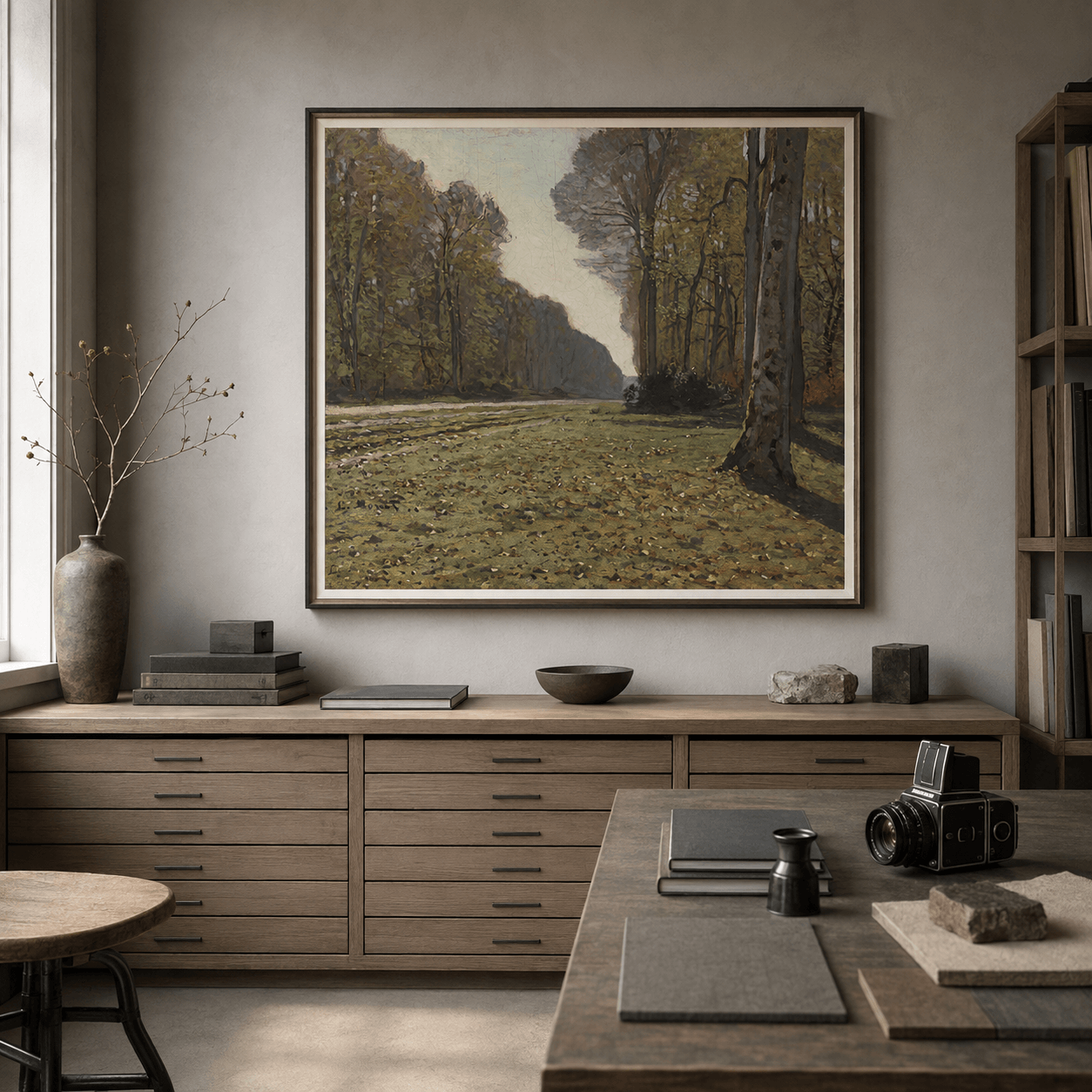
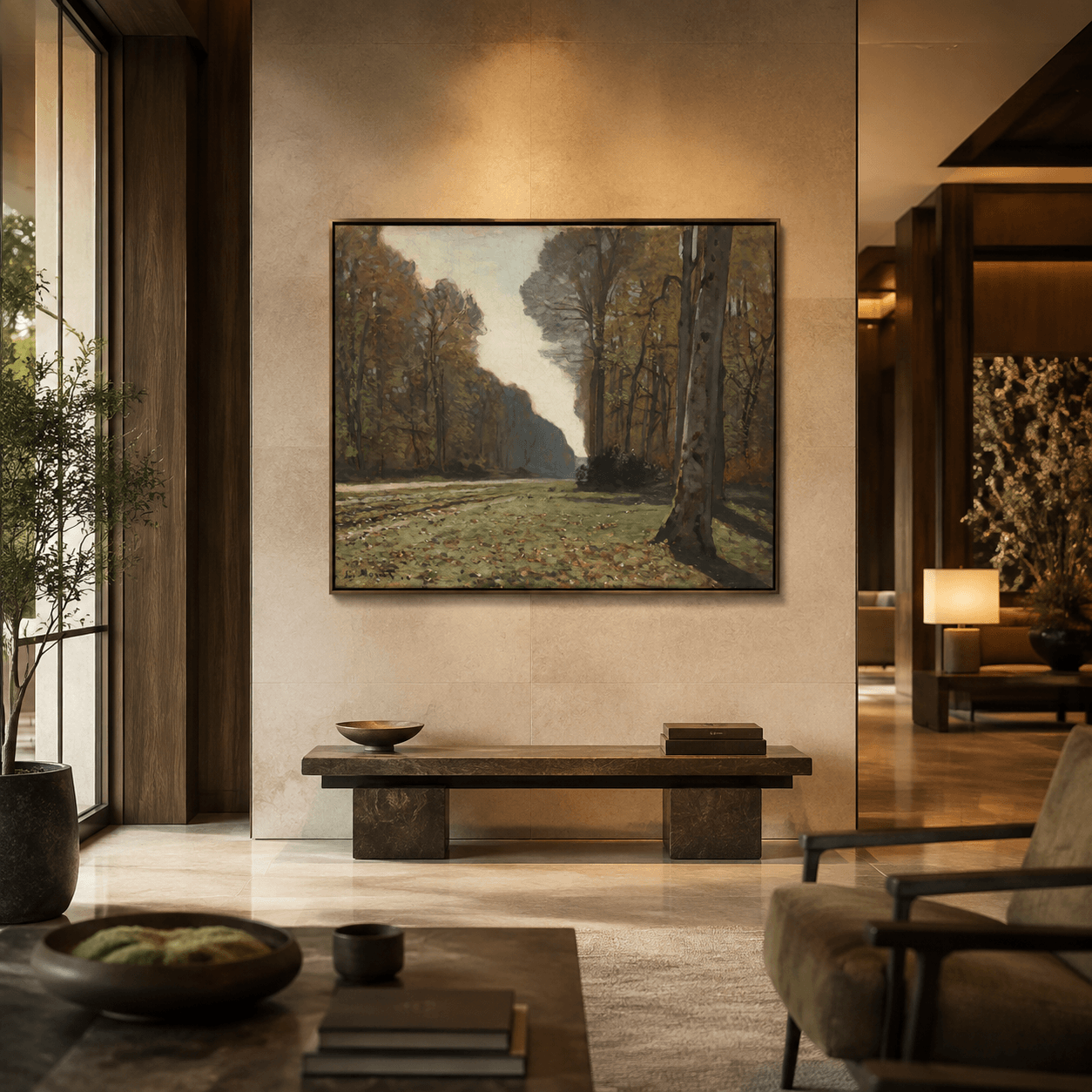
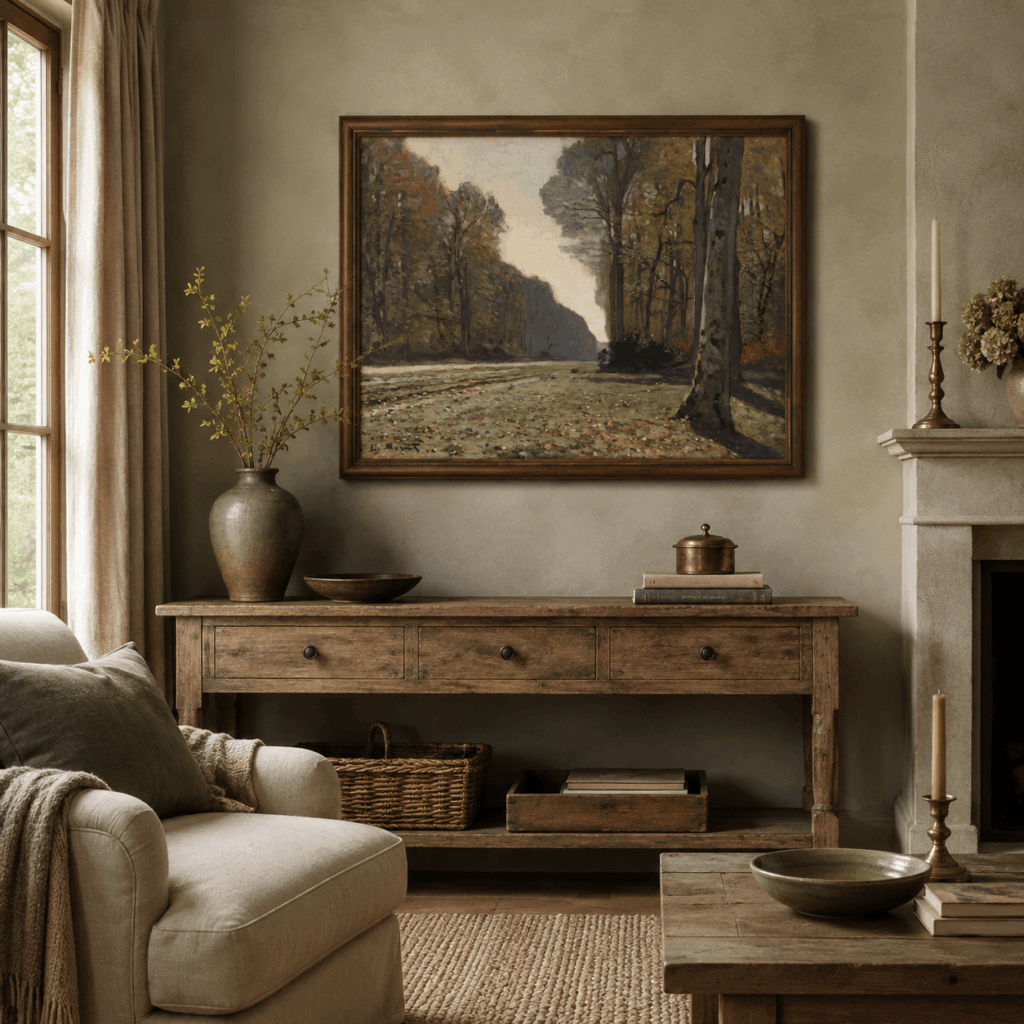
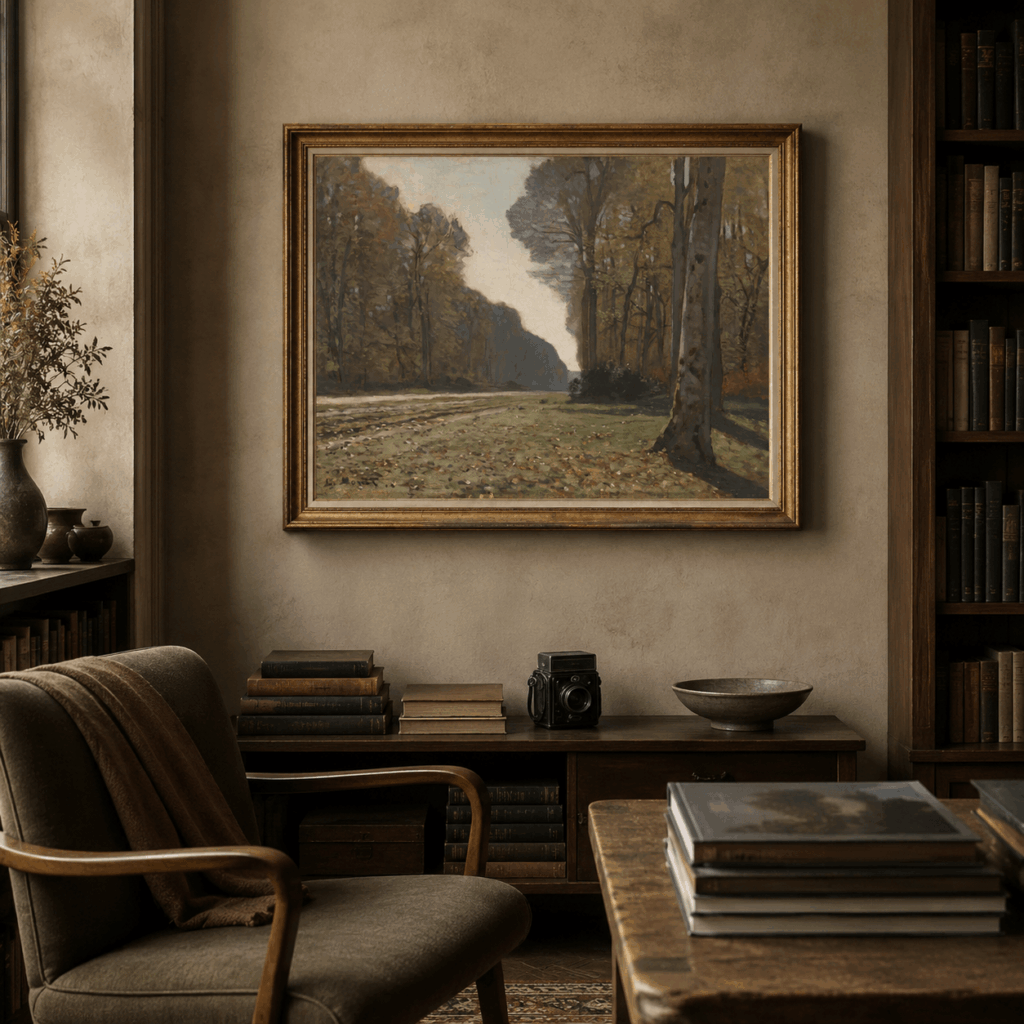
The official Musée d’Orsay collection record identifies Claude Monet’s Le Pavé de Chailly as an oil-on-canvas work created around 1865. The painting presents a quiet forest road shaped by filtered light, deep perspective, and restrained earth colors.
As Monet hotel lobby wall art, its olive green, warm brown, gray, and muted blue tones coordinate naturally with limestone, timber, bronze, and contemporary neutral finishes. As a result, the composition can soften a minimalist lobby, add warmth to a stone reception area, or bring visual calm to a boutique hotel lounge.
Why Monet Hotel Lobby Wall Art Supports Brand Value
Monet’s emerging Impressionist language is familiar to international audiences. Consequently, his work can reduce the aesthetic distance between guests from different cultural backgrounds. It communicates heritage and quality without relying on text, short-lived trends, or brand-specific imagery.
Moreover, a carefully produced reproduction offers more distinction than a generic commercial print. It can function as unique wall art while remaining suitable for luxury hotels, resorts, serviced apartments, executive clubs, and premium reception spaces.
How to Specify Monet Hotel Lobby, Wall Art
Successful hotel artwork must be planned within the complete wall elevation. Before production, designers should review ceiling height, wall width, furniture placement, viewing distance, lighting, and surrounding finishes.
Plan the Scale Around the Architecture
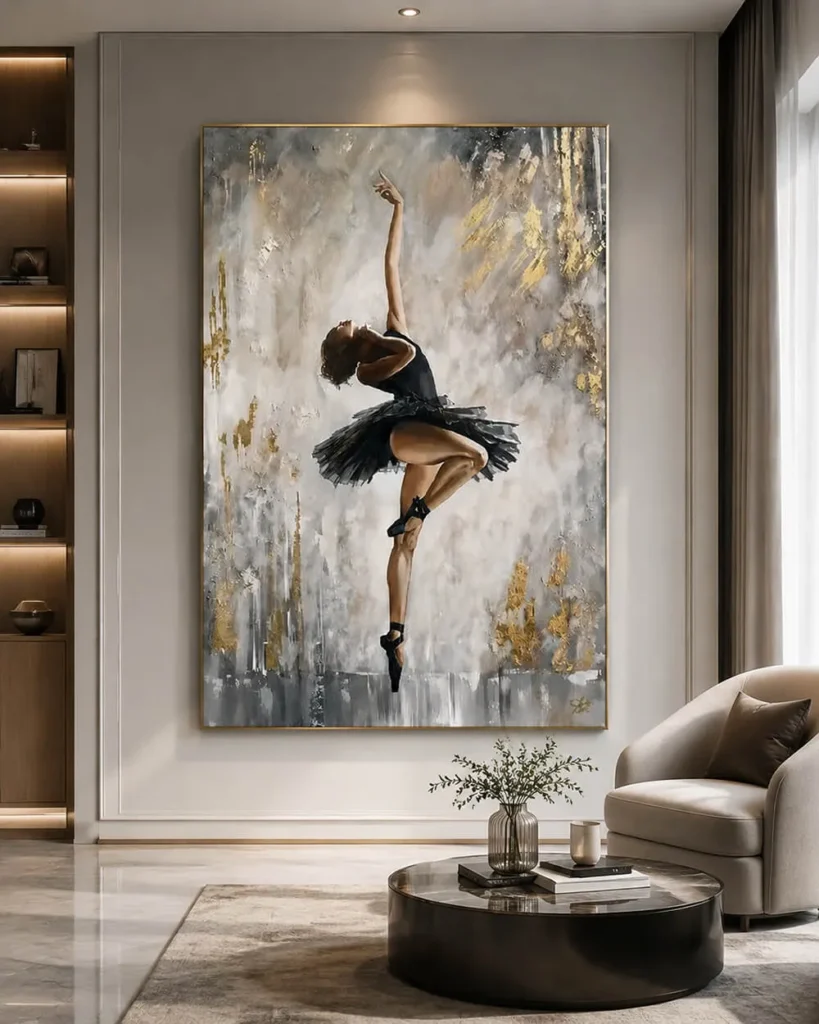
First, select dimensions according to the wall rather than the online product image. A horizontal composition works well above reception desks and lounge seating. Although extra-large wall art for the living room is a residential search phrase, the same proportion principles apply to hotel feature walls. For example, a wide reception area may require a larger format, whereas an executive lounge may benefit from a more restrained scale.
Coordinate Materials, Framing, and Lighting
Next, choose stable canvas, a low-glare painted surface, sealed backing, and durable frame construction. Walnut, dark bronze, or restrained gold frames can connect the artwork with surrounding joinery. Meanwhile, wall washers provide even illumination, while adjustable accent lights reveal Monet’s brushwork. Finally, controlled angles reduce glare and prevent darker passages from appearing flat.
B2B Procurement for Monet Hotel Lobby Wall Art
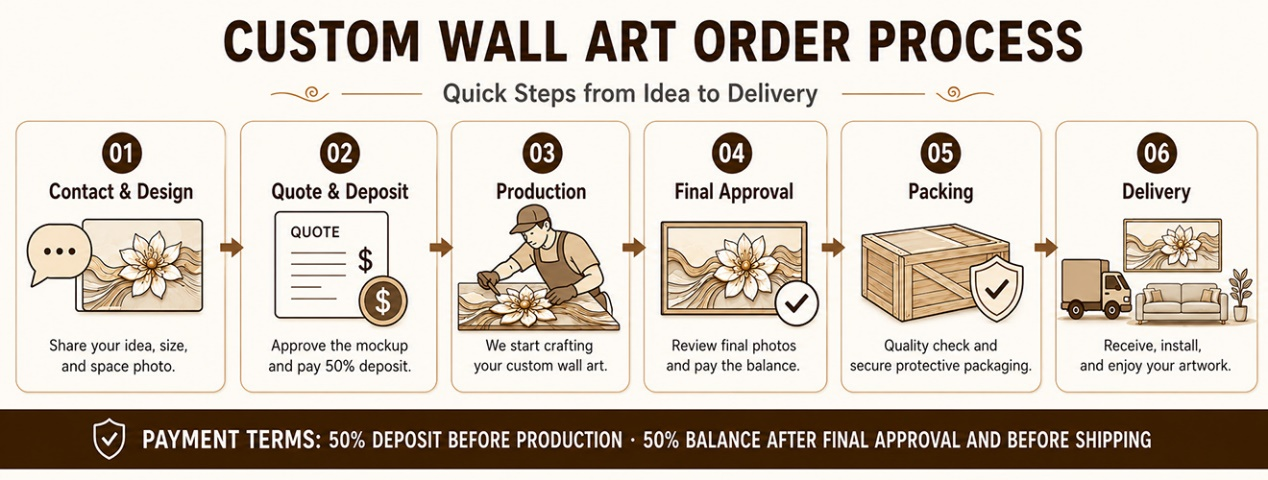
Commercial buyers need consistent results across every order. Therefore, a project-ready supplier should provide custom dimensions, color and frame samples, production approvals, batch-level inspection, and export-grade packaging.
Maintain Consistency Across Multiple Spaces
In addition, the artwork program can extend from the reception wall to corridors, suites, meeting areas, and lounge room wall art installations. This creates a coordinated identity without repeating the same presentation everywhere.
Prepare Accurate Project Information
Before production, buyers should submit wall dimensions, room photographs, drawings, and finish references. Consequently, the supplier can recommend proportions, frames, color balance, and packing methods more accurately.
Ultimately, well-planned Monet hotel lobby wall art can strengthen brand perception and remain relevant beyond short-lived décor trends. Contact Wallartura to request the Hotel B2B Art Procurement Catalogue, customization support, and a project quotation.