Water Lilies (1907)
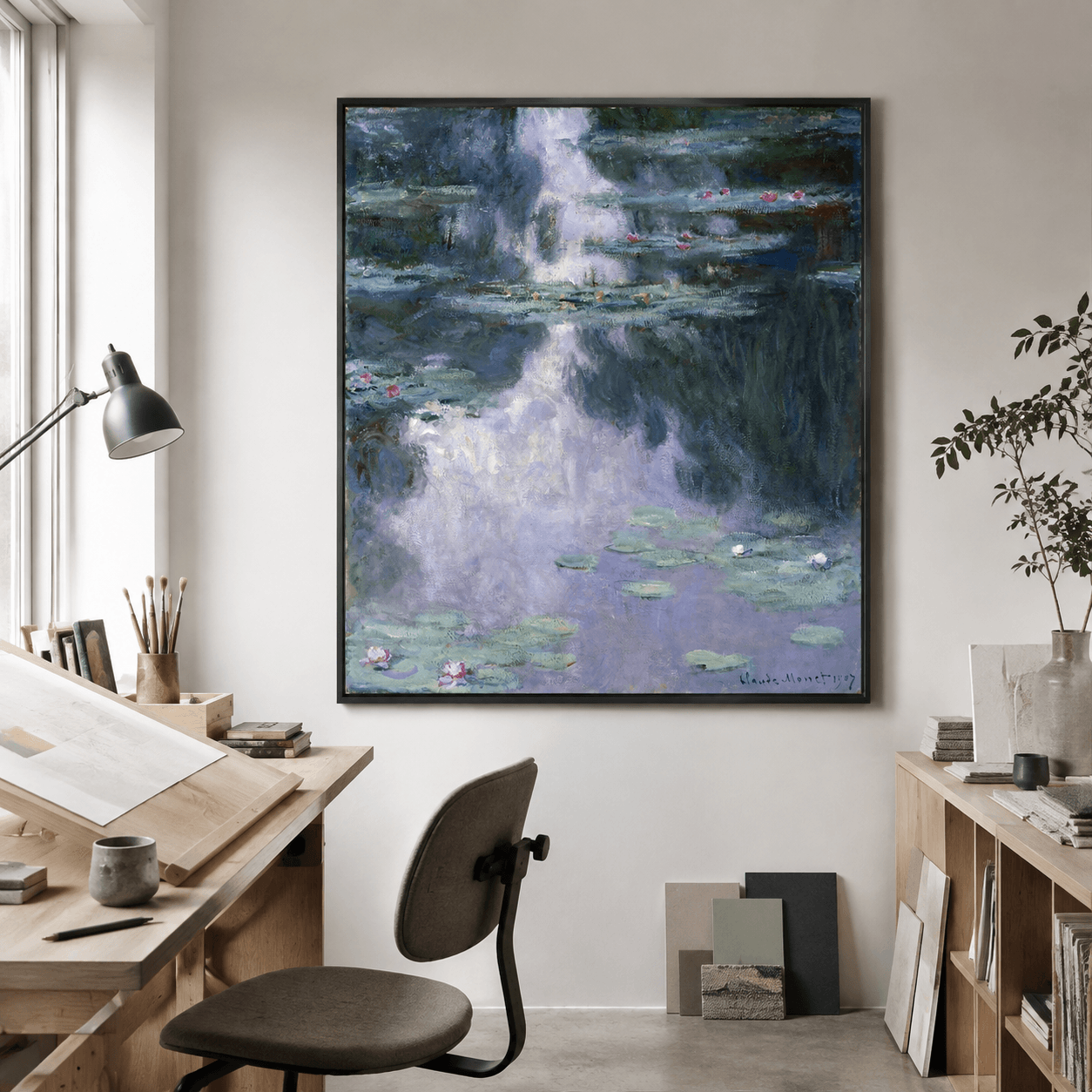
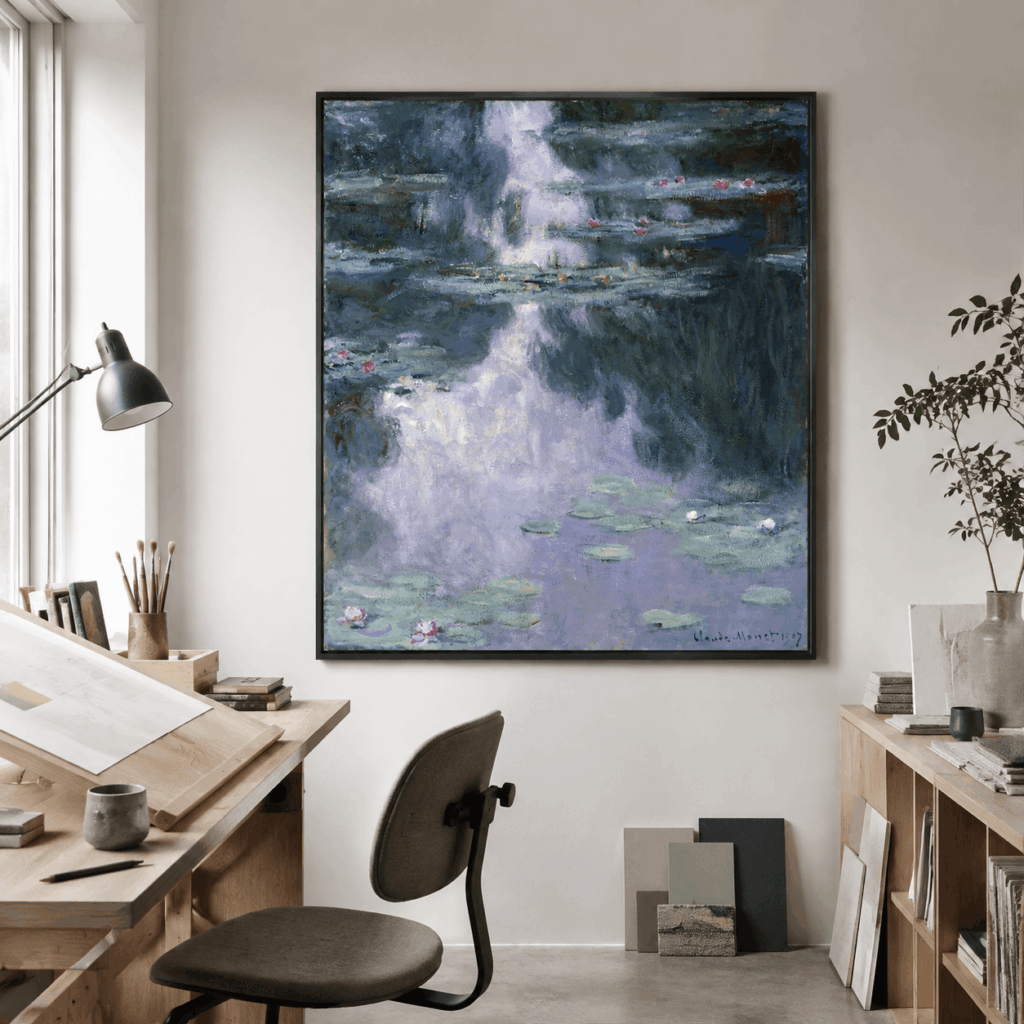
Sunlight slips across a quiet pond, dissolving sky, foliage, and flowers into one shifting surface. Claude Monet Water Lilies 1907 captures the result of Monet’s late pursuit: to make changing light feel permanent without making nature appear still. This version of Nymphéas is firmly rooted in Impressionism, yet its floating viewpoint, uncertain depth, and expansive painted surface also anticipate important developments in modern abstraction.
Claude Monet Water Lilies 1907 and the Giverny Garden
After purchasing his house at Giverny in 1890, Monet enlarged its pond and cultivated water lilies as both living subjects and instruments for studying light. The Museum of Fine Arts, Houston identifies this 1907 canvas as part of his first concentrated campaign to record the blooms under changing atmospheric conditions.
In Claude Monet Water Lilies 1907, the conventional landscape horizon disappears. Instead of separating earth, water, and sky, Monet compresses them into the pond’s reflective surface. Water becomes a complete visual world—at once solid, transparent, deep, and flat.
Composition, Color, and Reflected Light
The structure of Claude Monet Water Lilies 1907 depends on a luminous vertical reflection running through the center. It acts as a light axis, holding together the darker passages of blue-green water and shadow.
- Color: Deep blue, violet, and charcoal tones meet pale green pads and small notes of pink, white, and yellow. These contrasts suggest light changing from one area of the pond to another.
- Space: Lily pads rest on the surface, while reflected trees and sky pull the eye downward. The result is deliberate spatial ambiguity rather than conventional perspective.
- Brushwork: Layered, rhythmic strokes create the sensation of rippling water. Denser pigment gives the lilies physical presence, while softer passages allow reflections to dissolve.
Monet therefore represents a specific place without fixing it into a single moment. The painting feels observed, but it also remains open, atmospheric, and continuously in motion.
Why Claude Monet Water Lilies 1907 Anticipates Abstraction
Monet increasingly allowed color, gesture, and surface to carry meaning independently of clear outlines. As the Metropolitan Museum of Art explains, the absent horizon and broader brushwork bring the late water-lily paintings close to abstraction.
Yet this work is not abstract wall art in the strict sense: every stroke remains connected to nature. Its all-over surface later resonated with Pollock’s continuous fields, while its enveloping color and contemplative mood invite comparison with Rothko. The relationship is not simple imitation; rather, Monet helped expand what a painted surface could express.
A Lasting Image for Contemporary Interiors
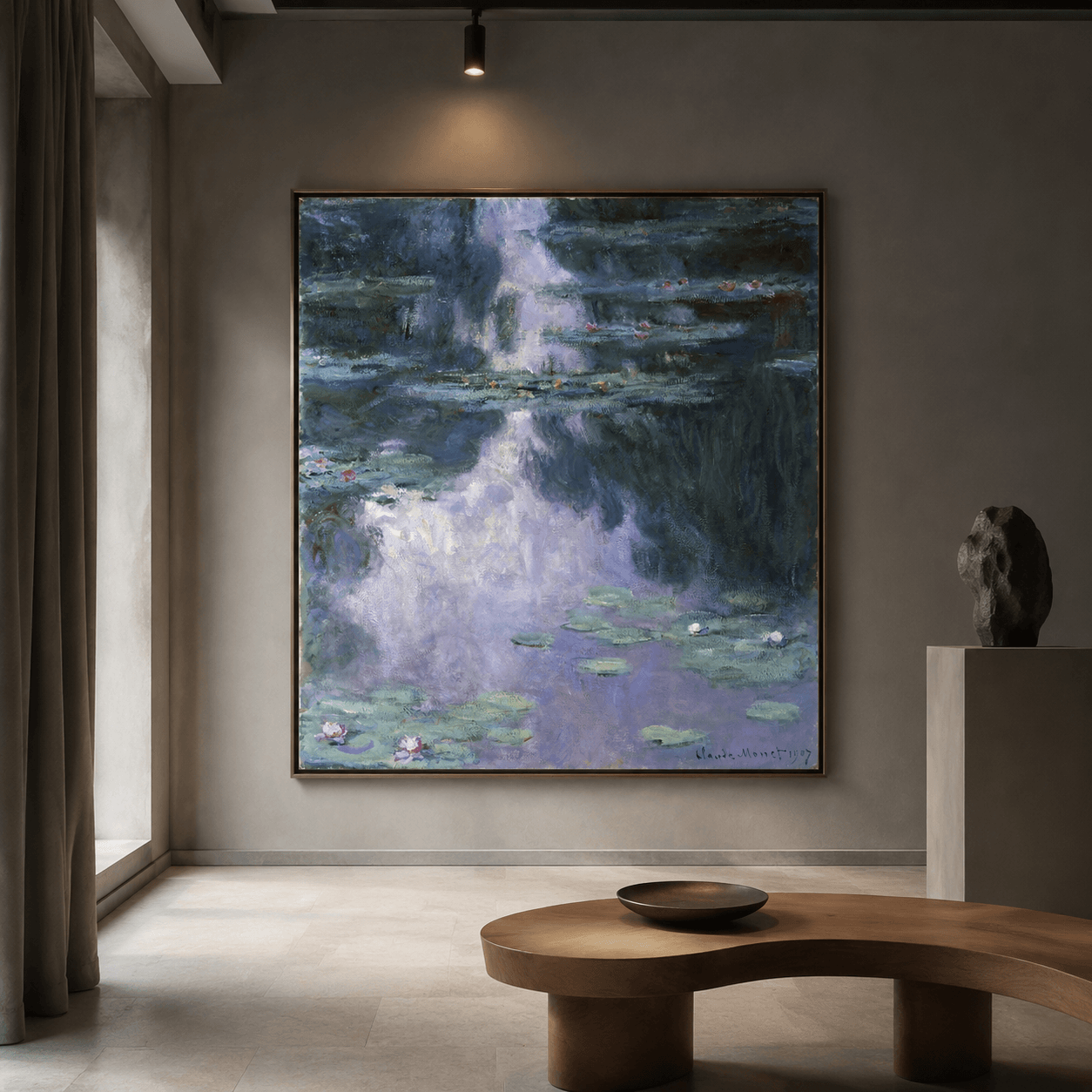
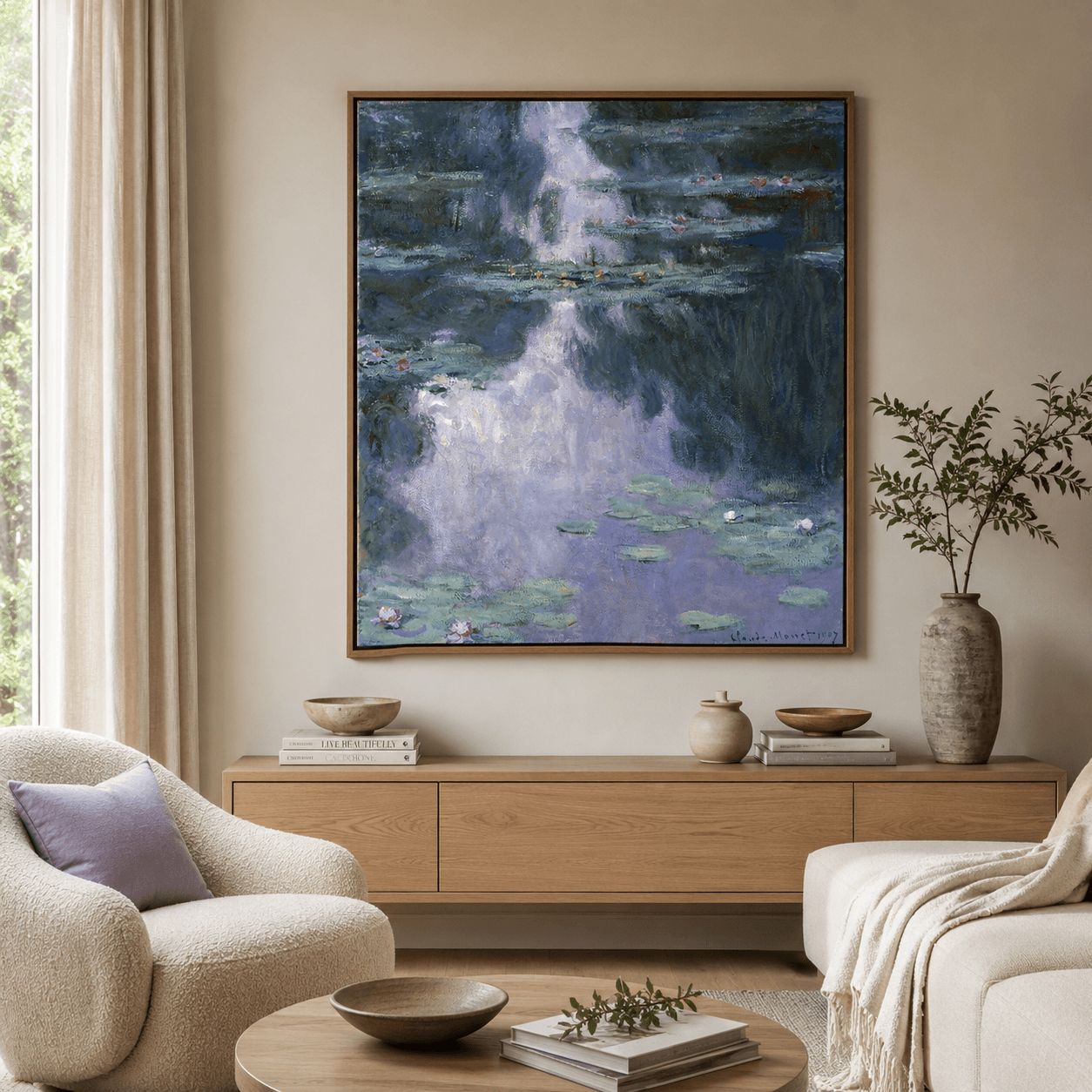
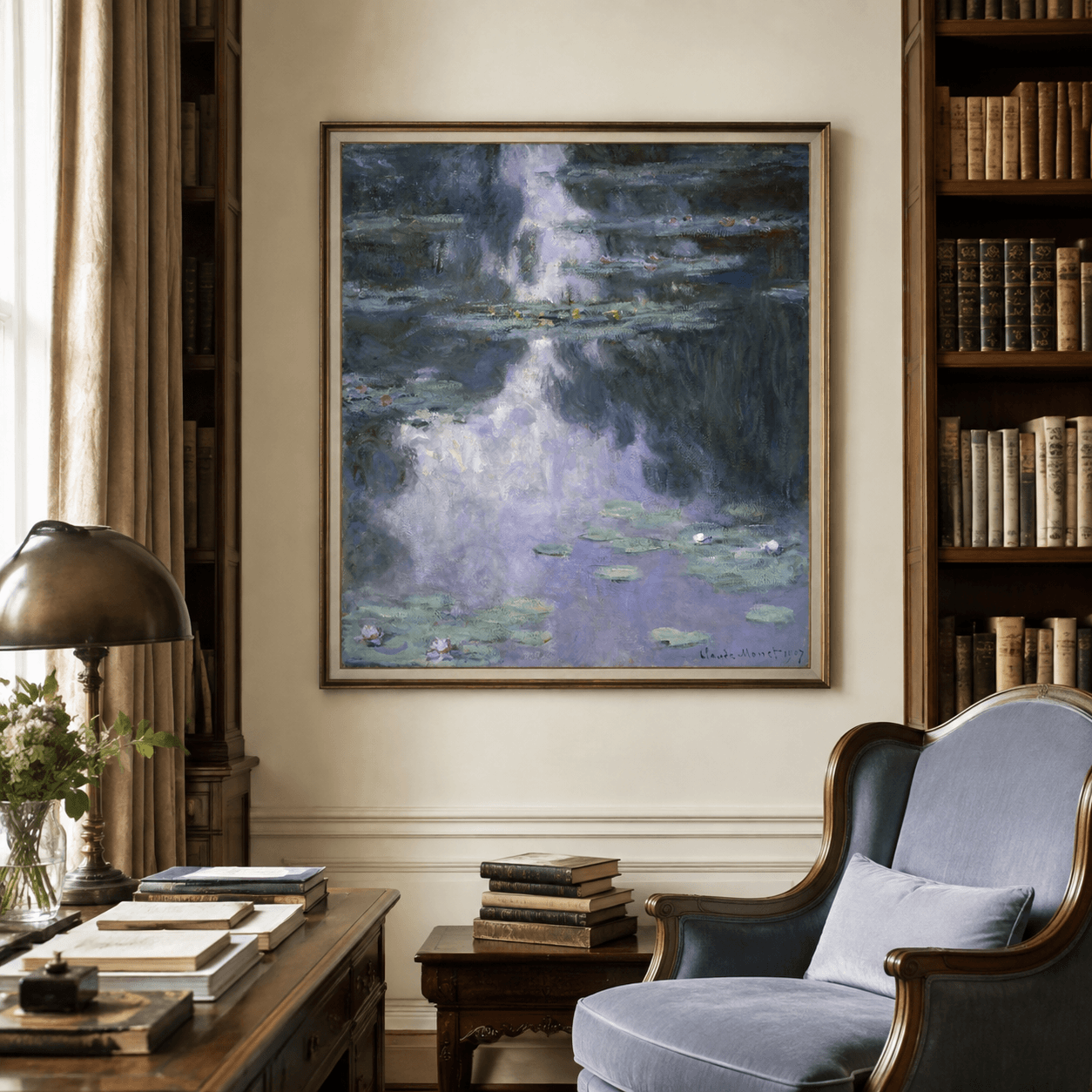
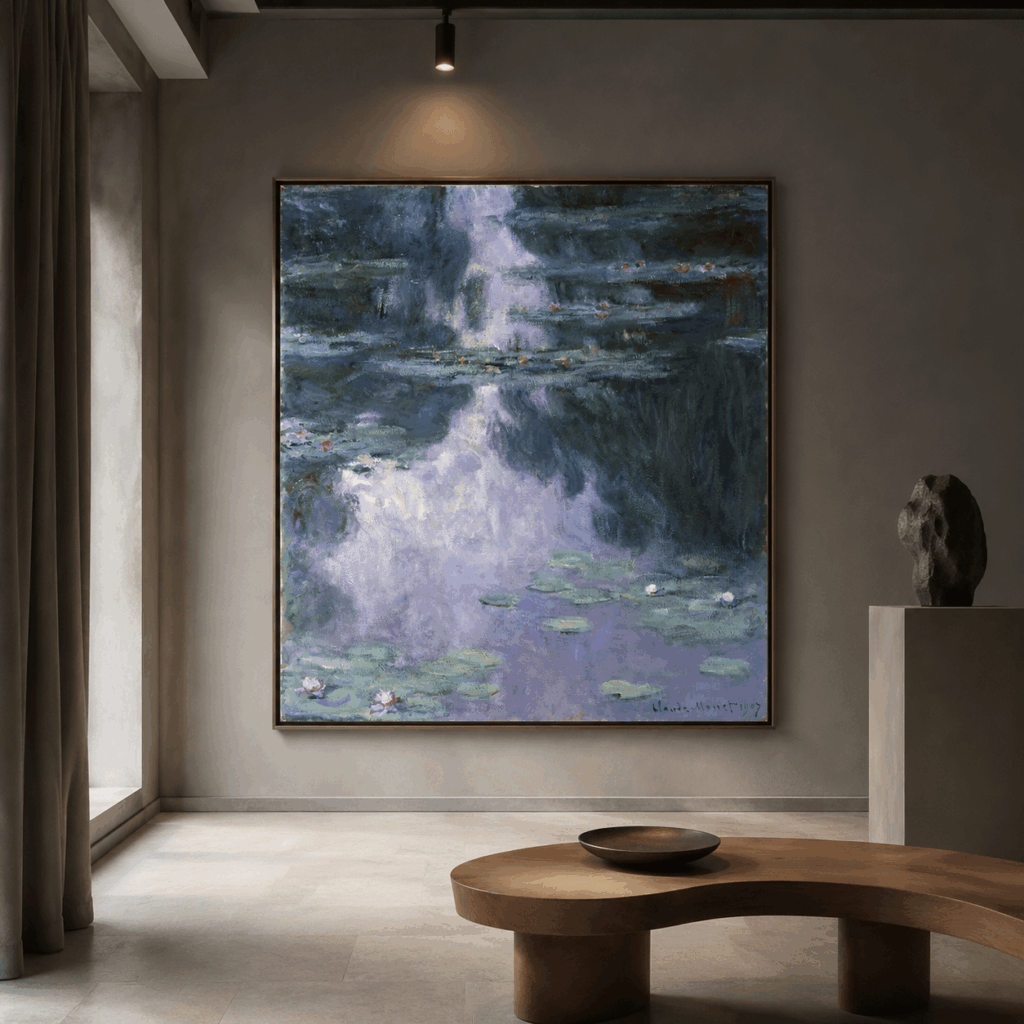
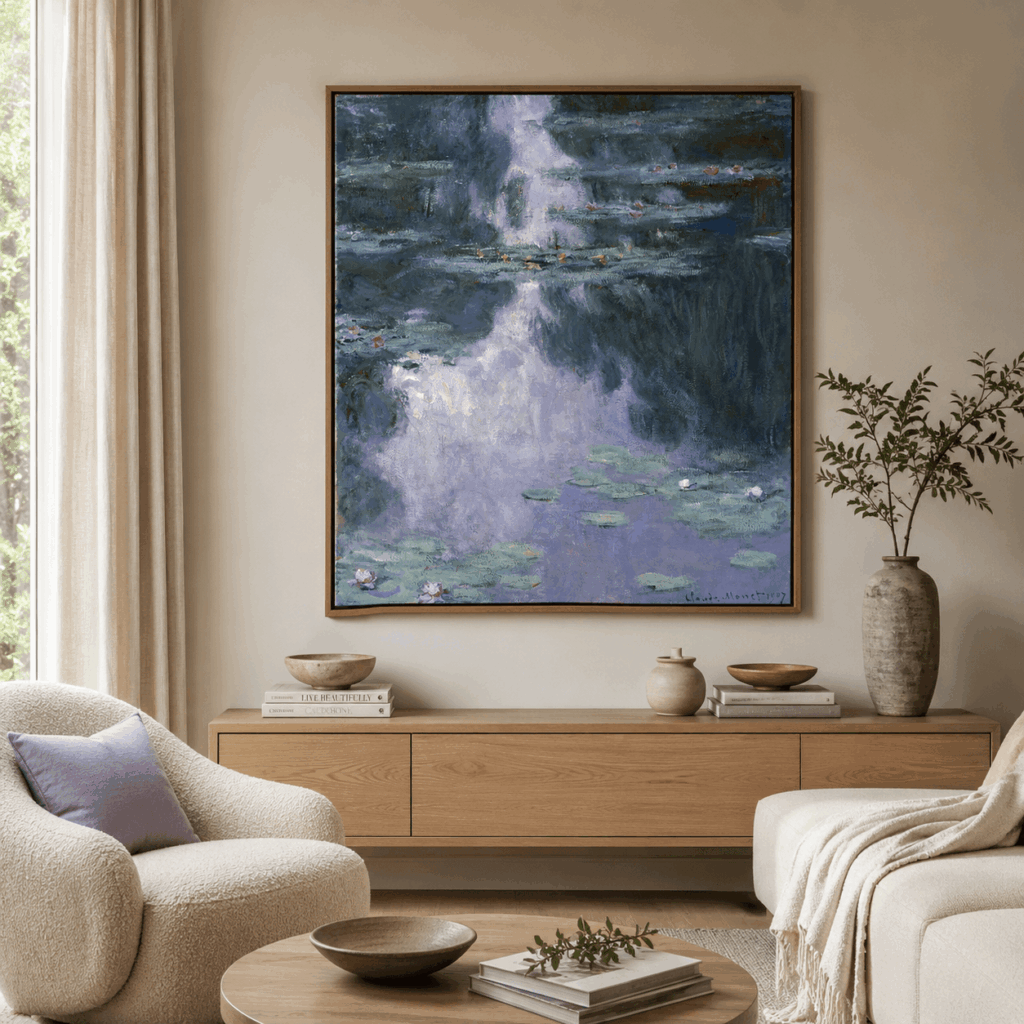
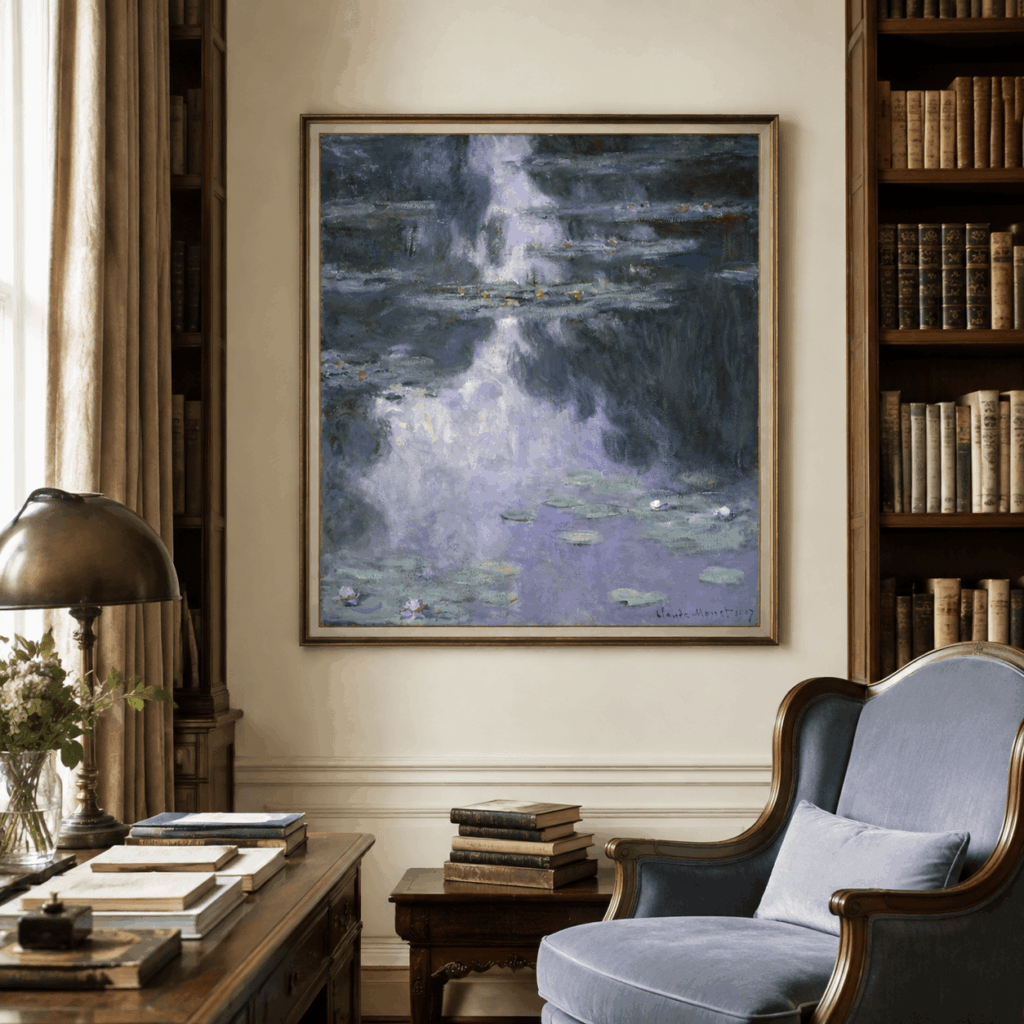
Claude Monet Water Lilies 1907 remains compelling because it combines intellectual depth with emotional calm. As unique wall art, a faithful reproduction can introduce cool color, visual movement, and a restorative sense of nature into a reading room, gallery-like hallway, or quiet lounge.
For spacious homes, an extra-large wall art for living room display can strengthen the work’s immersive quality, provided the scale, frame, and viewing distance are carefully balanced. More than a decorative image, the 1907 Nymphéas offers a sustained encounter with light, reflection, and the threshold between Impressionism and abstraction.