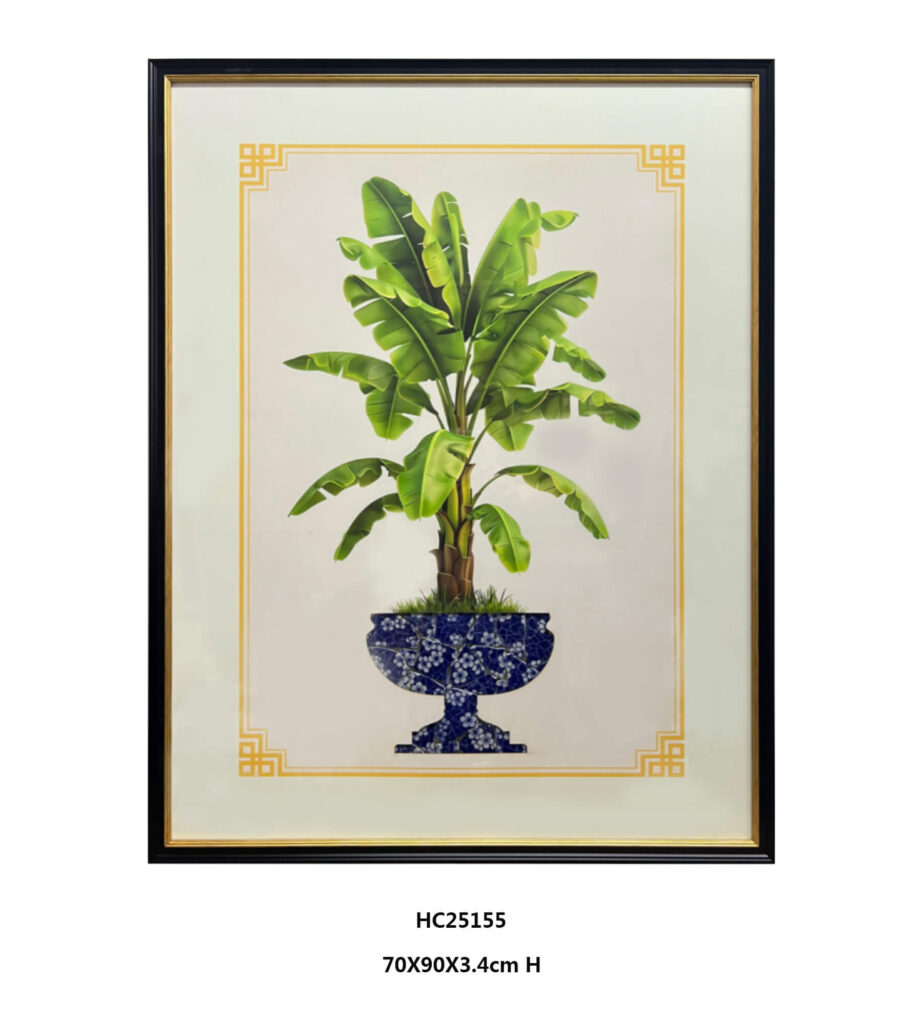
Banana and Palm Tree Porcelain Wall Art for Refined Interiors
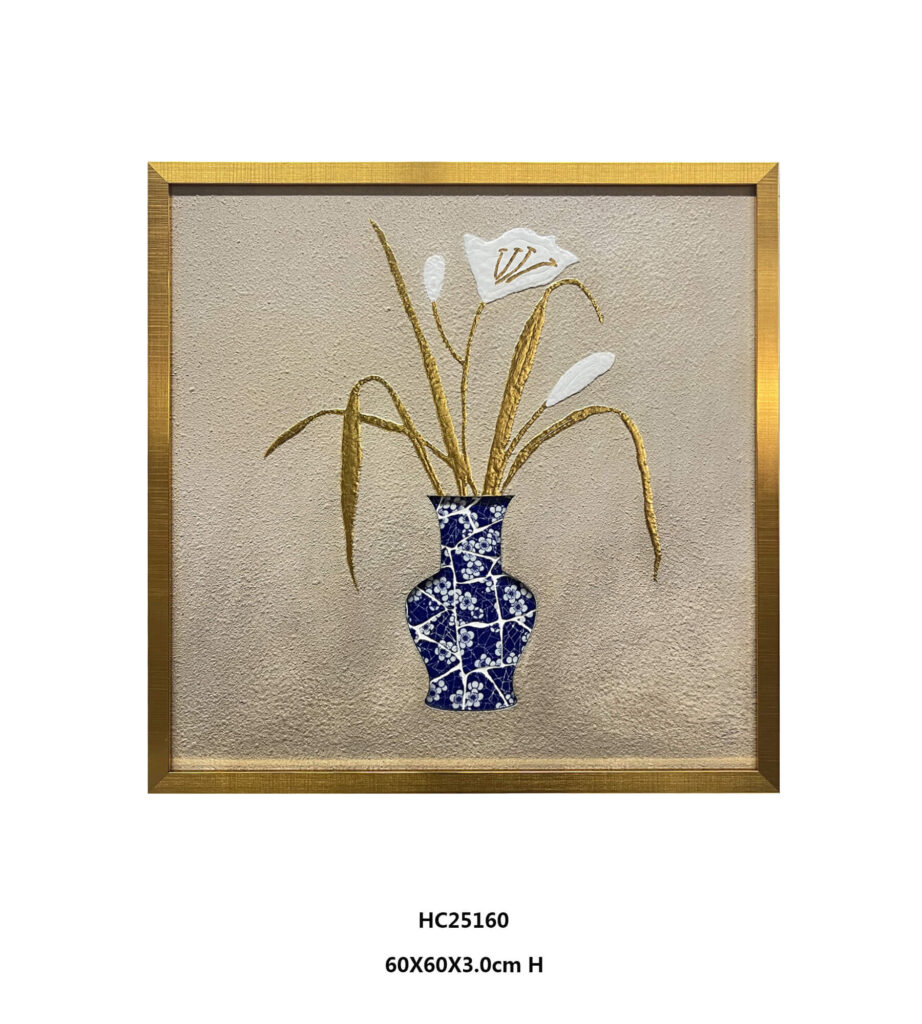
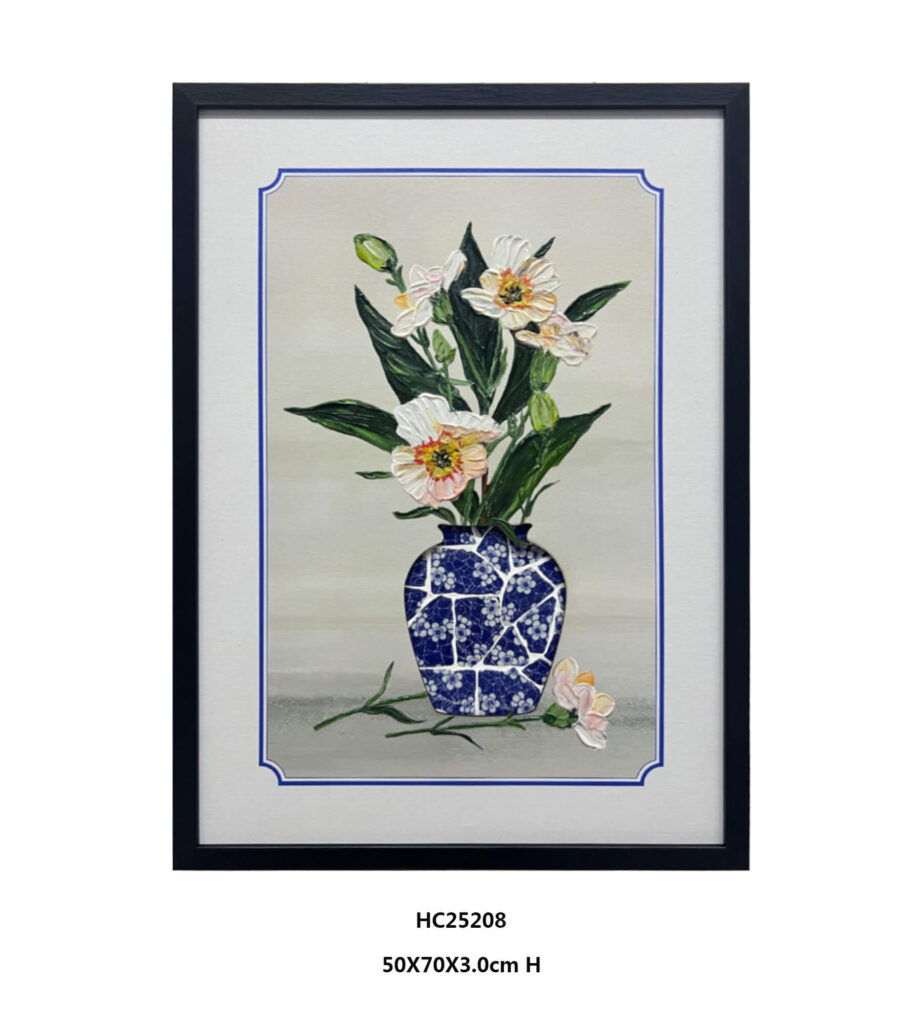
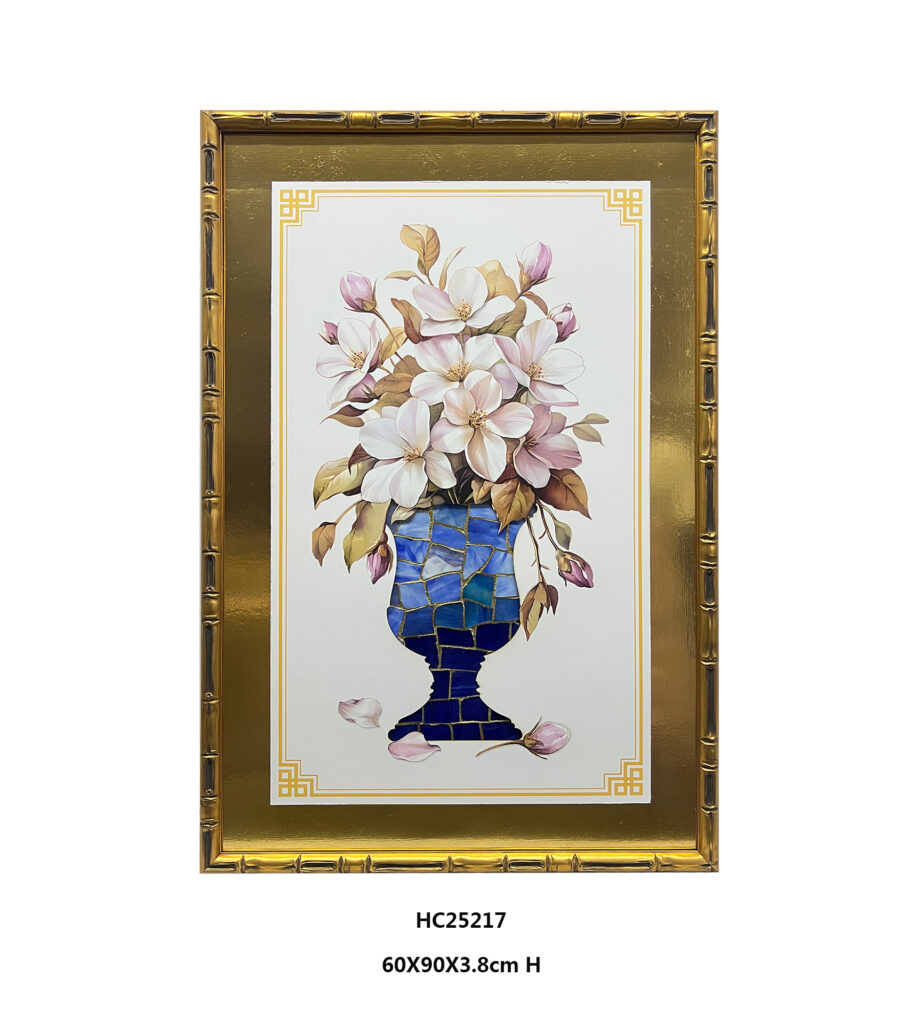
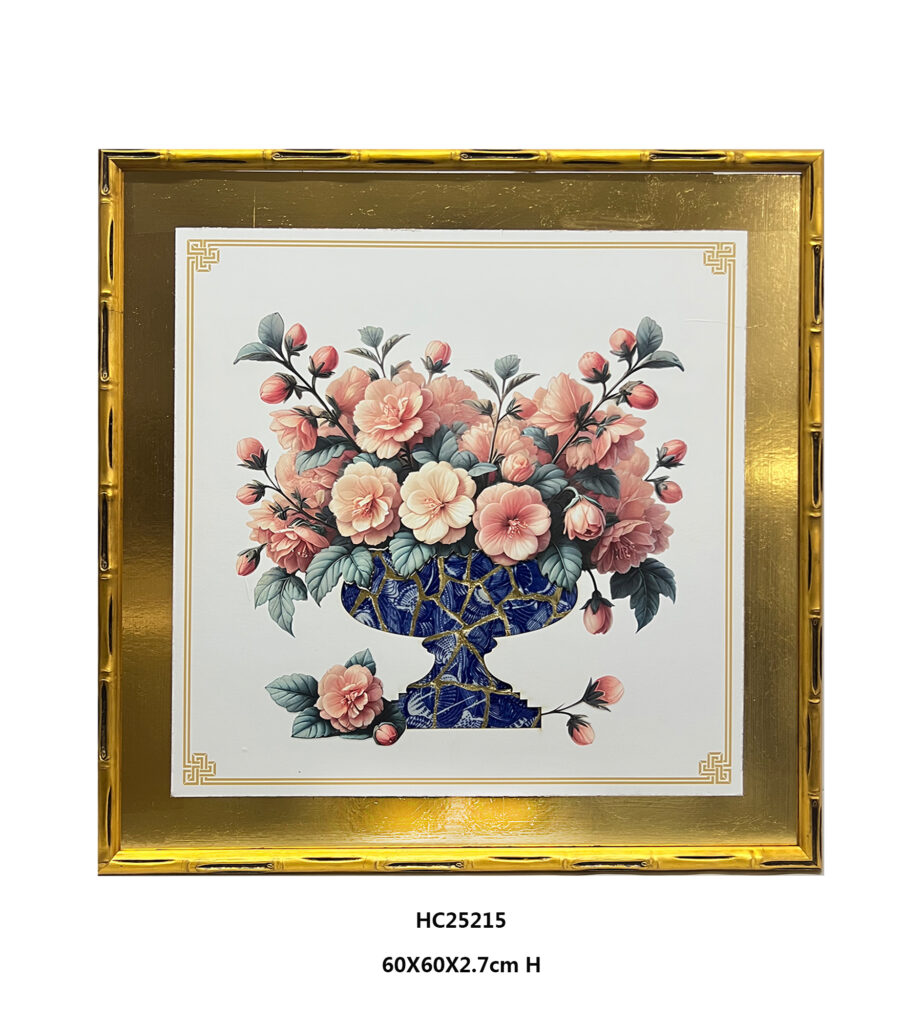
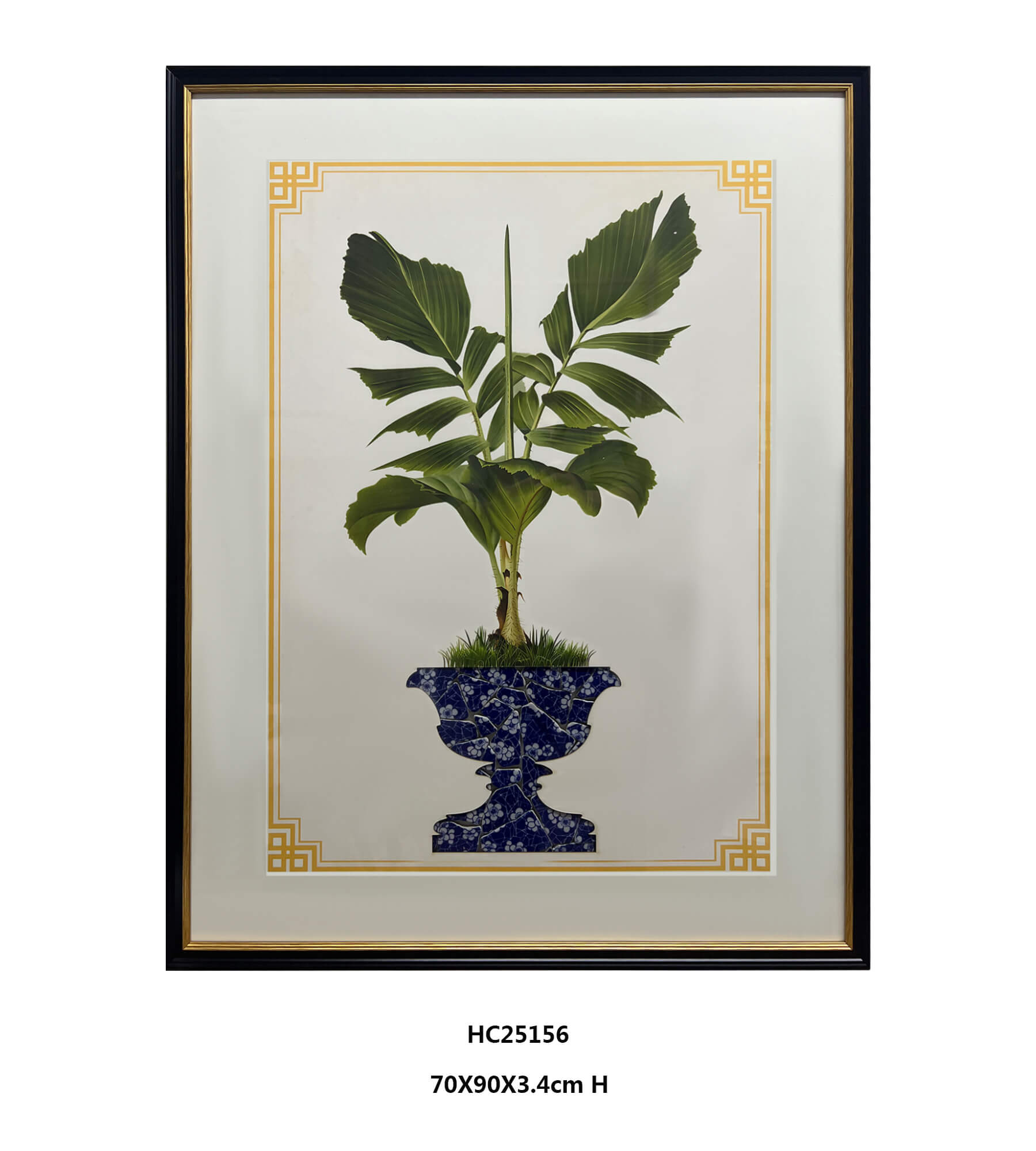
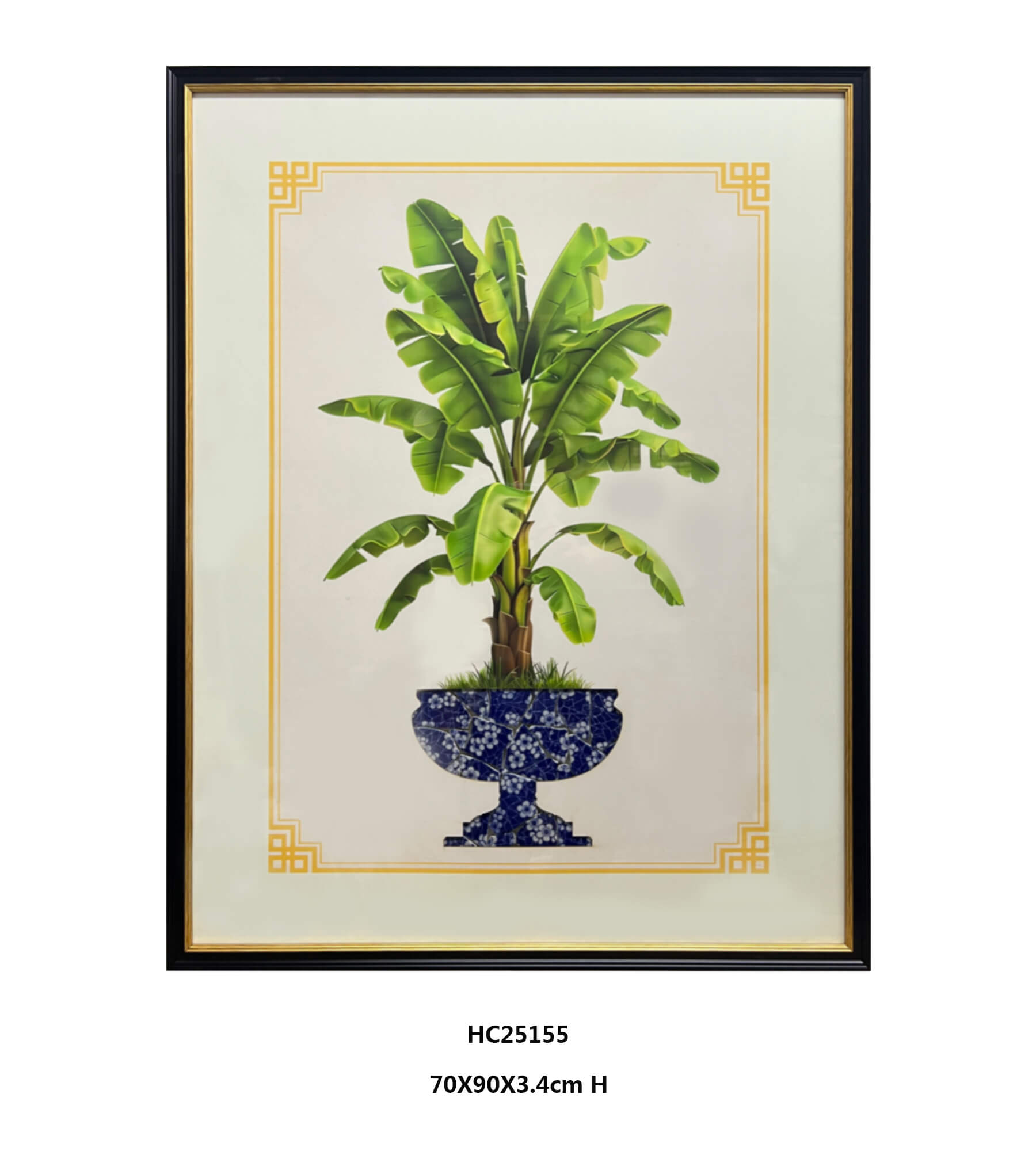
Banana and Palm Tree Porcelain Wall Art combines tropical foliage, real blue-and-white porcelain fragments and structured black-and-gold frames. Unlike a standard botanical print, each artwork introduces visible depth through a planter assembled from individual porcelain shards.
Moreover, the two designs can be displayed as a coordinated pair or as individual pieces. Therefore, homeowners, interior designers and hospitality buyers can adapt them to different rooms and wall layouts.
Real Porcelain Shard Mosaic Planters
Selected blue-and-white porcelain fragments form the pedestal planter in each artwork. Every shard contributes a different cobalt floral or geometric pattern. As a result, the surface has more variation than a printed ceramic illustration.
The visible joints are part of the design rather than imperfections. Instead, they reveal how separate fragments create one complete planter silhouette.
Cobalt Patterns and Material Variation
From across the room, viewers first notice the tropical plant and balanced composition. However, at close range, the changing porcelain patterns and individual joints become clearer.
Moreover, deep cobalt tones contrast with the fresh green foliage. The neutral background also prevents the compositions from appearing too dark or visually crowded.
Depth Created by Light and Texture
The raised porcelain details respond naturally to light. Consequently, highlights and shadows change slightly as the viewing angle changes.
Meanwhile, the black frame adds structure around the lighter background. Gold inner detailing also connects the frame with the geometric border. For historical context, the V&A overview of Chinese blue-and-white ceramics explains the international decorative influence of cobalt-painted porcelain.
Two Coordinated Tropical Botanical Designs
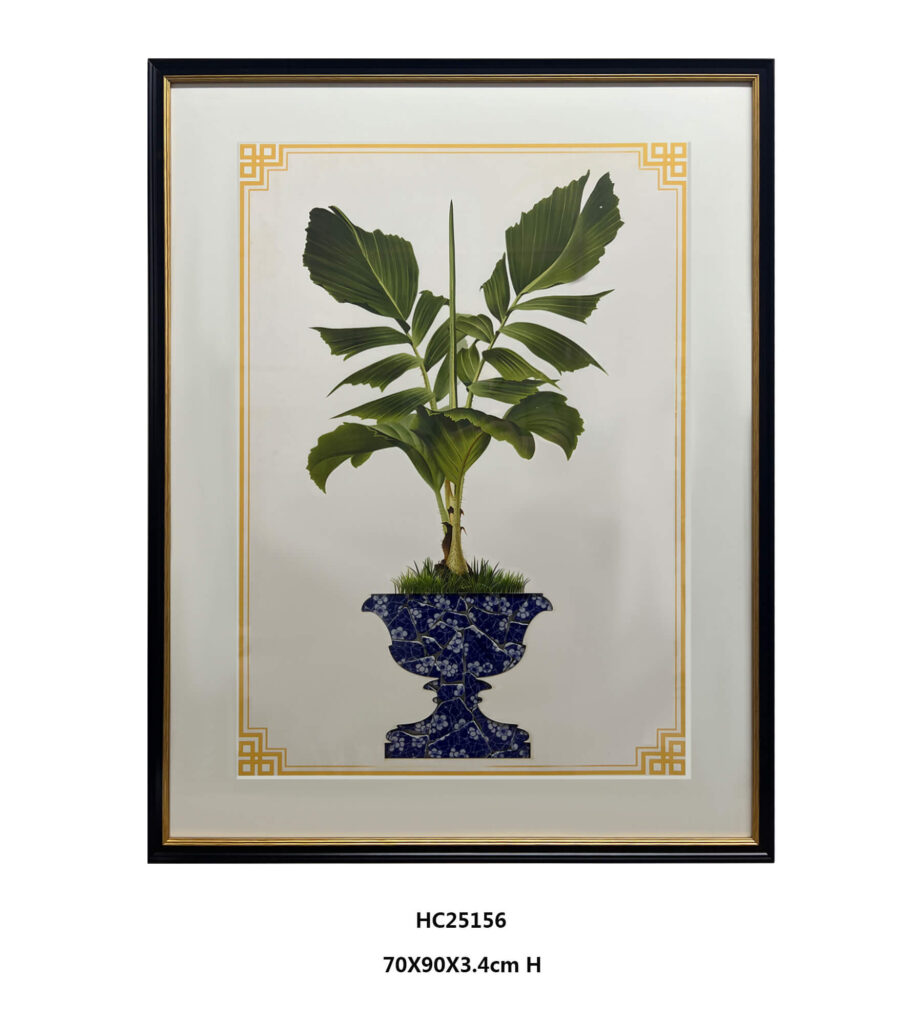
The first artwork presents a banana tree with broad, flowing leaves. In contrast, the second design features a palm with more structured, fan-shaped foliage.
Although the botanical forms differ, matching proportions, colours and porcelain planters connect the two pieces. Therefore, the pair feels coordinated without becoming repetitive.
Displaying the Art as a Pair
The two artworks can hang side by side above a sofa, console or dining cabinet. In this arrangement, the different leaf shapes create visual balance.
Alternatively, buyers can place them on separate walls within the same room. This approach maintains a consistent decorative theme while giving each plant more individual attention.
Choosing a Single Design
The banana tree works well when a room needs a softer and fuller botanical form. Meanwhile, the palm design offers a more structured appearance.
Therefore, buyers with limited wall space can select one piece without losing the main porcelain and botanical features. Larger interiors, however, can use both designs to create a stronger focal point.
Styling the Artwork in European Interiors
The combination of botanical green, porcelain blue and warm neutral tones suits both classic and contemporary rooms. For example, cream walls keep the presentation light, while navy upholstery strengthens the connection with the porcelain planters.
In addition, brass lighting and gold accessories complement the frame details. Natural wood furniture can introduce warmth and soften the formal geometric border.
Residential Display Ideas
In residential interiors, the artwork suits living rooms, dining areas, bedrooms and entrance halls. Moreover, its vertical proportions work well above narrow consoles or between architectural features.
For a restrained interior, buyers can combine the designs with linen fabrics and simple ceramic accessories. Alternatively, patterned cushions can create a more expressive Chinoiserie-inspired setting.
Hospitality and Commercial Spaces
The tropical subject is also suitable for boutique hotels, restaurants, villas and furnished show homes. In addition, the coordinated pair can help connect adjoining areas such as a hotel entrance and lounge.
However, commercial buyers should consider viewing distance and wall dimensions before selecting a size. A larger format may provide better visual impact in spacious public interiors.
Buyer Inspection and Custom Options
Before ordering, buyers should examine more than the overall product image. First, the porcelain fragments should remain stable within the planter shape. Second, frame corners and hanging hardware should suit the finished weight.
Finally, protective packaging is essential because raised components require additional support during transport.
Details to Confirm Before Ordering
Buyers should check:
- Porcelain shard stability and edge finishing
- Cobalt pattern and background colour consistency
- Frame corners and gold inner detailing
- Protective front panel and finished depth
- Hanging hardware and completed weight
- Reinforced packaging for raised components
Therefore, requesting detailed photographs or an approved sample can reduce uncertainty before a project order.
Customization for Interior Projects
Sizes, background colours, frames and packaging can be adjusted for different residential and commercial projects. In addition, buyers may order one design or select the coordinated pair.
For related materials and styles, explore our porcelain wall art collection.
Which Botanical Design Suits Your Space?
Which design would work better in your interior—the broad banana leaves or the structured palm foliage? Share your preferred arrangement in the comments.
For a project quotation, send us your wall dimensions, required quantity, destination and preferred frame finish. We can then recommend a suitable size, arrangement and packaging solution.