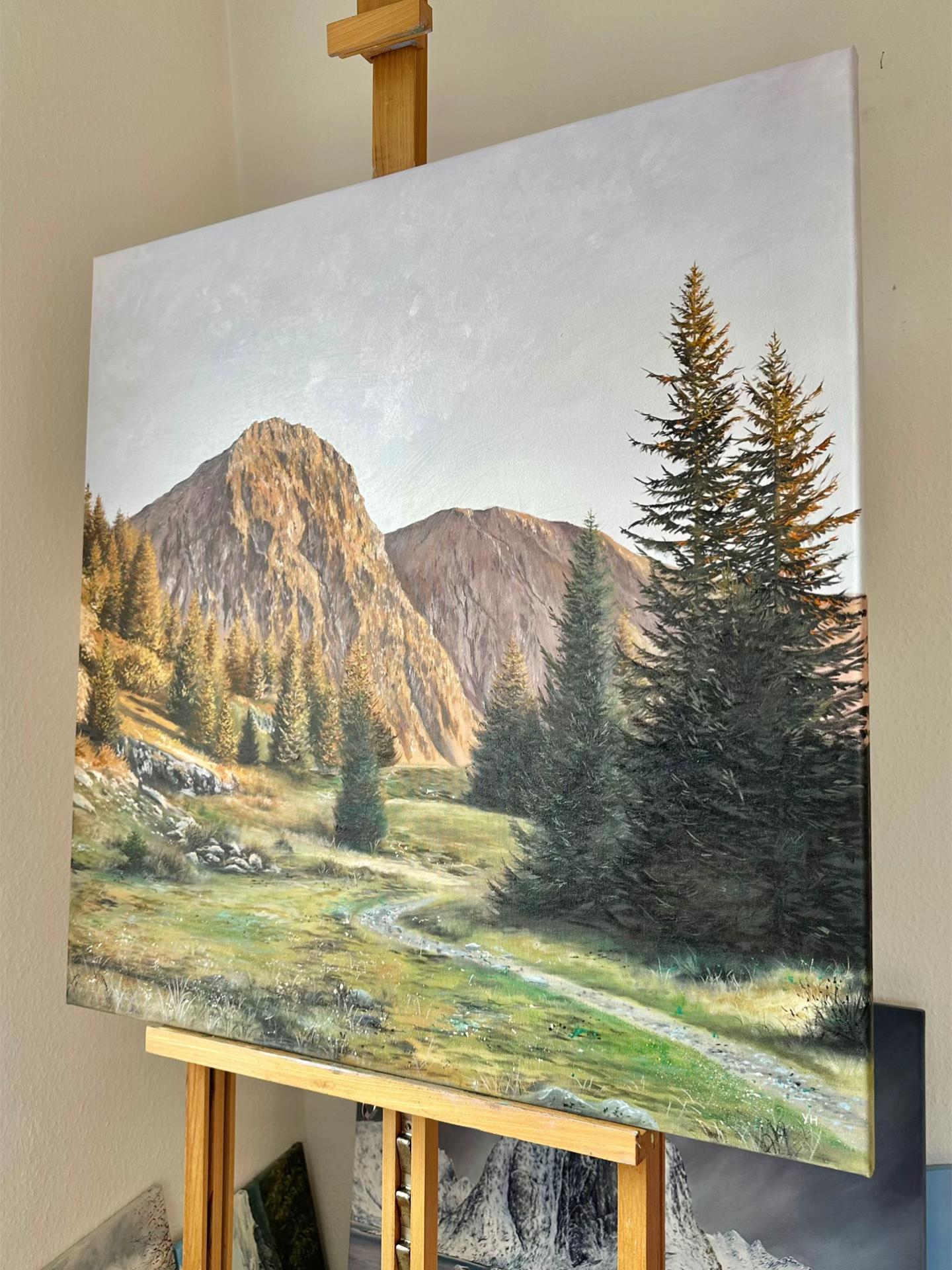
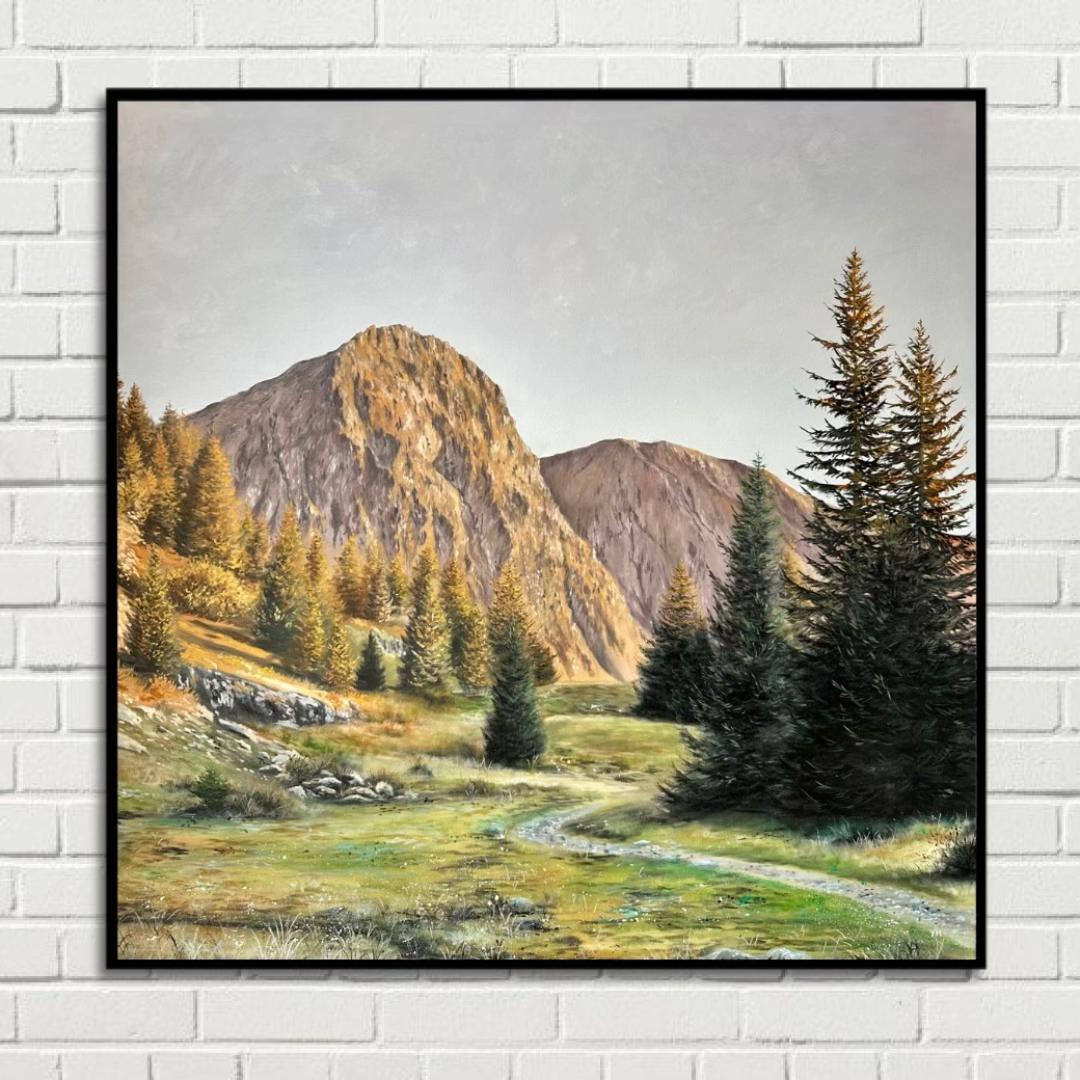
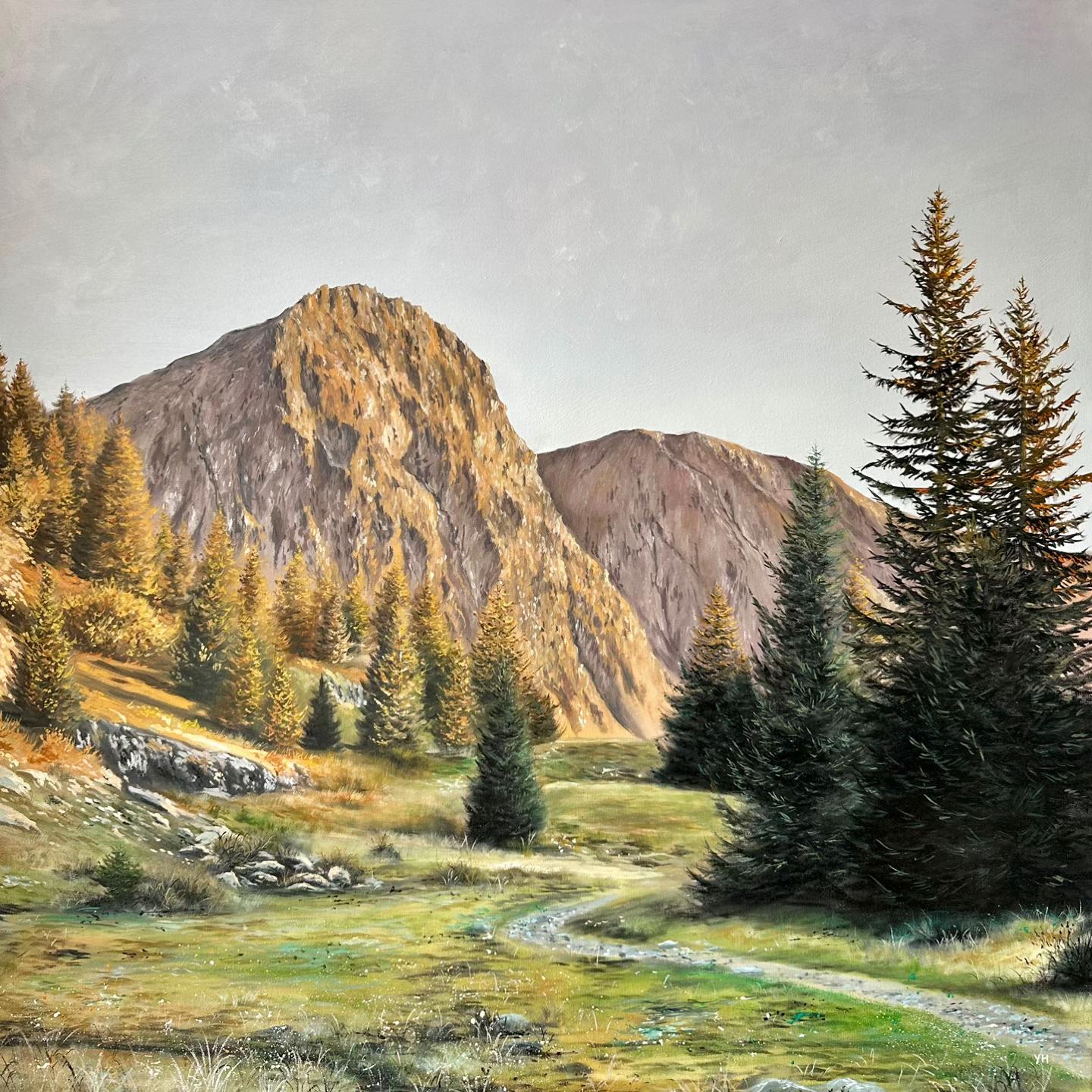
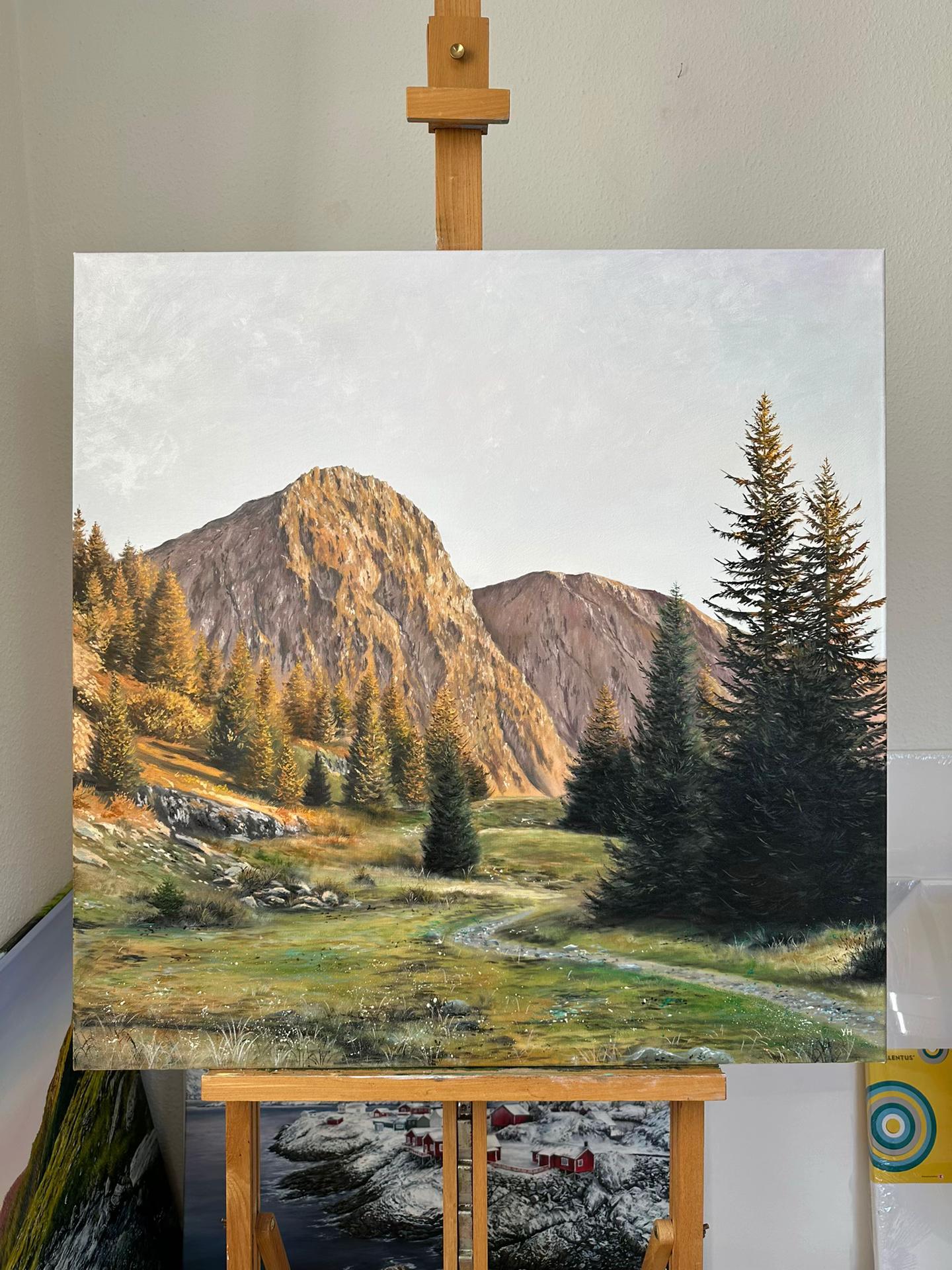
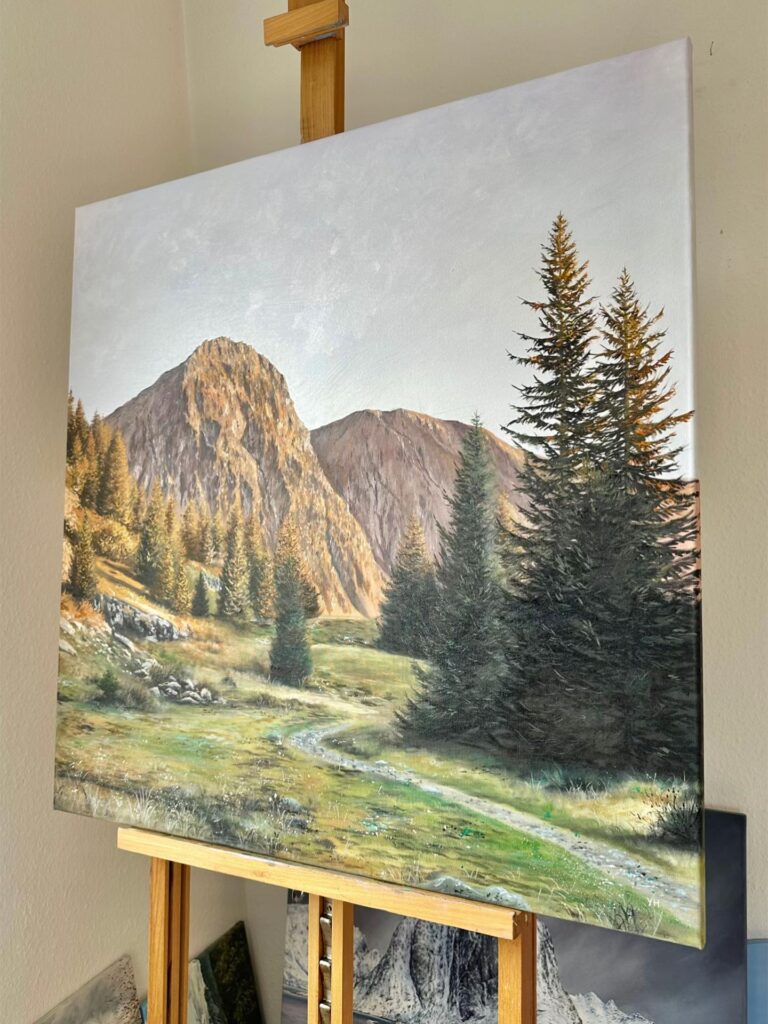
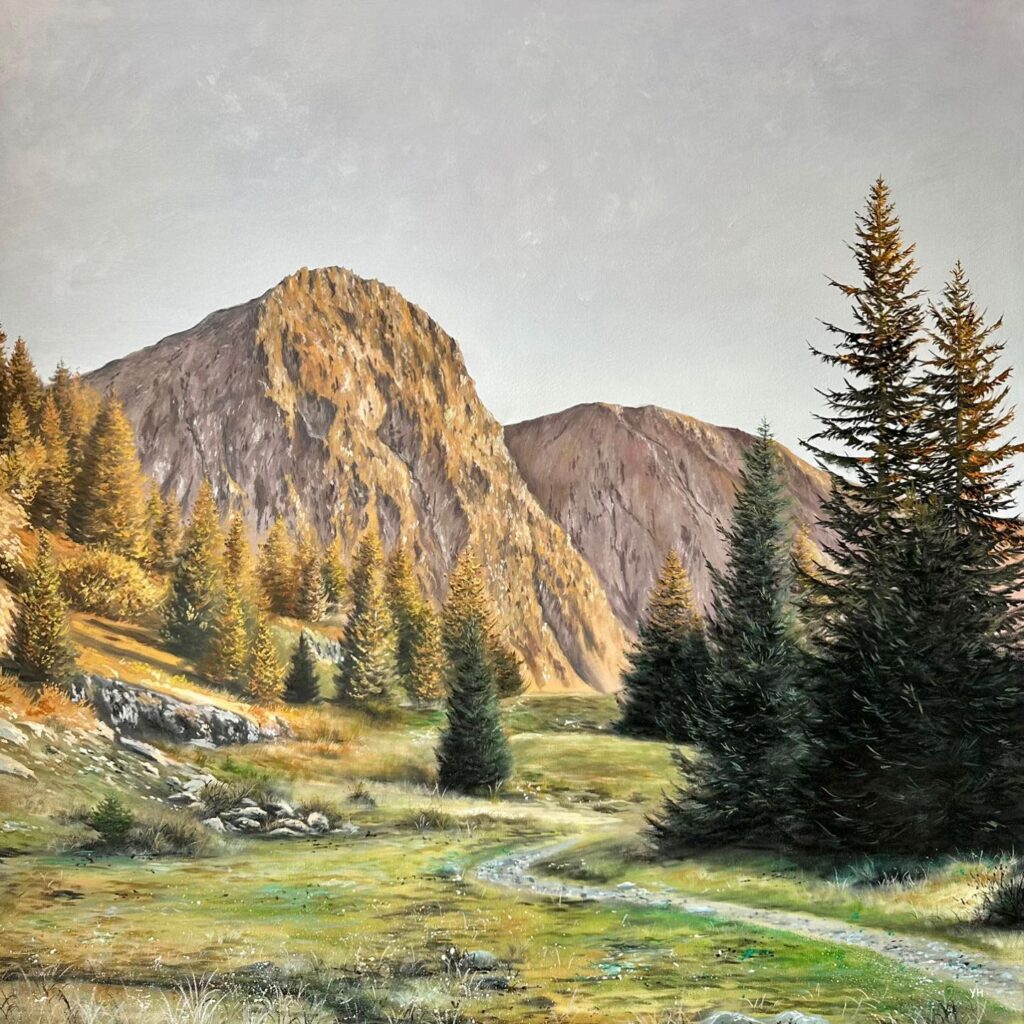
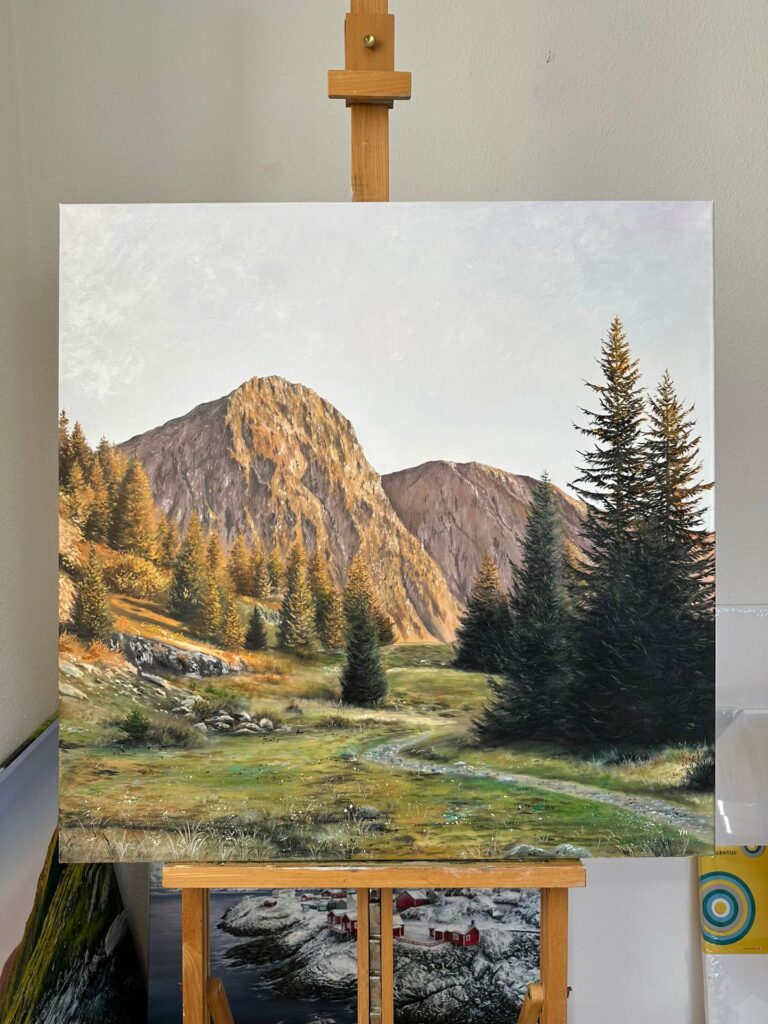
Buyers often ask about drying, preservation, and placement before choosing hand-painted art. Next, using our brand-new mountain-themed oil painting, *Autumn Path to the Summit*, as an example, we will discuss how long oil paintings take to dry, their daily maintenance, and how to select the right piece for your interior décor.
How Long Does Oil Paint Take to Dry
The time required for oil paint to dry depends on the specific characteristics of the painting. Oil paint cures through oxidation; therefore, factors such as pigment composition, paint thickness, the medium used, airflow, temperature, and humidity all influence the process. Winsor & Newton states that thin films generally become touch-dry in two to twelve days.
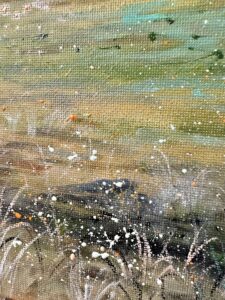
Autumn Path to the Peaks uses mainly thin-to-medium layers, with denser marks across the trees, rocks, and foreground. In normal room conditions, much of the surface may become touch-dry in one to two weeks, while thicker details can take several more weeks. However, curing continues for months. Premature stacking, tight wrapping, and varnishing should therefore be avoided.
Stable Conditions for Long Term Preservation
Direct sunlight can alter color, while unstable humidity can stress the canvas and paint layers. Heat, moisture, dust, rough handling, and airflow from heating or cooling vents also affect long-term condition.
Display the painting on a stable interior wall away from windows, radiators, fireplaces, and damp areas. A digital hygrometer can identify humidity problems. Then use a dehumidifier in an overly damp room or a humidifier when the air remains too dry. Remove loose dust with a clean, soft brush; never use water or household cleaners.
Matching an Oil Painting with Its Interior
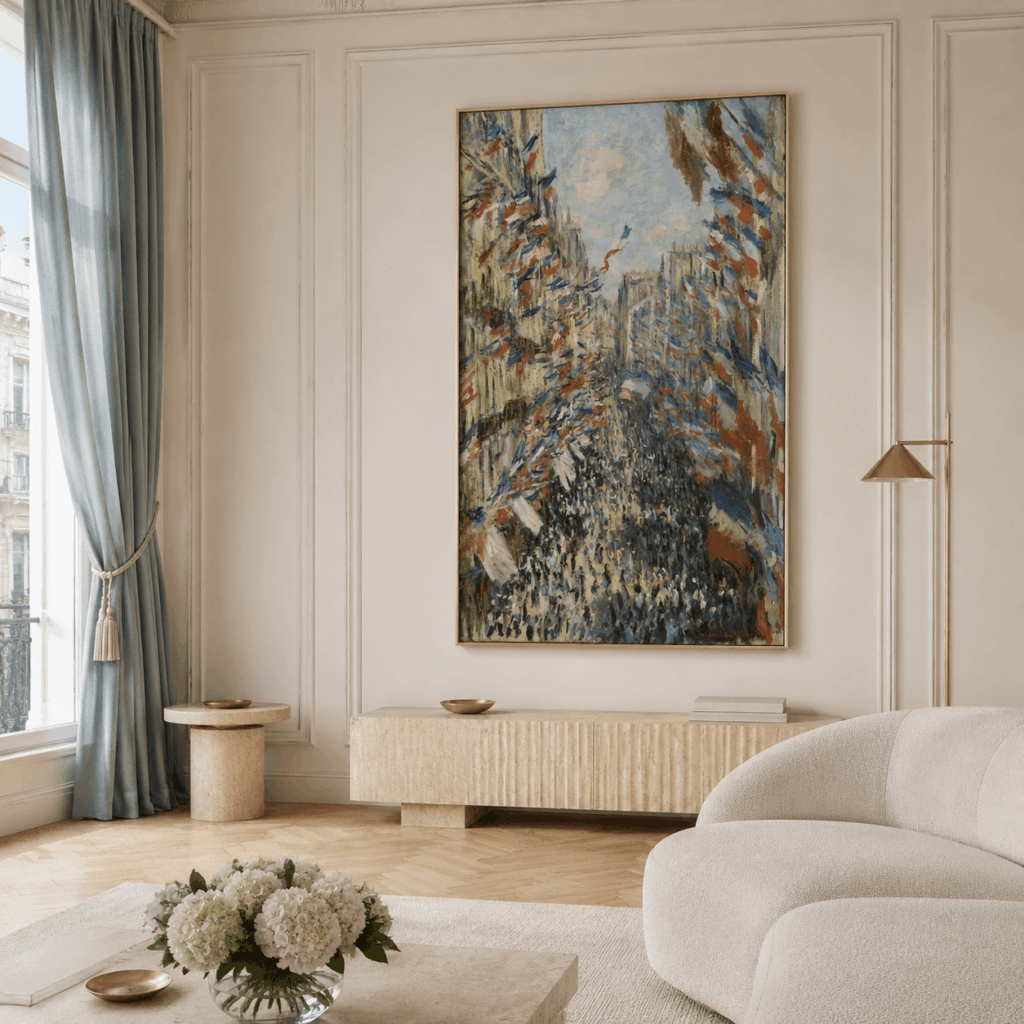
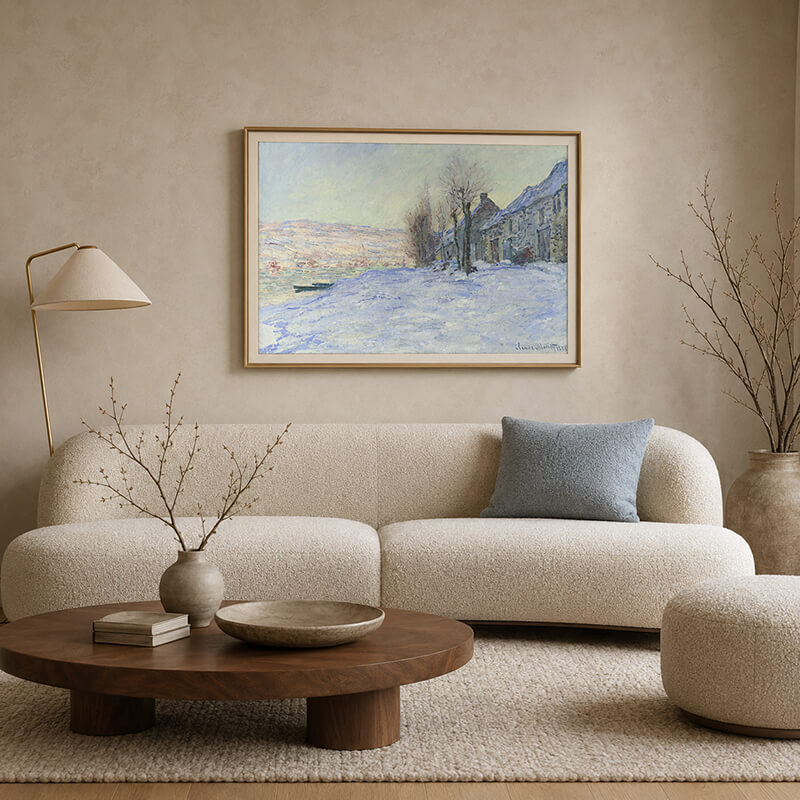
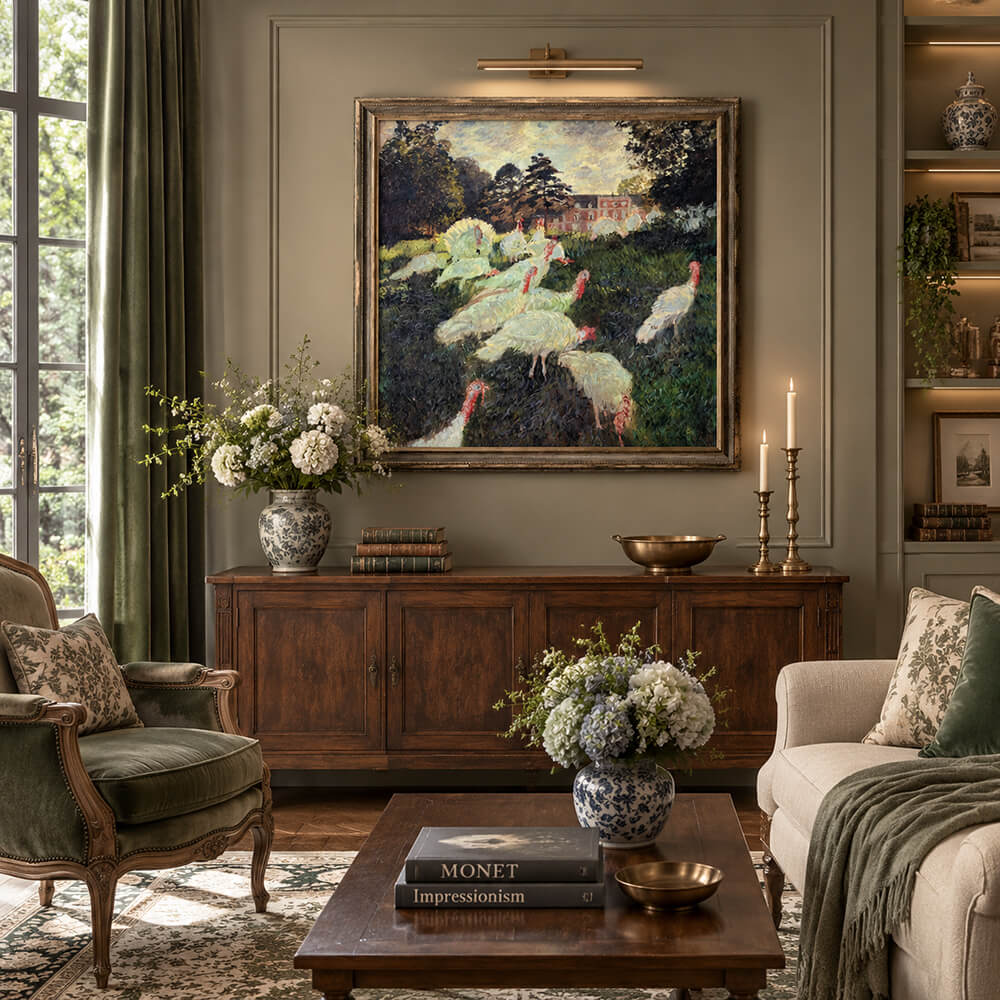
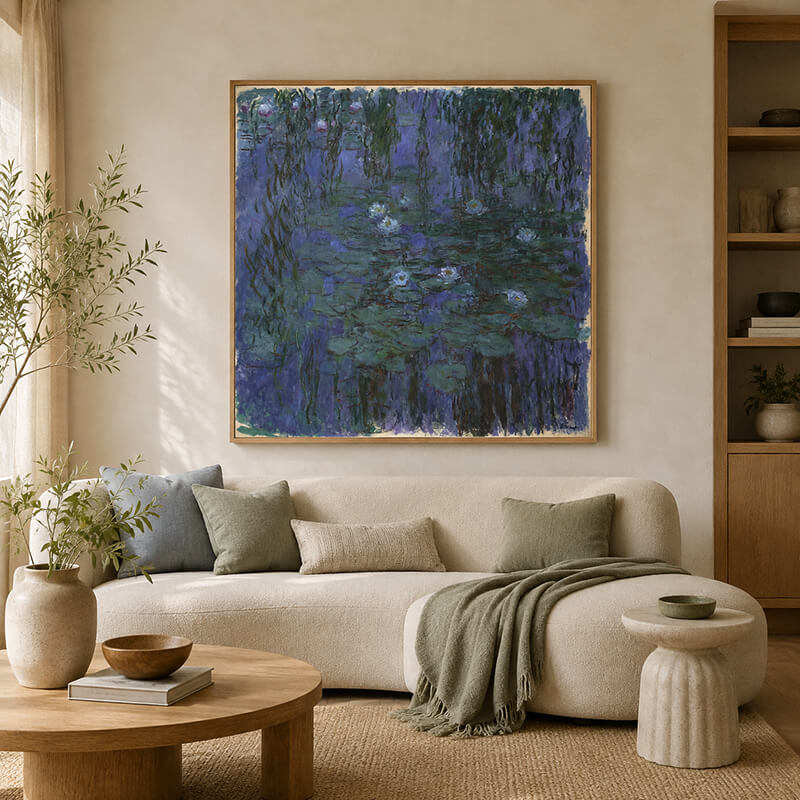
Measure the usable area above nearby furniture and account for shelves, lighting, mirrors, or other wall objects. The painting should feel connected to the layout without filling every open space. . Dominant colors, furniture materials, and the overall mood of the room are equally important.
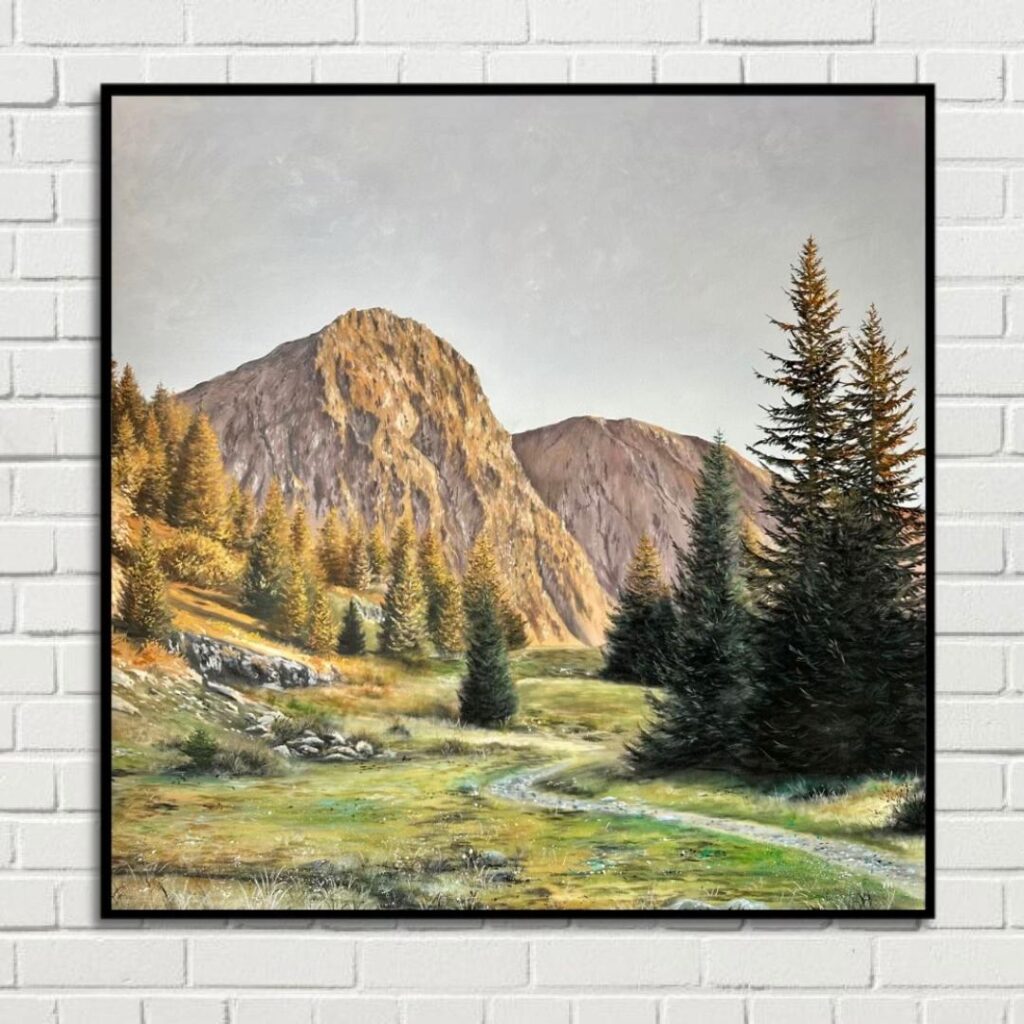
When comparing oil paintings of landscapes, consider whether the scene complements the interior or introduces too many competing colors. Quiet compositions work well in detailed rooms, while open walls can support a stronger focal piece. Framing also changes the result. An oil painting with frame included creates a clear visual boundary, whereas a gallery-wrapped canvas blends more softly into a contemporary setting.
Autumn Path to the Peaks in Practice
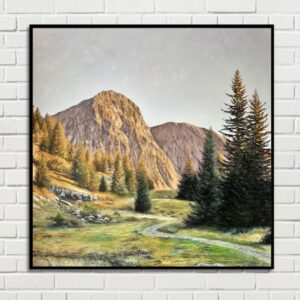
Autumn Path to the Peaks combines golden ochre foliage, warm brown cliffs, deep evergreen trees, muted grass, and a pale gray sky. These colors pair naturally with warm white, cream, light greige, or muted sage walls. Natural wood, stone, linen, and tan leather can further connect the mountain scenery with the surrounding interior.
The painting works best as a single focal point. It can anchor a living room above a low sofa or console, add depth to a study or home office, or support the natural character of a cabin, hotel lounge, mountain resort, or reception area. A slim black frame defines the dark pines against a light wall, while the frameless version creates a quieter and more modern presentation.
The painting size and frame can be adjusted to match the final layout.
Art Selected for Individual Spaces
Oil painting customization allows the dimensions and framing to respond to each wall. If this scene does not match the required color or atmosphere, explore our hand-painted landscape collection for other natural subjects and made-to-order options.