Inside Monet’s Argenteuil Home: An Impressionist Study of Family and Light
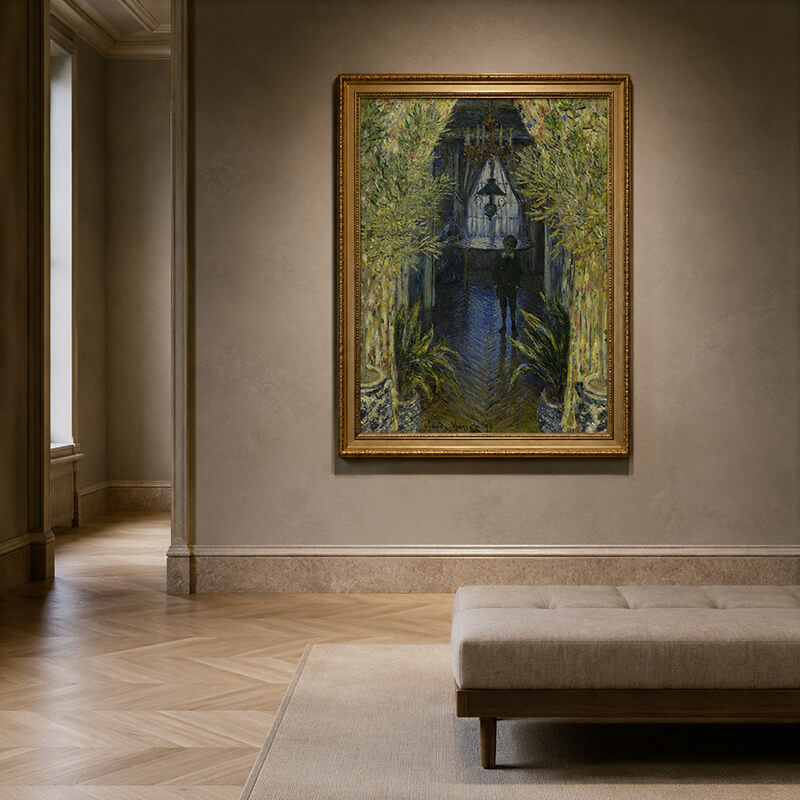
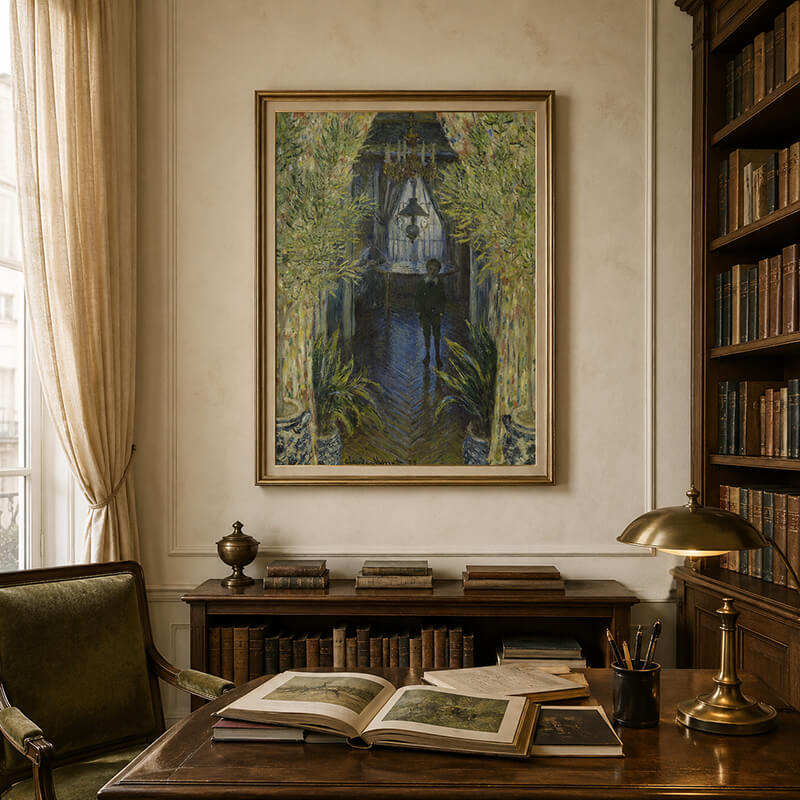
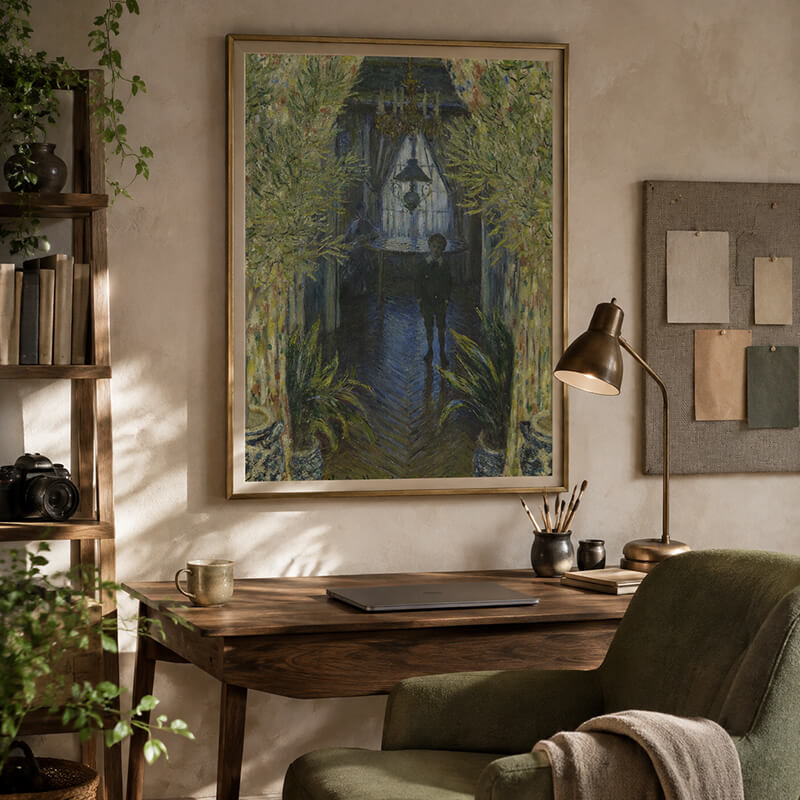
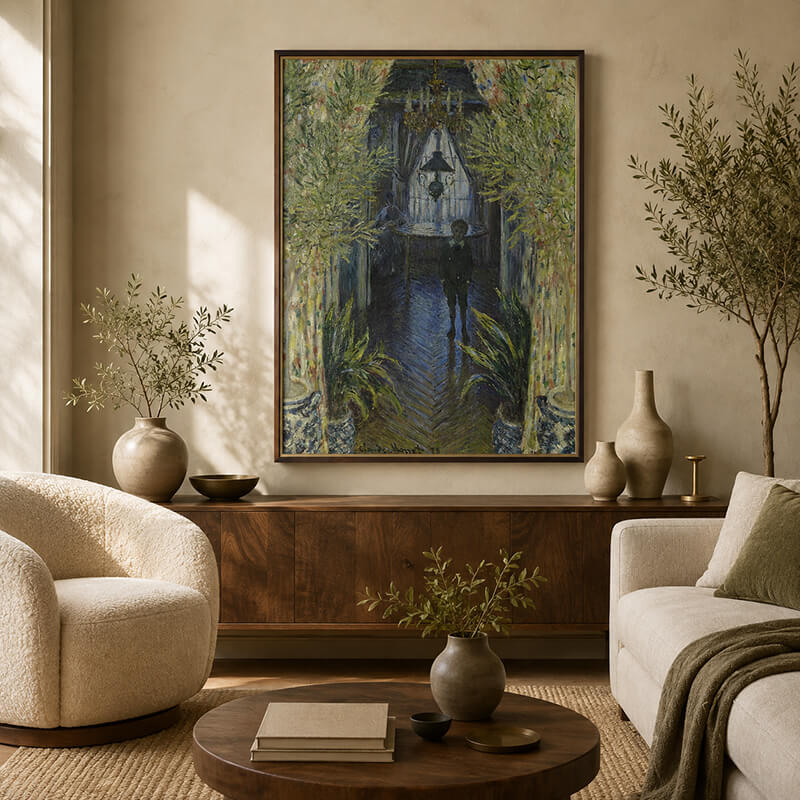
Claude Monet is best known for gardens, rivers, and shifting skies. However, Claude Monet A Corner of the Apartment turns away from the open landscape and enters a private domestic space. Painted in 1875, the work applies Monet’s sensitivity to air, color and changing light to an intimate family interior.
Beyond the Open Air: Monet Turns Inward
Monet painted the scene in his second home in Argenteuil, where he lived from 1871 to 1878. His eldest son, Jean, stands near the center, while a seated figure—probably his wife, Camille—appears in the shadowed background.
The Musée d’Orsay’s official artwork record identifies the painting as Intérieur d’appartement, with Un coin d’appartement as an alternative title. This quiet subject shows that Impressionism could explore more than outdoor light. It could also reveal atmosphere within an ordinary home.
Composition: A Natural Frame and Deep Perspective
Plants, Curtains and Decorative Vases
Monet builds the foreground like a stage. Patterned curtains, tall plants and decorative ceramic vases form a symmetrical border around the darker interior.
Consequently, the viewer does not simply look at the room. Instead, the eye appears to pass through a curtain and enter a private domestic world. This framing device creates both visual depth and emotional distance.
Jean Monet and the Herringbone Floor
Jean stands slightly to the right of the central axis. Meanwhile, the table, hanging lamp, and bright window guide the eye toward the rear of the apartment.
The herringbone parquet is especially important. Its diagonal pattern directs the gaze inward while reinforcing the painting’s symmetry. Jean’s dark silhouette and faint reflection further connect the figure to the illuminated floor.
Light and Color: An Indoor Impressionist Experiment
Backlighting and Interior Atmosphere
Daylight enters from the window behind the figures. Rather than describing every object clearly, Monet allows the light to dissolve edges and soften spatial boundaries.
The suspended lamp anchors the composition, while the brighter window establishes the principal light source. As a result, the room feels filled with air rather than enclosed by solid walls.
Broken Brushwork and Color Contrast
Monet uses loose, fragmented strokes to describe leaves, patterned fabric, and reflections. This is not Pointillism in the later Neo-Impressionist sense. Instead, it is characteristically broken Impressionist brushwork designed to suggest movement and changing perception.
Cool blues and blue-grays dominate the shadowed interior. In contrast, muted greens, ochres and warm floor tones create gentle visual energy. The result is calm but never static.
Family Life in Argenteuil
The painting records a relatively settled and productive period in Monet’s family life. Jean’s upright figure feels immediate, while Camille’s probable presence remains distant and contemplative.
This separation creates a subtle psychological tension. Nevertheless, the scene remains tender rather than dramatic. Monet transforms an everyday moment into a study of childhood, domestic silence, and family intimacy.
Its layered colors and atmospheric depth also make the composition appealing as unique wall décor, particularly in studies, reading rooms and interiors with warm wood or muted green accents.
Why A Corner of the Apartment Still Matters
This painting proves that Impressionism did not depend on expansive landscapes. Monet could discover equally complex effects of light, air and color within a private room.
For further comparison, explore his treatment of outdoor atmosphere in Impression, Sunrise or examine the later color harmonies of Monet’s Water Lilies and Agapanthus.
Which detail captures your attention first: Jean’s silhouette, the luminous floor, or the plants framing the room?