Monets „Eine Ecke der Wohnung“: Licht, Raum und Intimität – eine Entdeckung

Preis: $298

Artist / Designer: Claude Monet
Produktbeschreibung:
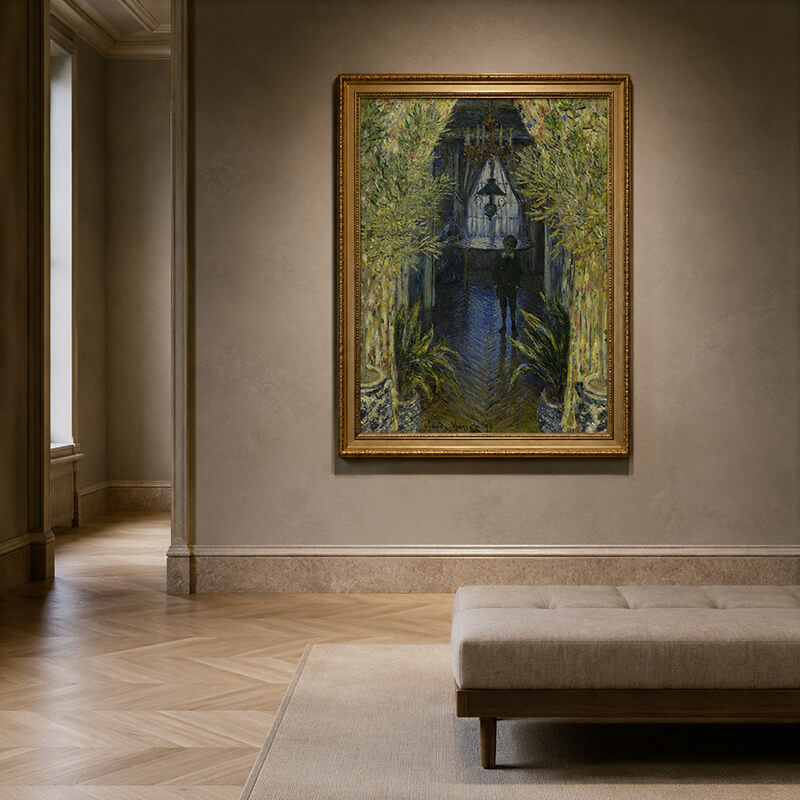
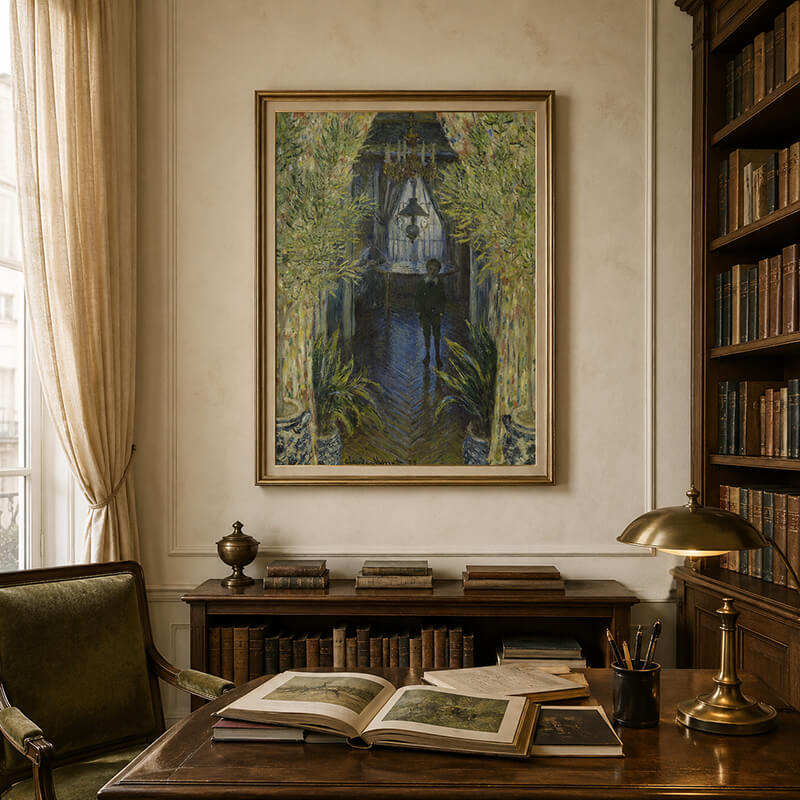
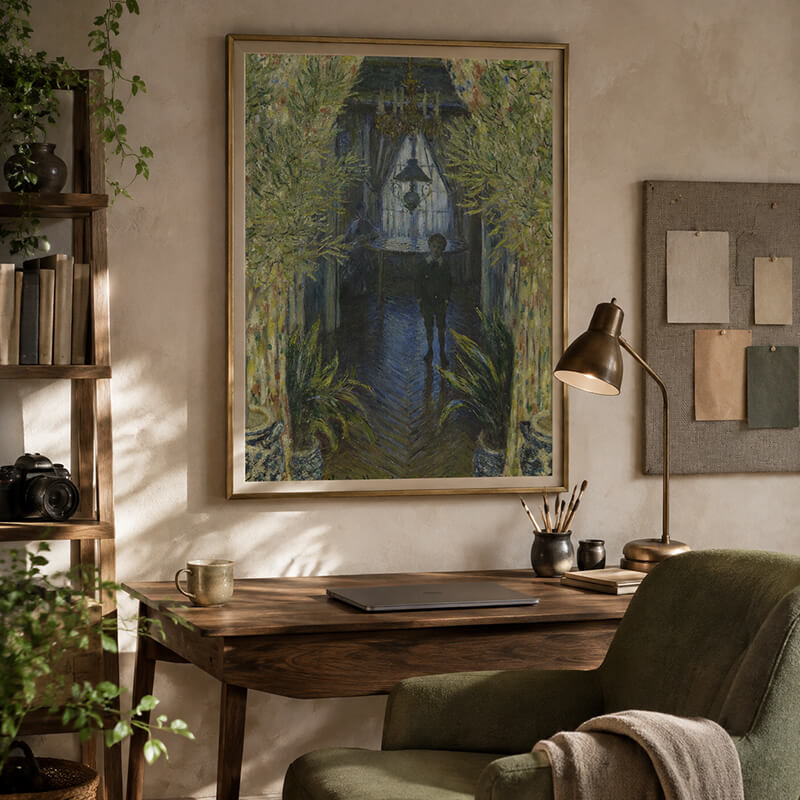
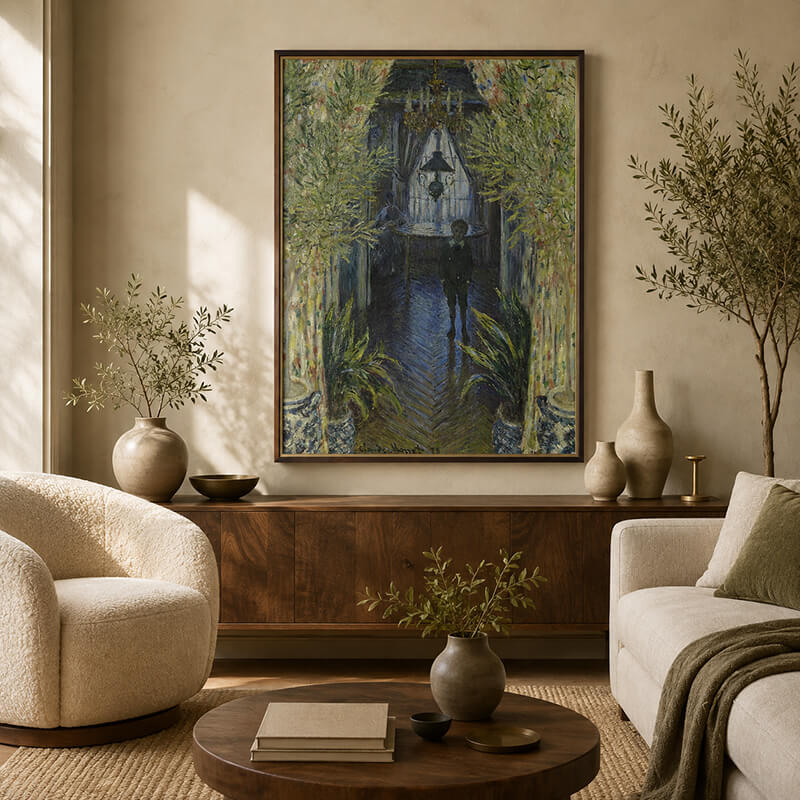
This decorative wall art features a sophisticated reproduction of Claude Monet’s 1875 Impressionist masterpiece, A Corner of the Apartment. The visual composition presents a tranquil, intimate interior framed by lush green potted plants resting in ornate blue-and-white porcelain vases. A young boy stands centered on glossy herringbone hardwood floors, bathed in soft natural light filtering through sheer window drapes. Rich shades of deep navy blue, forest green, warm gold, and muted beige combine to build a striking sense of depth, atmosphere, and classic luxury. Designed for modern homes, boutique hotels, upscale restaurants, executive offices, art galleries, and commercial interiors, it can be customized in size, color tone, material, frame, and packaging to meet different wholesale and project requirements.

Mindestbestellmenge: 1 Stück
Verfügbare Größen: Standard- und Sondergrößen erhältlich
Material: Wood Frame/ Canvas
Farbe: Standard- oder Sonderfarben
Stil: Impressionist / Classic
Rahmenoptionen: Gerahmt oder ungerahmt
Abtastzeit: 5–10 Werktage
Produktionszeit: 5–10 Werktage
Anpassung: Design, Größe, Farbe, Material, Rahmen, Logo, Etikett und Verpackung
Verpackung: Schaumstoffpolsterung, Eckenschutz, Exportkarton oder Holzkiste
Versand: DHL, FedEx, Luftfracht, Seefracht oder beauftragter Spediteur
OEM & ODM: Verfügbar
Qualitätsprüfung: Umfassende Prüfung vor dem Versand

Inside Monet’s Argenteuil Home: An Impressionist Study of Family and Light

Claude Monet is best known for gardens, rivers, and shifting skies. However, Claude Monet A Corner of the Apartment turns away from the open landscape and enters a private domestic space. Painted in 1875, the work applies Monet’s sensitivity to air, color and changing light to an intimate family interior.

Beyond the Open Air: Monet Turns Inward

Monet painted the scene in his second home in Argenteuil, where he lived from 1871 to 1878. His eldest son, Jean, stands near the center, while a seated figure—probably his wife, Camille—appears in the shadowed background.

The Musée d’Orsay’s official artwork record identifies the painting as Intérieur d’appartement, with Un coin d’appartement as an alternative title. This quiet subject shows that Impressionism could explore more than outdoor light. It could also reveal atmosphere within an ordinary home.

Composition: A Natural Frame and Deep Perspective

Plants, Curtains and Decorative Vases

Monet builds the foreground like a stage. Patterned curtains, tall plants and decorative ceramic vases form a symmetrical border around the darker interior.

Consequently, the viewer does not simply look at the room. Instead, the eye appears to pass through a curtain and enter a private domestic world. This framing device creates both visual depth and emotional distance.

Jean Monet and the Herringbone Floor

Jean stands slightly to the right of the central axis. Meanwhile, the table, hanging lamp, and bright window guide the eye toward the rear of the apartment.

The herringbone parquet is especially important. Its diagonal pattern directs the gaze inward while reinforcing the painting’s symmetry. Jean’s dark silhouette and faint reflection further connect the figure to the illuminated floor.

Light and Color: An Indoor Impressionist Experiment

Backlighting and Interior Atmosphere

Daylight enters from the window behind the figures. Rather than describing every object clearly, Monet allows the light to dissolve edges and soften spatial boundaries.

The suspended lamp anchors the composition, while the brighter window establishes the principal light source. As a result, the room feels filled with air rather than enclosed by solid walls.

Broken Brushwork and Color Contrast

Monet uses loose, fragmented strokes to describe leaves, patterned fabric, and reflections. This is not Pointillism in the later Neo-Impressionist sense. Instead, it is characteristically broken Impressionist brushwork designed to suggest movement and changing perception.

Cool blues and blue-grays dominate the shadowed interior. In contrast, muted greens, ochres and warm floor tones create gentle visual energy. The result is calm but never static.

Family Life in Argenteuil

The painting records a relatively settled and productive period in Monet’s family life. Jean’s upright figure feels immediate, while Camille’s probable presence remains distant and contemplative.

This separation creates a subtle psychological tension. Nevertheless, the scene remains tender rather than dramatic. Monet transforms an everyday moment into a study of childhood, domestic silence, and family intimacy.

Its layered colors and atmospheric depth also make the composition appealing as unique wall décor, particularly in studies, reading rooms and interiors with warm wood or muted green accents.

Why A Corner of the Apartment Still Matters

This painting proves that Impressionism did not depend on expansive landscapes. Monet could discover equally complex effects of light, air and color within a private room.

For further comparison, explore his treatment of outdoor atmosphere in Impression, Sunrise or examine the later color harmonies of Monet’s Water Lilies and Agapanthus.

Which detail captures your attention first: Jean’s silhouette, the luminous floor, or the plants framing the room?


Gestalten Sie ein einzigartiges Wandkunstwerk, das ganz auf Ihr bevorzugtes Design, Ihre Wunschgröße, Farbe, Ihr Material und Ihren Stil zugeschnitten ist. Nachdem Sie die Details zur individuellen Gestaltung und das Angebot bestätigt haben, können Sie Ihre Bestellung sicher über PayPal, Visa, Mastercard, Maestro, American Express, Discover, JCB, UnionPay, Apple Pay, Alipay, WeChat Pay, Zelle, Western Union, Diners Club International oder Bitcoin abschließen.

Kontaktieren Sie uns noch heute, um Ihr individuelles Wandkunstprojekt zu starten.

Wir bieten flexible internationale Versandlösungen für individuelle Wandkunst an, einschließlich der Zustellung durch führende Versanddienstleister wie FedEx, DHL und UPS. Je nach Bestellumfang, Bestimmungsort und Lieferanforderungen stehen außerdem Luftfracht, Seefracht, Expressversand und Haus-zu-Haus-Lieferung zur Verfügung.

Jedes Kunstwerk wird sorgfältig mit verstärkten Ecken, feuchtigkeitsbeständiger Verpackung und einer sicheren Außenverpackung geschützt, um sicherzustellen, dass es sicher und in einwandfreiem Zustand bei Ihnen ankommt. Die Versandoptionen und -kosten werden Ihnen vor Abschluss Ihrer Bestellung bestätigt.

So bestellen Sie Ihre individuelle Wanddekoration

① Teilen Sie Ihre Idee mit

Senden Sie uns Ihr gewünschtes Design, die Größe, die Farbe, das Material sowie ein Foto des Raums, in dem das Kunstwerk ausgestellt werden soll.

② Angebot und Entwurf anfordern

Wir werden Ihre Anforderungen prüfen und Ihnen ein detailliertes Angebot zusammen mit einem Entwurfsmodell zur Freigabe vorlegen.

③ Bestätigen und die Anzahlung für 50% leisten

Sobald das Design und der Preis bestätigt sind, leisten Sie bitte eine Anzahlung in Höhe von 50%, damit die Produktion beginnen kann.

④ Handgefertigte Produktion

Unser kompetentes Team fertigt Ihre Wanddekoration sorgfältig gemäß dem genehmigten Entwurf, den Maßen und den Anforderungen an die Oberflächenbehandlung an.

⑤ Endkontrolle und Restzahlung

Nach der Fertigung senden wir Ihnen aussagekräftige Fotos oder Videos zur endgültigen Freigabe zu. Der Restbetrag in Höhe von 50% ist vor dem Versand zu begleichen.

⑥ Sichere Verpackung & weltweiter Versand

Ihr Kunstwerk wird sorgfältig geprüft, mit einer verstärkten Verpackung geschützt und sicher an Ihre Adresse versandt.

Laden Sie Ihr Lieblingsfoto hoch und lassen Sie daraus ein individuelles Wandbild anfertigen – Ölgemälde, Kunstwerke aus Kunstharz, Tierporträts, Familienporträts und vieles mehr, ganz auf Ihren Stil abgestimmt.