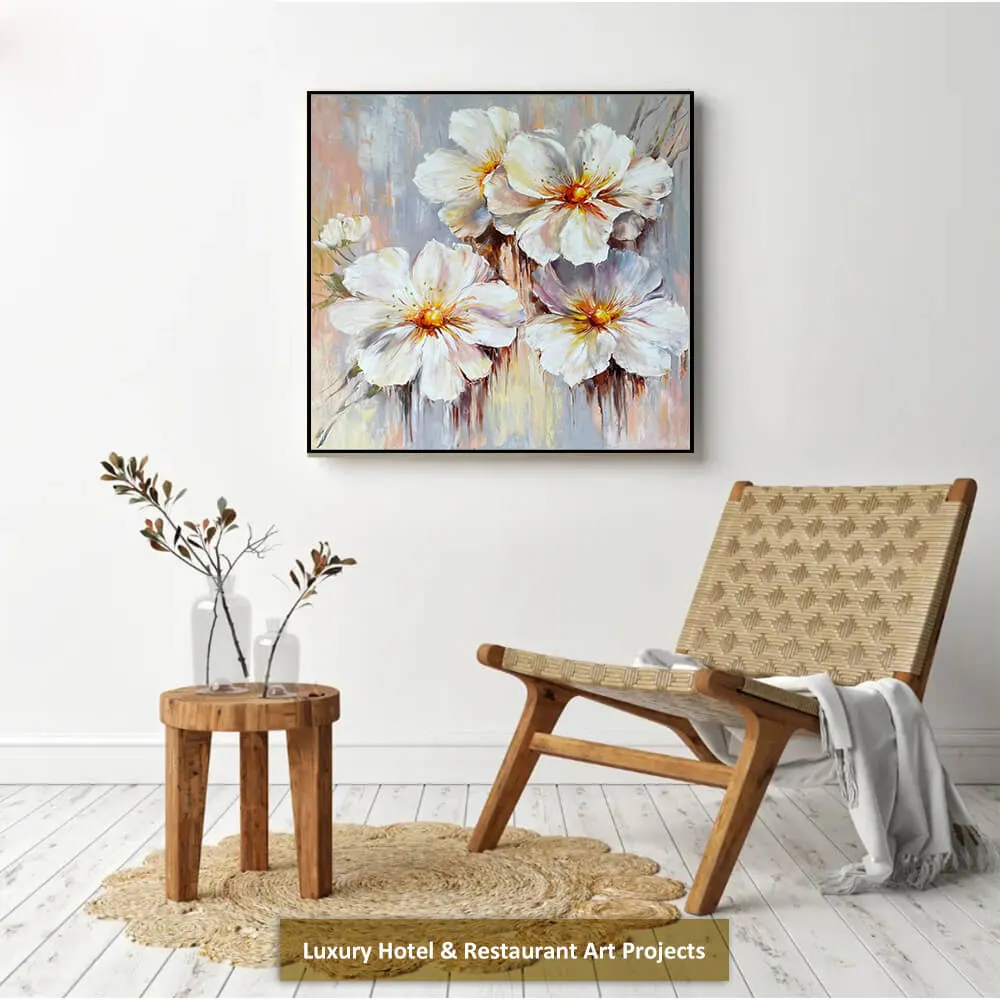
A blank wall can make a room feel unfinished, especially after moving into a new home or updating the interior. Traditional framed prints are only one option. By combining texture, natural elements, and three-dimensional details, wall decoration can become a stronger part of the room’s overall design.
Creative Wall Art Ideas Beyond Traditional Paintings
The Modern Minimalist Gallery Wall
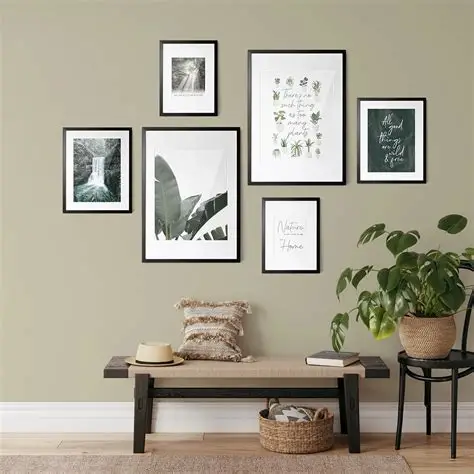
A gallery wall remains one of the most flexible wall art ideas for an entryway, hallway, or living room. In this example, slim black frames, white mounts, and generous negative space create a clean visual rhythm. Although the artwork includes botanical drawings, typography, and nature photography, the consistent framing keeps the arrangement balanced.
The asymmetrical layout adds movement without making the wall look disorderly. Place the display around a bench, console, or low cabinet to create a clear visual center. Before hanging the frames, use painter’s tape to mark their positions and check the spacing from different viewpoints.
Woven Wall Hangnd Basket Clusters
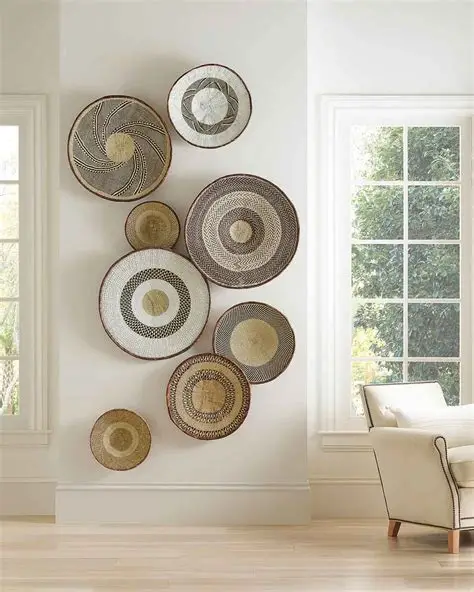
Woven baskets and handcrafted fiber pieces bring warmth and texture to a plain wall. Their curved surfaces create natural shadows, giving the display more depth than a flat print. A vertical cluster can also make a narrow wall or column feel taller and more dynamic.
Natural beige, brown, and black tones work particularly well with white, cream, and light wood interiors. This type of nature wall art suits Bohemian, Japandi, Coastal, and relaxed contemporary spaces. The arrangement does not need to be perfectly symmetrical; organic spacing usually creates a more comfortable result.
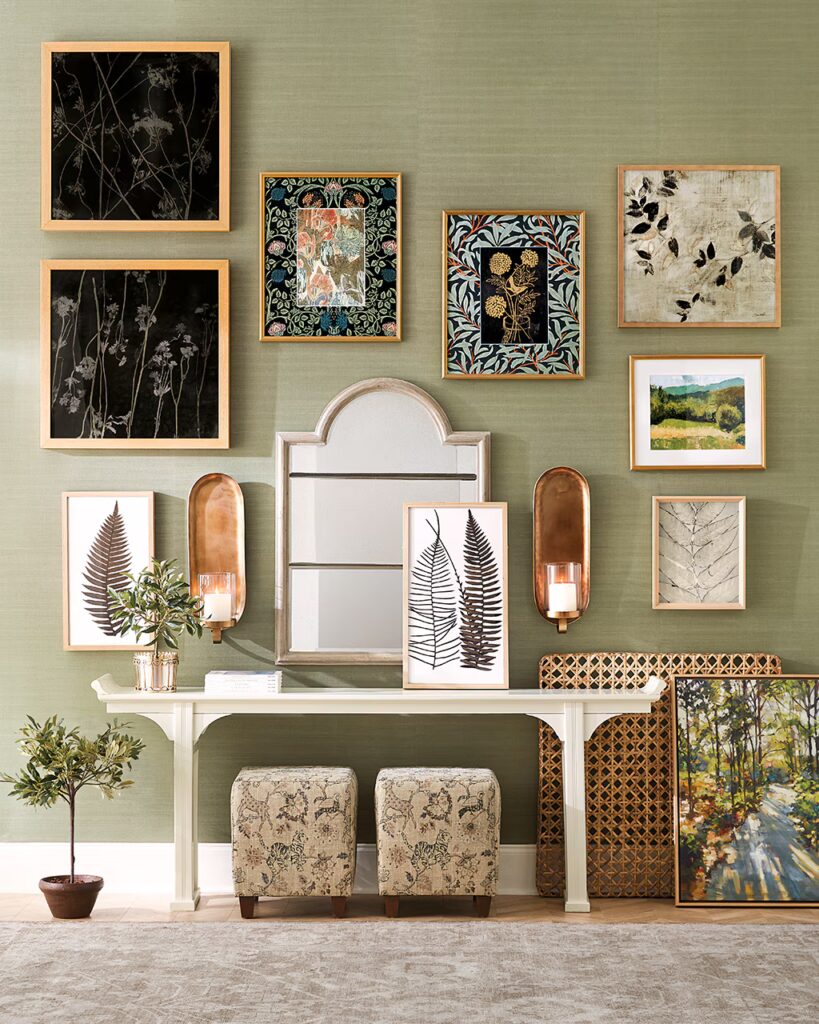
The Curated Eclectic and Mixed Media Wall
A mixed media wall combines framed artwork with mirrors, metal details, decorative objects, and different frame finishes. The mirror becomes a visual anchor while reflecting light and making the wall feel more open. Botanical prints, landscape pieces, and decorative accessories then build a layered story around it.
This approach works well in traditional, transitional, and eclectic interiors. Larger artwork can lean against a console or rest on the floor, while smaller pieces remain mounted above it. To maintain cohesion, repeat one or two colors across the display, such as green, gold, black, or warm wood.
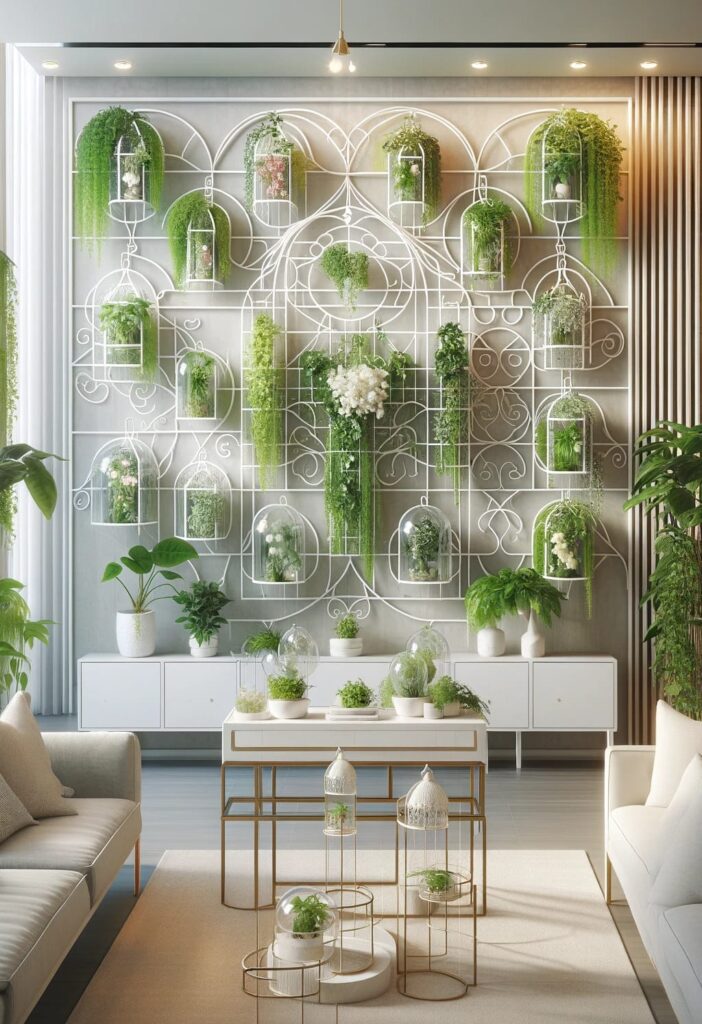
Living Wall Art and Vertical Gardens
A living plant wall turns the surface into a vertical garden. Geometric metal grids, glass containers, trailing plants, and small potted greenery create a display that changes with light and growth. This form of modern wall art decor is especially effective in spacious living rooms, offices, hotel lobbies, and reception areas.
Unlike conventional framed art, a living wall requires suitable light, secure installation, watering, and regular maintenance. The Royal Horticultural Society’s guide to green walls also highlights the importance of selecting plants that suit the available conditions.
Choosing the Right Wall Art for Your Space
The best wall art ideas should support the room’s scale and function. A large display can anchor a living room, while a smaller gallery wall may be more suitable above an entryway bench or dining console. For practical guidance, review this wall art sizing and placement guide before finalising the arrangement.
For offices, hotels, and other commercial interiors, a custom wall art manufacturer can adapt artwork sizes, materials, frame finishes, and installation requirements to match the project. The final display should feel intentional, combining visual interest with the atmosphere and purpose of the space.
The most successful wall decoration is not limited to one material or style. Gallery frames, woven textures, mirrors, metal, and living plants can work together to create a wall that feels personal, balanced, and visually complete.